


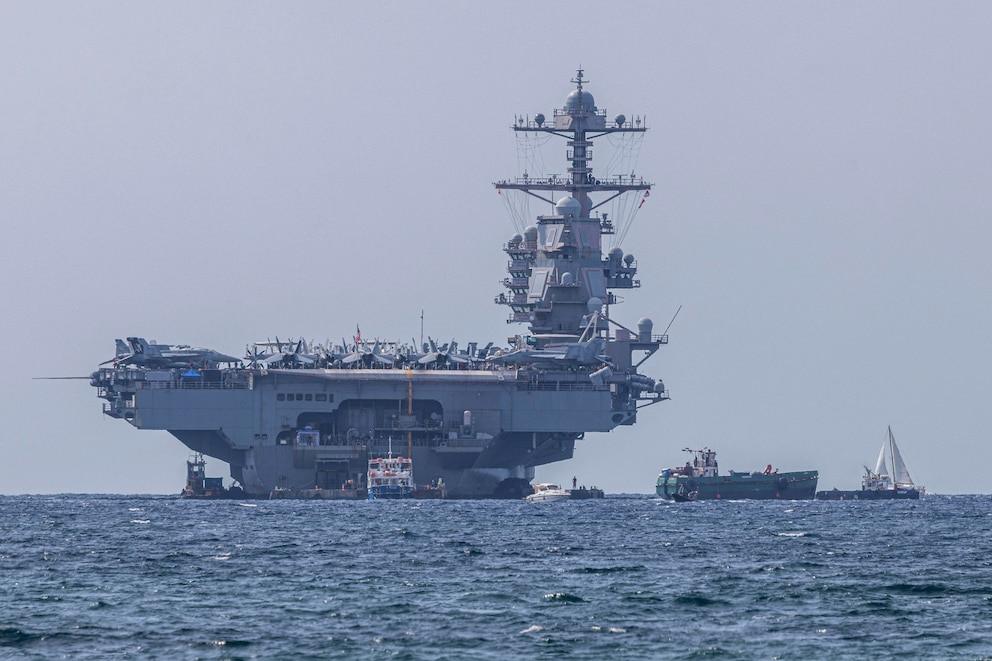
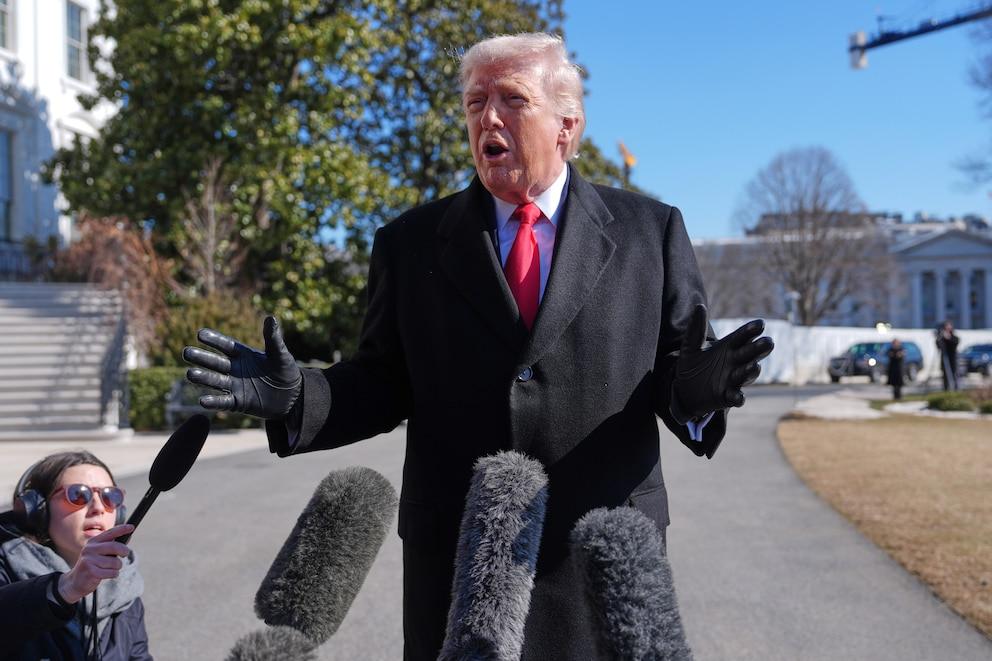
United States President Donald Trump announced the sending of the aircraft carrier USS Gerald R. Ford to the Middle East to join the USS Abraham Lincoln, a move that increases military pressure on Iran at a time of renewed negotiations over the Iranian nuclear program.“It will leave very soon,” said Trump when asked by journalists about the transfer of the Ford, the most advanced ship in the US Navy, from the Caribbean to the region.The president stressed that the ship will be necessary “in case we do not reach an agreement” with Tehran.
Meanwhile, Trump assured that a change of government in Iran would be “the best thing that could happen.”“It seems like that would be the best thing that could happen,” Trump told reporters at the Fort Bragg military base in North Carolina, when a reporter asked him if he wanted “regime change” in Iran.
“For 47 years, they have been talking and talking. Meanwhile, we have lost many lives while they talk,” he told reporters.
The decision was confirmed after US media reports on the Department of Defense’s preparations for the deployment of the Ford, which operated in the Caribbean after participating in the operation that culminated in the capture of former Venezuelan president Nicolás Maduro on January 3.The Ford, which has a nuclear reactor and capacity for more than 75 military aircraft, was abruptly mobilized from Europe to the Caribbean in November 2025, extending a deployment that is now approaching eight months.
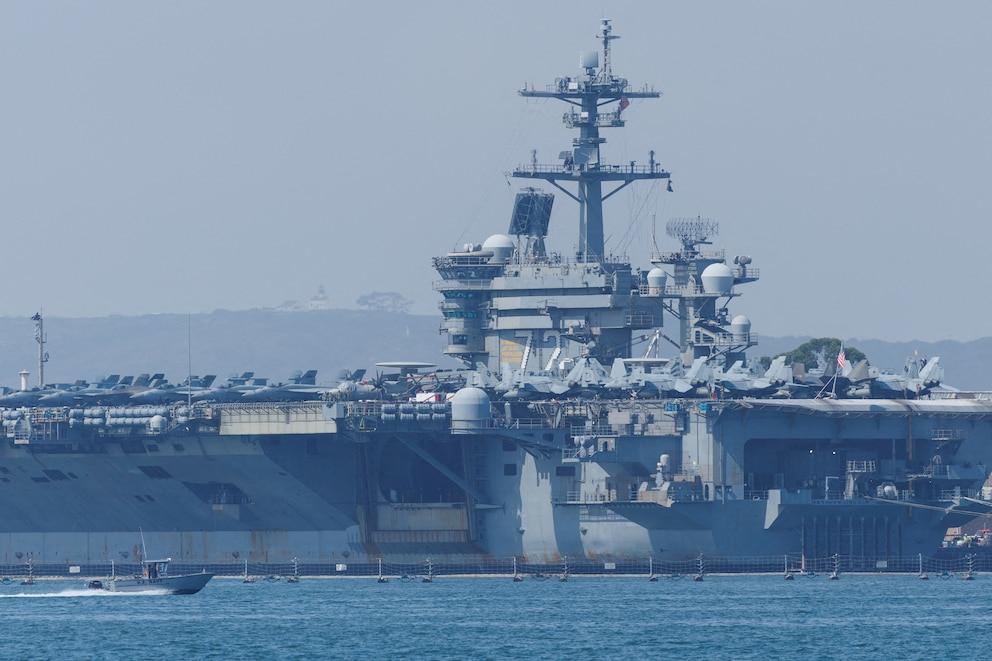
The arrival of the Ford to the Arabian Sea will reinforce the naval group led by Abraham Lincoln, accompanied by destroyers with guided missiles and combat aircraft.The last precedent of two US aircraft carriers in the area dates back to June of the previous year, when there were attacks against Iranian nuclear facilities.With only eleven aircraft carriers in its arsenal, the United States Navy considers these ships as strategic assets, subject to advance scheduling and susceptible to extensions in periods of high tension.
The recent indirect negotiations between Washington and Tehran took place in Muscat, Oman, with the mediation of the Omani Foreign Minister, Badr al Busaidi, and concluded without a final agreement.Trump warned that a failure in negotiations would have “very traumatic consequences” for the Islamic Republic and suggested that an agreement could be reached “during the next month.”US officials have maintained sustained contact with Israeli Prime Minister Benjamin Netanyahu, who insists that any deal must include restrictions on the Iranian ballistic missile program and an end to support for groups such as Hamas and Hezbollah.
The deployment coincides with a period of internal tension in Iran, where shock persists over the repression of massive protests last month, which reportedly left thousands dead.The families of the victims have begun the traditional forty-day mourning, which increases social pressure on the Tehran government, mired in economic difficulties aggravated by international sanctions.Videos spread on the internet show gatherings of mourners in cities like Mashhad, where historical patriotic songs have been sung in acts of collective memory.
For its part, the United States Southern Command assured that, despite the transfer of the Ford, the forces in Latin America maintain their capacity to counter “illicit activities and evil actors in the Western Hemisphere.”Military spokesperson Colonel Emanuel L. Ortiz stated that “force posture evolves,” but “operational capability does not,” maintaining readiness to protect U.S. interests in the region.
Gulf Arab nations have warned that any military escalation could trigger a new regional conflict, in a context marked by the recent war between Israel and Hamas in Gaza and persistent instability in the Strait of Hormuz.The White House did not respond to requests for comment on the duration and scope of Ford’s deployment as the crew faces an exceptionally long period of offshore operations.
(With information from AFP, AP, Reuters, Europa Press and EFE)

