


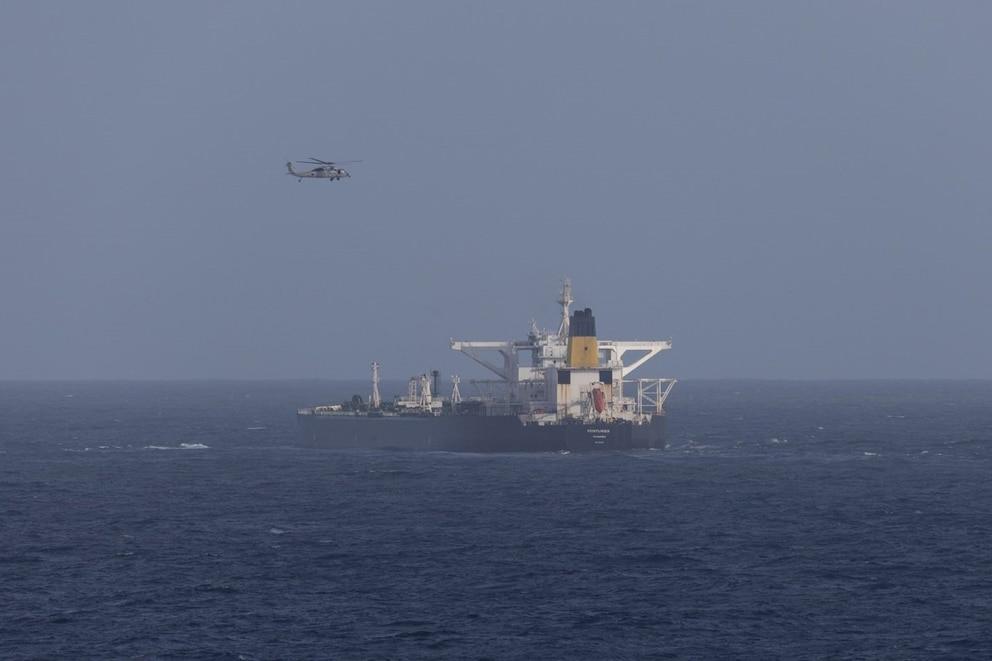
United States military forces boarded the Aquila II oil tanker, a vessel linked to Venezuela, in the Indian Ocean during an operation announced on the night of February 9 by the US Secretary of Defense.The images released by the Pentagon show the deployment carried out in broad daylight, which suggests that the communicated time corresponds to the United States zone.The ship’s location data, collected on the same date, confirmed the presence of the Aquila II in Indian waters, while sources from the Department of Defense indicated that the ship was tracked from the Caribbean to its final location.
The official message published on the social networkThe statement stressed that the Aquila II was operating in defiance of the quarantine established for sanctioned ships in the Caribbean.After attempting to evade pursuit, the tanker was followed and eventually intercepted by US military units.The Department of Defense highlighted the military’s ability to impose its will “on land, air or sea,” stating: “No other nation on planet Earth has the ability to impose its will in any area. By land, air or sea, our Armed Forces will find them and deliver justice. They will run out of fuel long before they can escape us.”
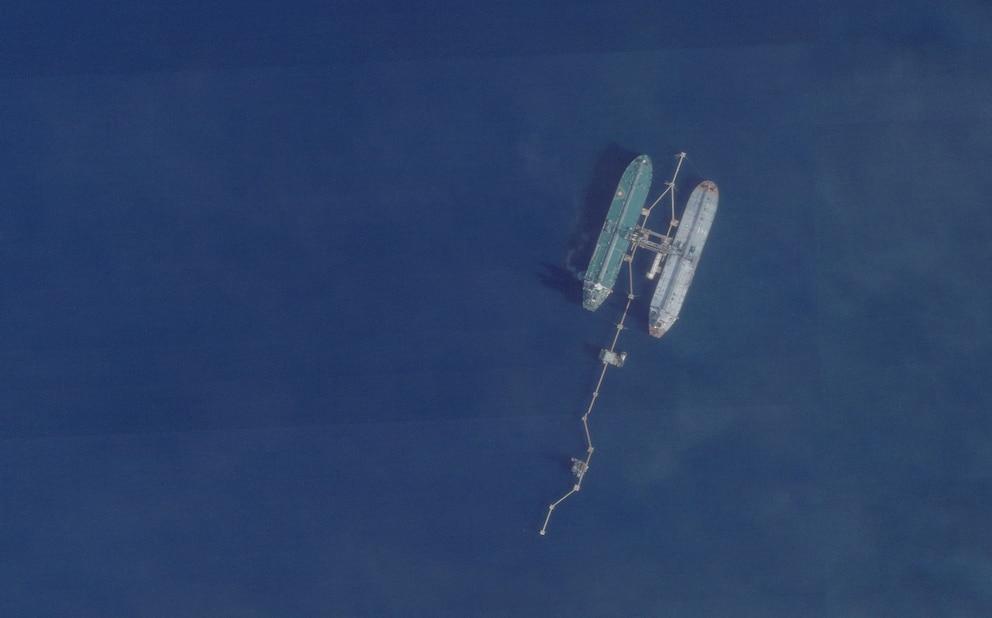
Since the end of 2025 and during the first months of 2026, the United States has intensified a policy of interception and boarding of oil tankers related to Petróleos de Venezuela S.A.(PDVSA).This strategy, framed by an escalation of diplomatic and military tensions, is mainly divided into two fronts: the persecution of the so-called oil “dark fleet” and lethal operations against alleged drug trafficking networks in the Caribbean.The US government has justified these actions by pointing out that the sanctioned ships violate international standards, operate with “flags of convenience” and navigate with transponders turned off to hide their origin and destination.
In December 2025, under the administration of Donald Trump, who resumed the presidency that year, the Skipper ship was seized after its departure from Venezuela.The United States government argued that the vessel was part of an illicit network intended to finance terrorist activities.Caracas described the boarding and seizure as an act of “international piracy.”On January 7, 2026, US forces conducted simultaneous operations in the North Atlantic and the Caribbean to seize two additional tankers.One of them, the Bella 1, which was renamed Marinera, tried to evade the collision by changing its flag to that of Russia.Even with the presence of a Russian submarine escorting the tanker, US forces proceeded with the boarding after obtaining judicial seizure orders.
In parallel with the pressure on oil tankers, the military deployment in the Caribbean extended to lethal operations against small vessels.These operations, directed against what Washington identifies as “narco-boats,” have involved the use of aircraft carriers, destroyers and F-35 fighters, reinforcing the US military presence in the region.The Department of Defense has reiterated that the policy of “total strangulation” on Venezuelan oil exports and illicit maritime trafficking will continue as part of its strategy to deny illicit actors and their representatives the ability to challenge the power of the United States in the global maritime arena.

