


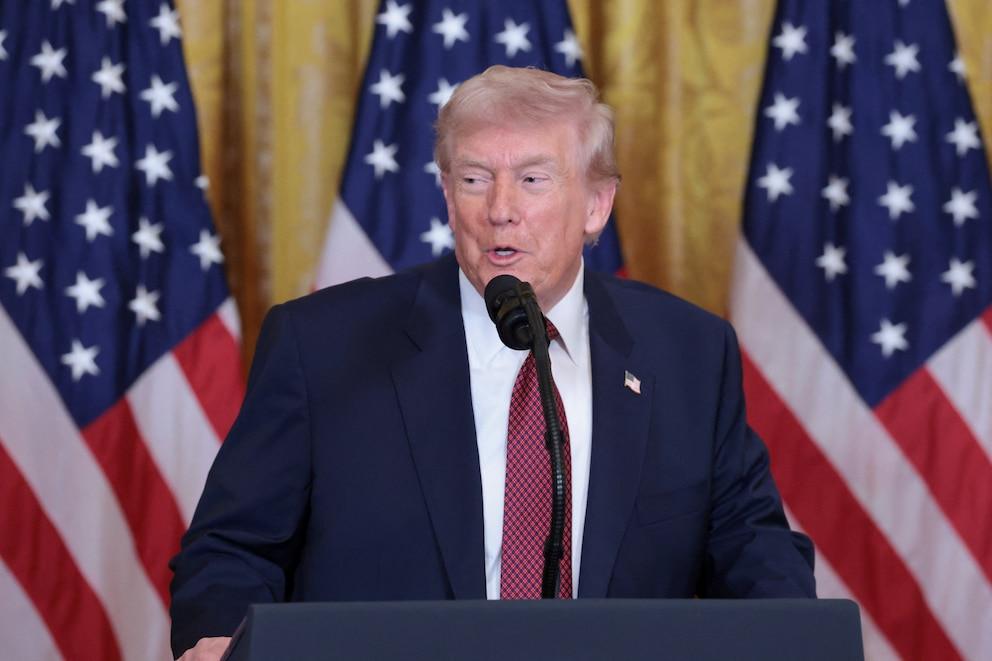
The president of the United States, Donald Trump, stated this Thursday that relations between Washington and Caracas are going through an “extraordinary” moment, after the capture of the drug dictator Nicolás Maduro and contacts with the head of the Chavista regime, Delcy Rodríguez.According to the president, this approach includes the beginning of an energy cooperation process that is already reflected in the reactivation of the Venezuelan oil industry.
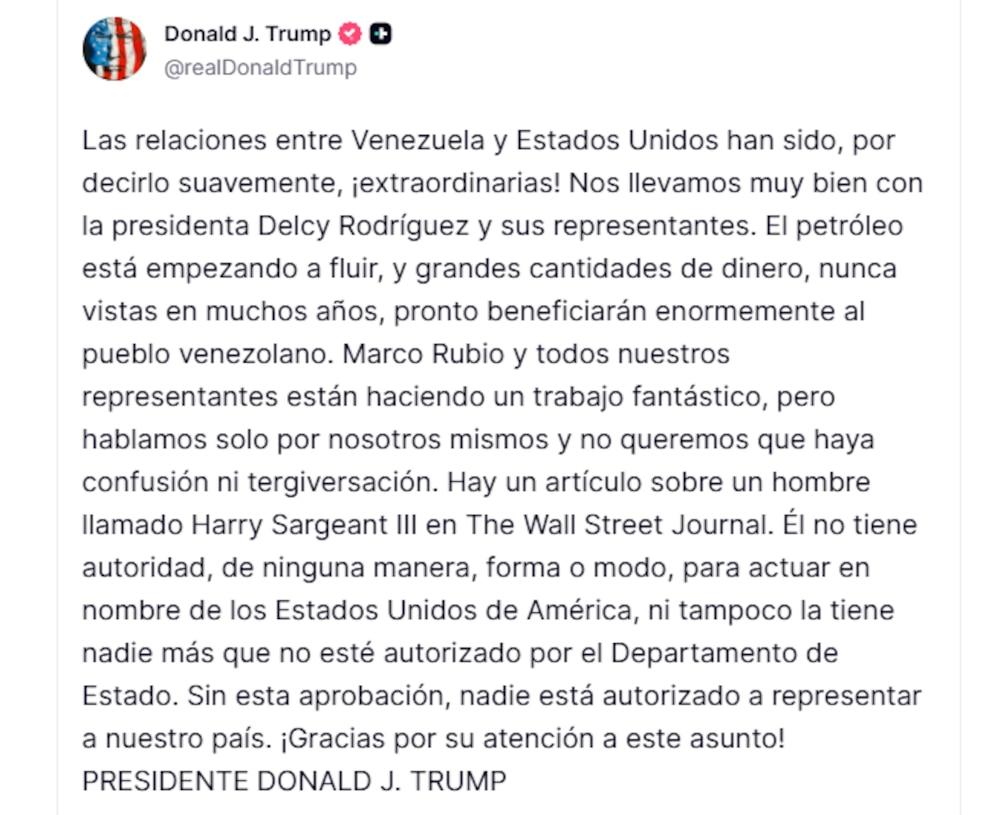
“We get along very well with President Delcy Rodríguez and her representatives. The oil is starting to flow, and large amounts of money, never seen in many years, will soon greatly benefit the Venezuelan people. MarcoRubio and all of our representatives are doing a fantastic job,” Trump said on his Truth Social network.
The Republican leader stressed that the dialogue is carried out exclusively through officials approved by the State Department and stressed: “We only speak on behalf of ourselves and we do not want confusion or misrepresentations.”
“We do not want there to be any confusion or misinterpretation,” said the president, referring to press versions that mention unofficial intermediaries in the oil sector.
Trump’s statements come in the middle of the visit of the United States Secretary of Energy, Chris Wright, who arrived in Caracas this Wednesday to meet with Delcy Rodríguez and her economic team.Both officials held talks at the Miraflores Palace, where they addressed the roadmap for oil reactivation and investment in energy infrastructure.
The United States chargé d’affaires in Venezuela, Laura Dogu, stated that the meeting served to advance the Trump administration’s three-phase plan for the Caribbean country: stabilization, recovery and transition.
As part of the agenda, this Thursday Wright and Rodríguez visited the facilities of the Petro Independencia mixed company, located in Morichal, in the south of Monagas state, within the Orinoco Oil Belt.
The Minister of Communication, Miguel Ángel Pérez Pirela, confirmed the visit and released images of the US secretary touring the plant.
The%20Faja%20Petrol%C3%ADfera%20of%20Orinoco%20is%20a%20vast%20area%20of%2055.314%20kil%C3%B3meters%20squared%2020south%20of%20los%20states%20Gu%C3%A1rico,%20Anzo%C3%A1tegui,%20Monagas%20y%20Delta%20Amacuro,%20que%20hosts%20el87%%20of%20the%20reserves%20venezuelan%20of%20petr%C3%B3leo,%20considered%20las%20m%C3%A1s%20large%20delmundo%20y%20con%20capacity%20to%20supply%20the%20demand%20global%20for%20three%20centuries, according to%C3%BAn%20the%20state%20PDVSA.
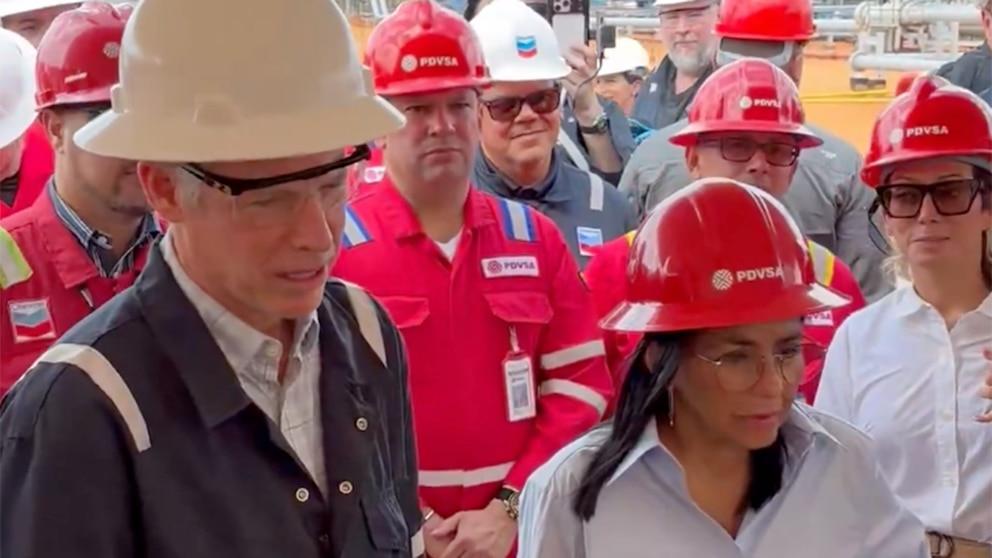
Chevron, the only US oil company currently operating in Venezuela, maintains a minority stake in joint ventures with PDVSA and develops four oil projects and one gas project in the area.
Wright’s trip coincides with the relaxation of restrictions imposed by the United States on the Venezuelan oil sector.On the eve of the visit, the Treasury Department relaxed the conditions so that American companies can operate in the Venezuelan market under strict control and reporting.
This new regulatory framework allows the investment, marketing, transportation and refining of Venezuelan crude oil, as well as the export of technology and services.
The income generated by exports is channeled through international funds under US control, destined for stabilization and social development projects in Venezuela.
The Venezuelan Parliament, dominated by Chavismo, recently approved a reform of the Organic Hydrocarbons Law that opens the sector to private and foreign investment.This measure seeks to attract capital and technology to revitalize the depressed oil industry and accompanies the transition process supervised by the White House.
The resumption of oil investments and the normalization of operations in the country’s main fields have been presented by the Trump administration and the Rodríguez regime as a fundamental step for Venezuelan economic recovery.
According to official estimates, the new agreements will allow a sustained flow of resources that will contribute to alleviating the internal crisis, improving energy supply and supporting the financing of basic services.
(With information from EFE)

