


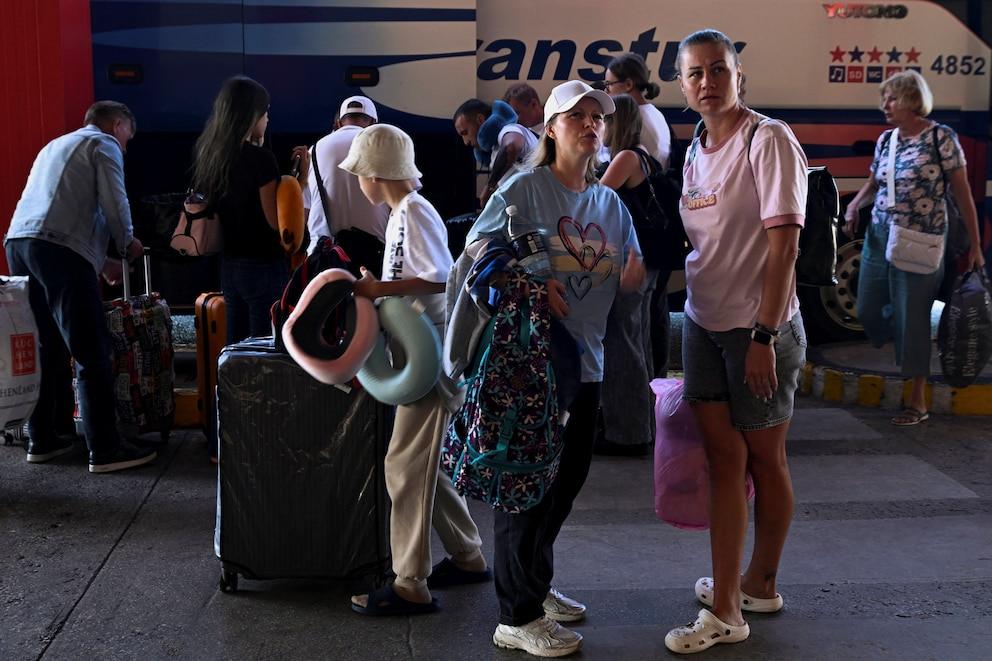
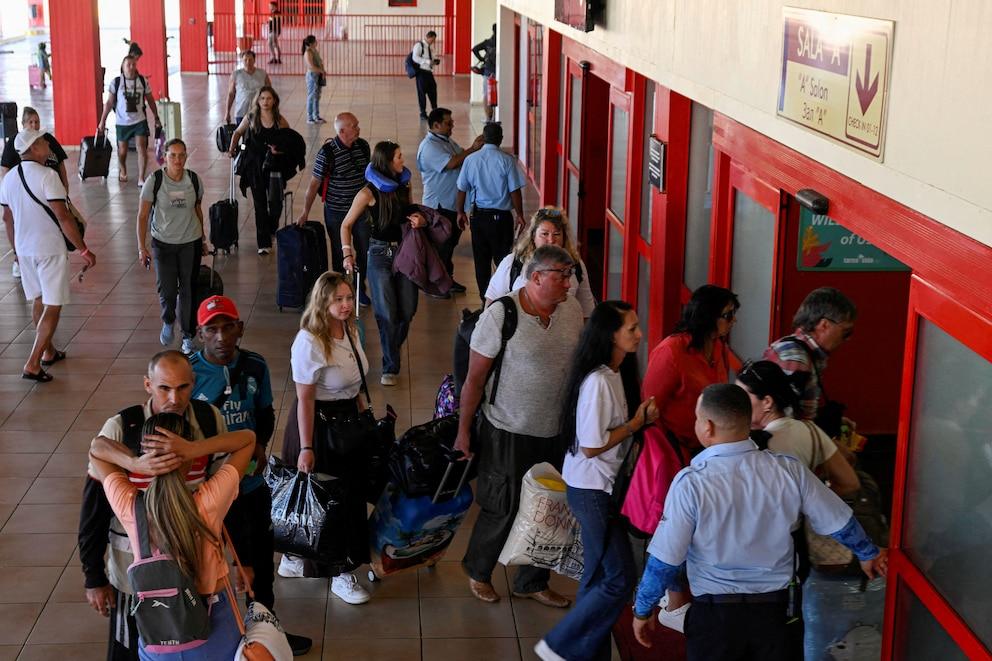
With continuous power cuts, hotel closures and the suspension of air routes due to lack of fuel, tourists are gradually leaving Cuba, aggravating the serious crisis on the island, which is suffering from economic difficulties.
Several countries have advised against travel to Cuba since the United States tightened a decades-old embargo, blocking vital oil imports.
“I only found one taxi,” said French tourist Frédéric Monnet, who cut short his trip to a picturesque valley in western Cuba to return to Havana.
“There may not be taxis afterwards,” he told AFP.
The oil shortage has caused hours-long power outages, long lines at gas stations and forced many airlines to announce the cancellation of their scheduled services.
Some 30 hotels and resorts across the island are temporarily closed due to low occupancy and fuel rationing, according to an internal Tourism Ministry document obtained by AFP.
Since January, a flotilla of US warships has prevented Venezuelan tankers from delivering oil to Cuban ports.
Washington has also threatened Mexico and other exporters with punitive tariffs if they continue deliveries.
Several Canadian and Russian airlines are sending empty flights to Cuba to rescue thousands of passengers who would otherwise be stranded, and others are introducing refueling stops on the way home.
American tourist Liam Burnell contacted his airline to make sure he could get a return flight.
“There was a risk of not being able to return, because the airport says it doesn’t have enough fuel for the planes,” he said.
The absence of tourists is more than an inconvenience for the Cuban government.
Tourism is traditionally Cuba’s second main source of foreign currency, after income from doctors sent abroad.
This income is vital to pay for food, fuel and other imports.
And the 300,000 Cubans who make their living from tourism are already feeling the consequences.
A tour bus touring the sights of Havana on Thursday was virtually empty.The horses stopped in the shadow of the colonial buildings, waiting for the carriages to fill with visitors.
“The situation is critical, critical, critical,” said Juan Arteaga, 34, who drives one of the island’s many classic cars from the 1950s so prized by tourists.
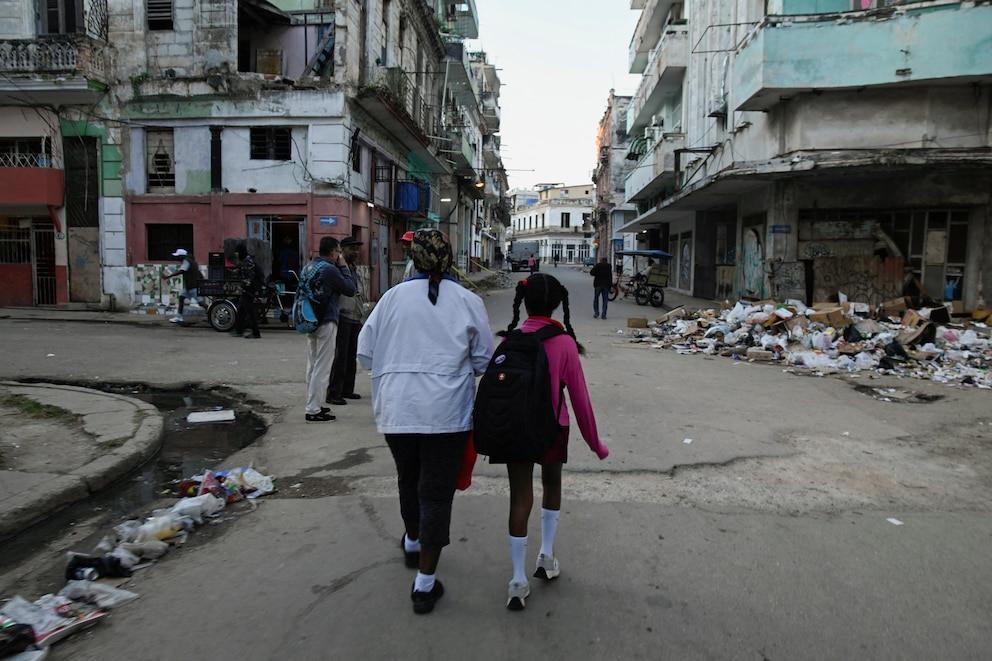
“There are few cars (on the street) because there is little fuel left. Whoever had a reservation is saving it,” he said.
“When I run out of gas, I go home. What else can I do?” he asked.
The island of 9.6 million people has faced difficult times since the US trade embargo came into force in 1962, and in recent years the serious economic crisis has also been characterized by shortages of food and medicine.
On Thursday, two Mexican Navy ships arrived in Cuba with more than 800 tons of much-needed humanitarian aid: fresh and powdered milk, meat, cookies, beans, rice and personal hygiene items, according to Mexico’s Ministry of Foreign Affairs.
The musician Víctor Estévez stated that, given that tourism has been “a lifeline for all Cubans… if it is affected, we are going to have serious problems.”
“The well-being of my family depends on me.”
The%20sector%20tur%C3%ADstico%20ya%20se%20hab%C3%ADa%20seen%20seriously%20affected%20by%20the%20pandemic%20de%20COVID-19,%20with%20a%20decrease%C3%B3n%20of%2070%20%%20in%20its%20income%20between%202019%20and%202025.
Tourism expert José Luis Perelló stated that the island now faces the prospect of “a disastrous year.”
(With information from AFP)

