


February 14 is usually associated with love.Valentine’s Day, Valentine’s Day, a day in which couples celebrate their union and the atmosphere is filled with air of affection.But there was a February 14, almost a century ago, in 1929, when the celebration was overshadowed by a crime that grabbed the headlines and gave an account of the violent times that were being experienced in Chicago, United States.
It was a mafia revenge that was called “The St. Valentine’s Day Massacre”, a massacre that forever transformed the panorama of organized crime in Chicago, originating a case that was never officially solved, but that consolidated the power of Al Capone, the famous gangster of Italian origin, also known as “Scarface.”Years later, in 1951, the North American city witnessed one of the bloodiest fights in boxing history: Sugar Ray Robinson against Jake LaMotta, which was related to that event attributed to Al Capone.
But let’s go back to that morning of February 14, 1929. Chicago woke up with one of the most violent episodes in its history: five armed men, several dressed as police officers, got out of a black Cadillac in front of the SMC Cartage Co. company and killed seven members of the rival group led by George Bugs Moran, a declared adversary of Al Capone.
Although it was never possible to gather conclusive evidence linking Capone, the massacre was the catalyst that allowed him to found the Crime Syndicate and, at the same time, intensified the response of federal authorities against the mafia, according to National Geographic.
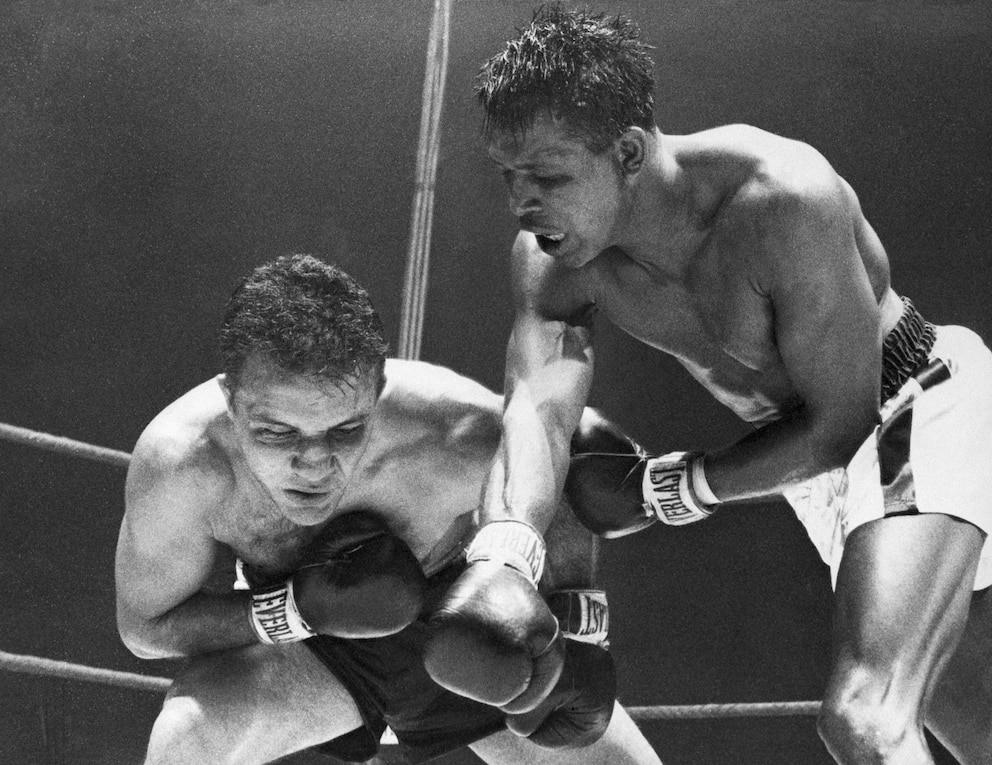
Twenty-two later, on another Valentine’s Day, Chicago also witnessed an episode with bloody edges, but this time linked to sports.At Chicago Stadium, Sugar Ray Robinson sealed the recovery of his middleweight world championship after defeating Jake LaMotta in a match marked by extreme violence and physical resistance.
The dimension of that combat was accompanied by the memory of the aforementioned mafia massacre, thus fusing the drama of that bloody gangster episode with the rawness of one of the most emblematic duels in sport.
The Robinson-LaMotta fight saga, one of the most emblematic in boxing, unfolded over six intense bouts.He contrasted two opposite figures: Sugar Ray, called the “Prince of Harlem”, remembered for his impeccable technique and agility, and Jake, nicknamed the “Bronx Bull”, recognized for his strength and aggressiveness.
Both debuted as professionals in 1941: Robinson as a welterweight and LaMotta as a middleweight.The first date came in October 1942. Sugar Ray, then undefeated with 35 victories, overcame the disadvantage of more than 4.5 kilograms (10 pounds) that he faced his rival and won seven of the ten rounds.
The second confrontation, just four months later, saw LaMotta prevail with fury: he forced Robinson to kiss the canvas for the first time in his career and obtained the unanimous decision, the Prince had been defeated.
The interest in the saga was so great that just three weeks later they fought again.Although LaMotta knocked Robinson down again, he achieved a clear victory.The fourth fight, in 1945 in New York, consolidated Robinson’s technical mastery, while the fifth fight, seven months later in Chicago, was bloody and even.Although the decision again favored Robinson, many in the public felt that LaMotta deserved better.Sugar Ray himself confessed that it was the hardest fight of his career.
After the five matches, Robinson had four wins.Dissatisfaction with the close result of the fifth fight fueled the expectation of a new confrontation.Years passed: Robinson won the world welterweight championship in 1946, LaMotta won the middleweight title in 1949. When in 1950 Robinson decided to move up a category after not being able to make the welterweight (66.7 kilograms, 147 pounds), both agreed to a sixth fight with the world middleweight championship at stake.
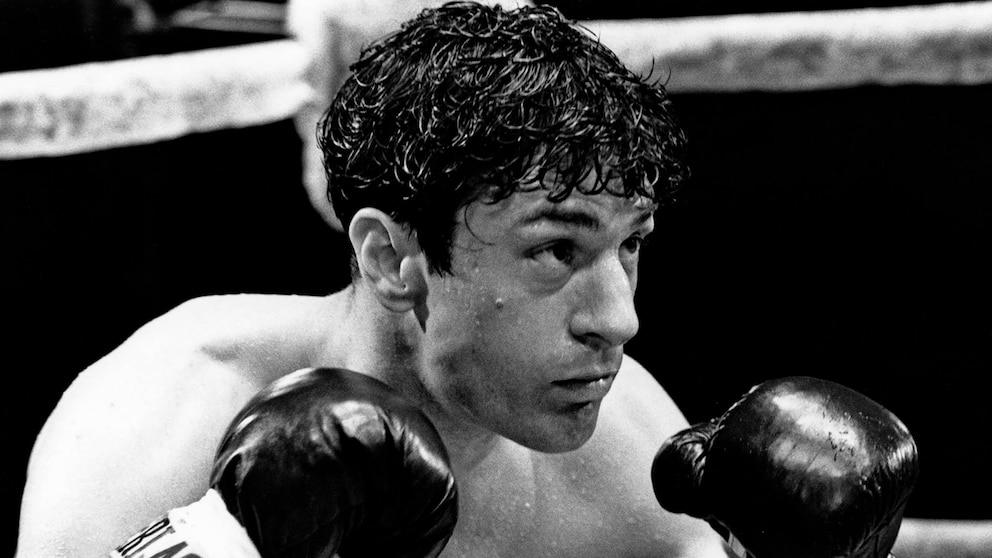
The famous rivalry between Robinson and LaMotta, revived decades later in Martin Scorsese’s Raging Bull, with Robert De Niro playing the Bronx fighter, reached its climax that night.More than 14,800 people witnessed the sixth and last fight between both fighters, in a fight that was only stopped in the 13th round.
LaMotta’s preparation for the decisive fight was exhausting: he had to lose at least 1.8 kilograms (4 pounds) the day before.Knowing that his resistance would be limited, he altered his tactics, seeking the knockout in the first rounds.Robinson, aware of his rival’s weight difficulties, designed a relentless strategy, punishing LaMotta to the body throughout the fight.
In the sixth round, LaMotta landed a left hand that put Robinson in trouble, he continued with an intense offensive and managed to make the challenger bleed.Even so, Sugar resisted and took control starting in the eleventh round, when the Bull made his last offensive effort before completely exhausting himself.
The fight came to an end in the 13th round. Referee Frank Sikora considered Robinson’s barrage of blows on an exhausted and punished LaMotta unstoppable, who, barely supported by the ropes, refused to fall to the canvas.
When the match stopped, LaMotta, with his face disfigured and his eyes almost closed, addressed his opponent and said: “Did you see that you couldn’t throw me, son of a bitch?”, as indicated by reports from the time.
From a sporting point of view, Robinson won five of the six confrontations in the saga, but the value of these fights lies less in the numbers than in the brutal dedication of both combatants.The Bronx Bull was never knocked down, not even after receiving the most ferocious punishment of his career that night.The stories indicate that, after the close of the fight in February 1951, LaMotta collapsed in the locker room and took two hours to recover enough to leave the stadium.
Robinson’s definition after the event summed up the admiration and harshness of the match: “He complained about the result because he never loses. He is a gladiator, only he could withstand such punishment. I was never so well prepared in my life, but I couldn’t knock him out,” said the champion.
The drama of that day forever marked the legend of boxing: Robinson’s last charge against a rival who, at the limit of his strength, resisted until the end.

