


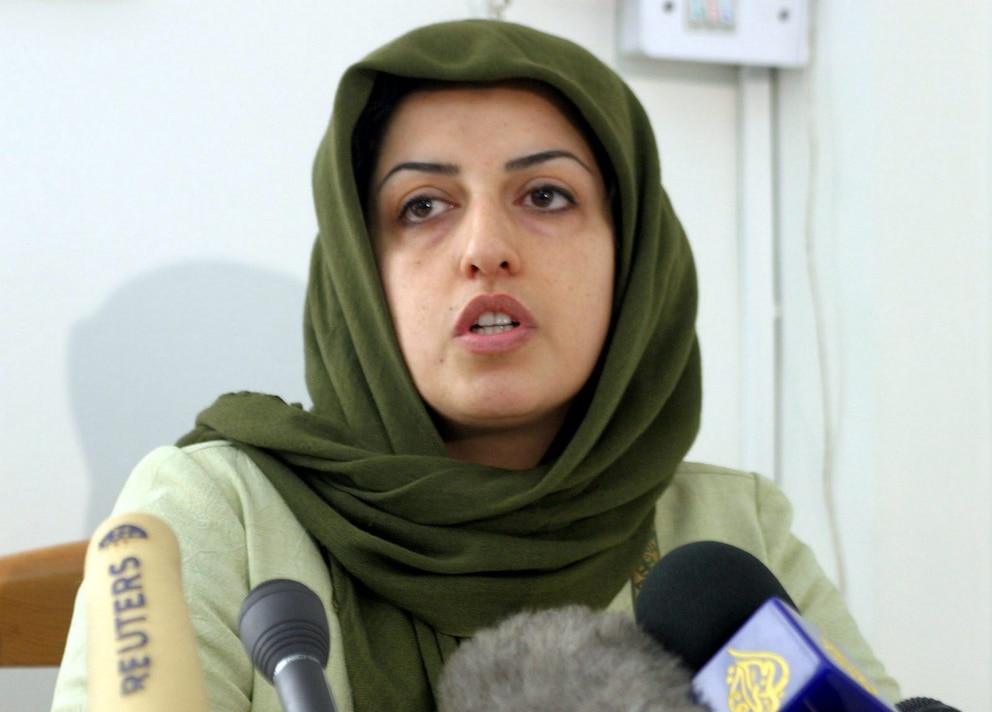
The revolutionary court of Mashad this Sunday sentenced Narges Mohammadi, 2023 Nobel Peace Prize winner and renowned Iranian human rights activist, to seven and a half years in prison.The sentence, confirmed in February 2024, responds to charges of conspiracy and propaganda against the Islamic Republic.This is the tenth sentence imposed against Mohammadi since 2021.
The activist’s lawyer, Mostafa Nili, detailed on his social networks thatMohammadi received six years in prison for conspiracy and collusion, a year and a half for propaganda activity and, as a complementary sentence, a two-year ban on leaving the country.The resolution was announced after a hearing in the first courtroom in Mashad, held while Mohammadi remained in custody and in poor health.
Nili explained that she received a phone call from her client, her first communication in almost two months, in which the activist reported having recently been admitted to the hospital due to health problems.During the call, interrupted before he could describe the circumstances of his violent arrest in mid-December 2023, Mohammadi recounted his transfer to court.The lawyer specified, in accordance with Iranian legislation, that the convicted woman must be sent to prison, although he maintained that, due to her physical condition, she should agree to provisional release on bail.
“In view of his illnesses, it is expected that he will be temporarily released on bail so that he can receive medical treatment,” Nili said.
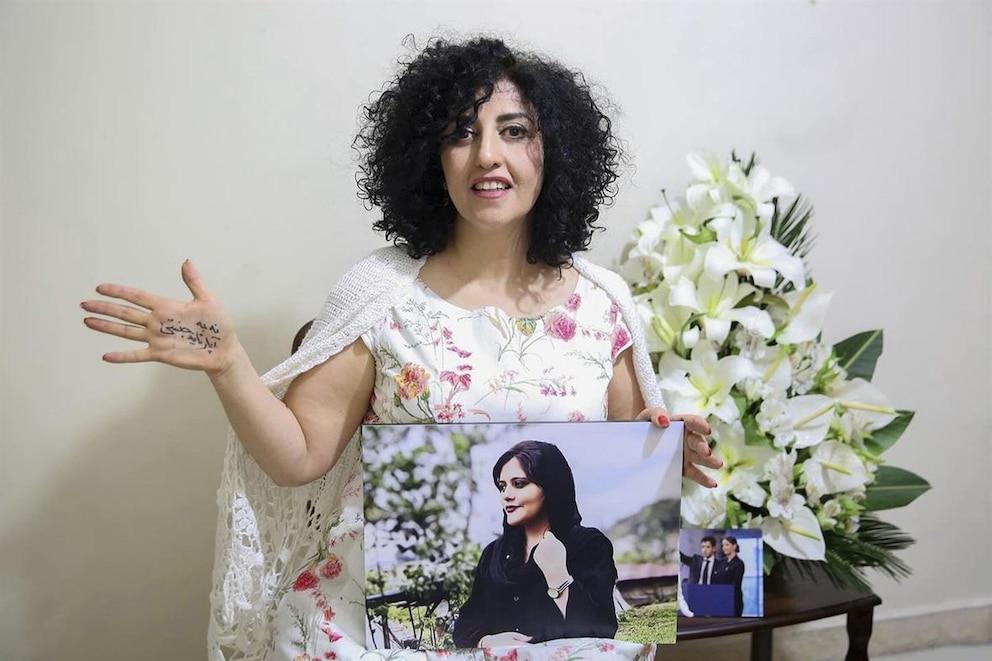
Mohammadi’s judicial record shows persistent persecution.She was released on parole for medical reasons at the end of 2023, but in November she had already denounced the permanent ban on leaving Iran and the refusal to issue her a passport, which prevents her from seeing her children, who have lived abroad for eleven years.In total, Mohammadi has been arrested thirteen times and convicted nine times, accumulating court cases and prison sentences for more than a decade.
Internationally, Mohammadi is known for her defense of women’s rights and her resistance to state repression, work recognized by the Norwegian Nobel Committee in 2023. The Committee highlighted her fight “against the oppression of women in Iran and to promote human rights and freedom for all.”His case has increased global pressure on the Iranian authorities and has been repeatedly highlighted by international organizations.
Repression in Iran intensified after mass demonstrations that began in December to protest the economic crisis and evolved to demand regime change.Official figures recognize 3,117 deaths since the beginning of the protests, while the organization Human Rights Activists (HRA) documents 6,941 deaths – of which 6,495 were protesters and 171 were minors – as well as 50,921 arrests and 11,021 seriously injured.The HRANA agency, dependent on HRA, considers these data as verified minimums and has more than 11,600 possible additional deaths under review.
Different organizations emphasize that accessing independent figures is complex, with the true magnitude still uncertain.According to Mahmood Amiry Moghaddam, director of Iran Human Rights (IHR), full knowledge of the tragedy will only be possible if an international investigation is allowed: “I think the definitive details will have to wait until the regime falls and an independent fact-finding mission can be carried out.”
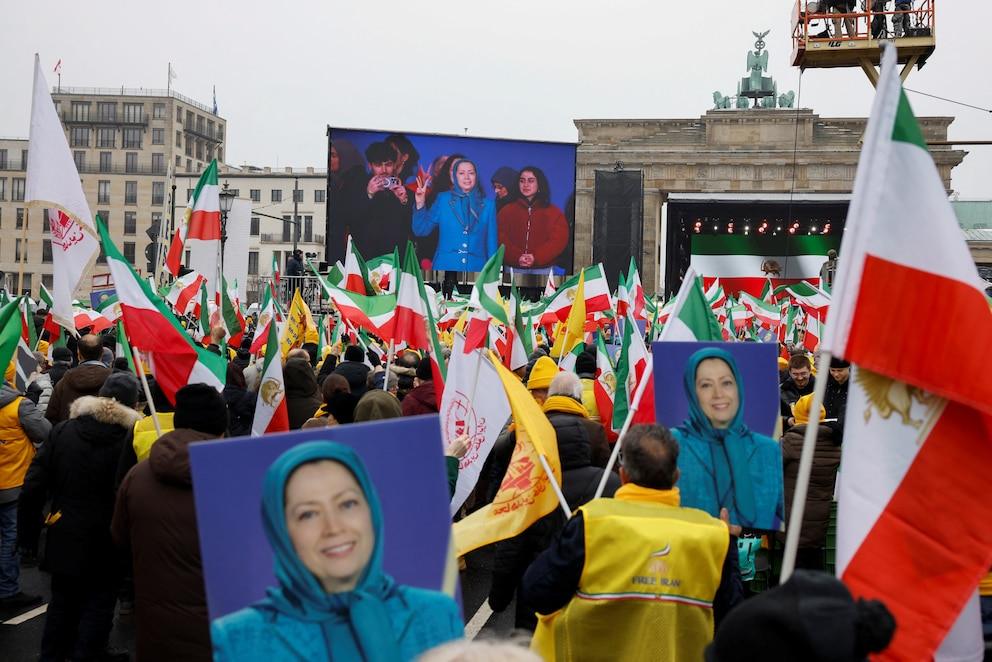
The case of the “Communique of the 17”, signed by Mohammadi, other activists and prominent figures, demanded a free referendum, a constituent assembly and the end of the Islamic Republic.The publication of this document has led to new arrests, such as that of Ghorban Behzadian-Nejad, as well as the arrest of filmmakers and human rights defenders.The authorities have attributed the unrest to foreign instigation, especially Israel, an attempt that organizations consider a strategy to divert attention from internal repression.HRA legal advisor Jennifer Connet indicated that “such speech is not unusual” and is often used to transform local dissent into alleged foreign interference.
International organizations have warned that the Iranian regime’s reaction includes media censorship, pressure on families of missing people, and regular use of military weapons in civil protests.Connet stressed the extreme nature of the control and militarization exercised over society.In turn, Moghaddam stressed that obtaining a complete picture is extremely difficult due to systematic repression.
Despite successive sentences and the risk of prison, Narges Mohammadiman maintains his activism and voice in defense of human rights and fundamental freedoms in Iran.

