


Negotiations between the International Atomic Energy Agency (IAEA) and Iran could reach an agreement on the inspection of nuclear facilities in the coming days, as confirmed by Rafael Grossi, director general of the agency, during the Munich Security Conference.
Grossi described the situation as a “very, very crucial” point in which both parties maintain a dialogue, although imperfect and extremely complicated, after the attacks on Iranian facilities the previous year.
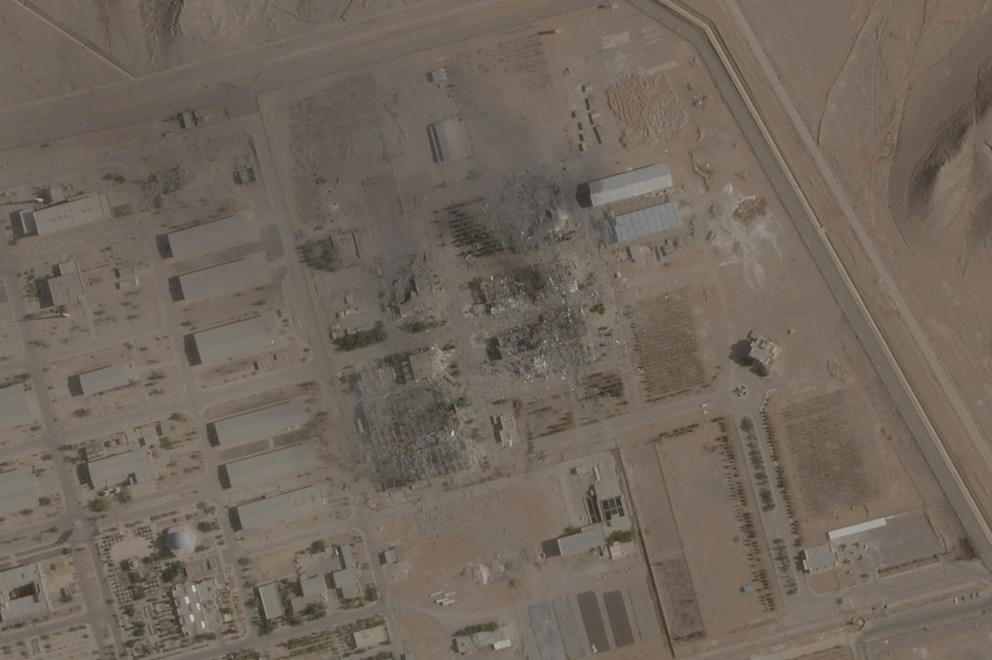
The resumption of contacts between the IAEA and Iran occurred after the agency’s inspectors returned to the country despite the significant deterioration of the nuclear infrastructure, a consequence of the so-called “12-day war.”During that conflict, Israel began a military attack against Iran in the early morning of June 13.Less than 24 hours later, Tehran responded with an offensive of its own.Nine days later, American planes bombed three Iranian nuclear sites, marking the direct entry of the United States into the confrontation.The following night, Iran launched missiles at the US military base at Al Udeid in Qatar.Subsequently, then-US President Donald Trump announced a complete ceasefire between Israel and Iran, which came into effect on June 24.
In this context, Iran cut off communication with the IAEA, arguing the organization’s lack of condemnation of the military actions of Israel and the United States.On September 9, both sides signed an agreement to resume cooperation, although on September 20, Tehran again suspended inspectors’ access after passing a resolution demanding full transparency.

Grossi explained that, although inspectors have returned to Iran, they have not been able to access the nuclear sites hit during the bombings. Tehran insists that any future visits to these sites will be part of a new agreement, the conditions of which remain under negotiation.The head of the IAEA pointed out that the Iranian nuclear program has changed radically after the attacks, since many infrastructures have been destroyed or seriously damaged, and he anticipated that eventual international supervision will not be able to be based on the model prior to the June attacks.
The Argentine diplomat stressed that, as a State party to the Non-Proliferation Treaty (NPT), Iran maintains the right to develop nuclear activities for peaceful purposes, but stressed the need for a credible verification system.Grossi insisted that the IAEA knows “perfectly what needs to be verified and how to do it,” although he acknowledged the complexity of defining the next steps.If the dialogue process advances, Grossi warned, there could be tangible progress “in the coming days, rather than in weeks or months,” and he considered it possible to reach a solution despite the difficulties.
Washington, for its part, maintains recent diplomatic contacts with Iranian officials and has expressed its willingness to negotiate after a first meeting in Oman on February 6.Meanwhile, the Pentagon has reinforced its presence in the region, with a group of aircraft carriers deployed and the arrival of a second naval group scheduled within two weeks, according to US media.The Iranian authorities insist that any agreement must take into account the new conditions of its nuclear facilities, particularly in places like Isfahan, Natanz and Fordo, where the previous technical framework has been compromised.
(With information from EFE and AFP)

