


Aryna Sabalenka showed all her potential at the Rod Laver Arena and qualified for the final without major problems with a 6-2, 6-3 victory over Ukraine’s Elina Svitolina in just 1 hour and 17 minutes of play.However, things could have been different due to a strange ruling against him when the first balls of the semifinal game were being played.
With the duel 2-1 in favor of Sabalenka after the first three games of the match, the Ukrainian prepared to begin her serve but the rally only lasted three crosses per side until judge Louise Azemar Engzell stopped the actions. “Stop, hindrance,” she announced.Seconds before, the world number 1 had caught the ball badly and seemed to throw it long, but finally the parabola of the blow left the action in play.
Svitolina seemed taken aback by the announcement and Sabalenka began to ask if she had been the protagonist of the “hindrance.”After the request for a review, the Swedish judge assured that the scream of the world number 1 after the blow had not been “normal.”From the ESPN broadcast they raised a question about that topic: “Is it different from the other noises it makes? Because as always it makes noise…” “For me that is an obstacle, because you don’t make the normal sound,” Louise Azemar Engzell argued to the tennis player at that time.
The regulation states that among the possibilities of “Hindrance” (obstacle in English) the referee “must determine if any of the players have been hindered” and highlights among the different options: “Any distraction caused by a player can be considered deliberate and may result in the loss of a point (intentional or unintentional).”
“Something like that had never happened to me, especially with my scream. It was very strange. The ball was going deep and it was a matter of timing. When he whistled, I thought: ‘What? What’s wrong?’ But it helped me, I played more aggressively and it benefited my game. I think it was a wrong decision, but oh well. I was more aggressive. I wasn’t happy with the decision, and it really helped me win that game. If it’s something that’s not under my control, I don’t care. I think that’s the right approach for thistype of situations,” Sabalenka said after the match about this action, according to Punto de Break.
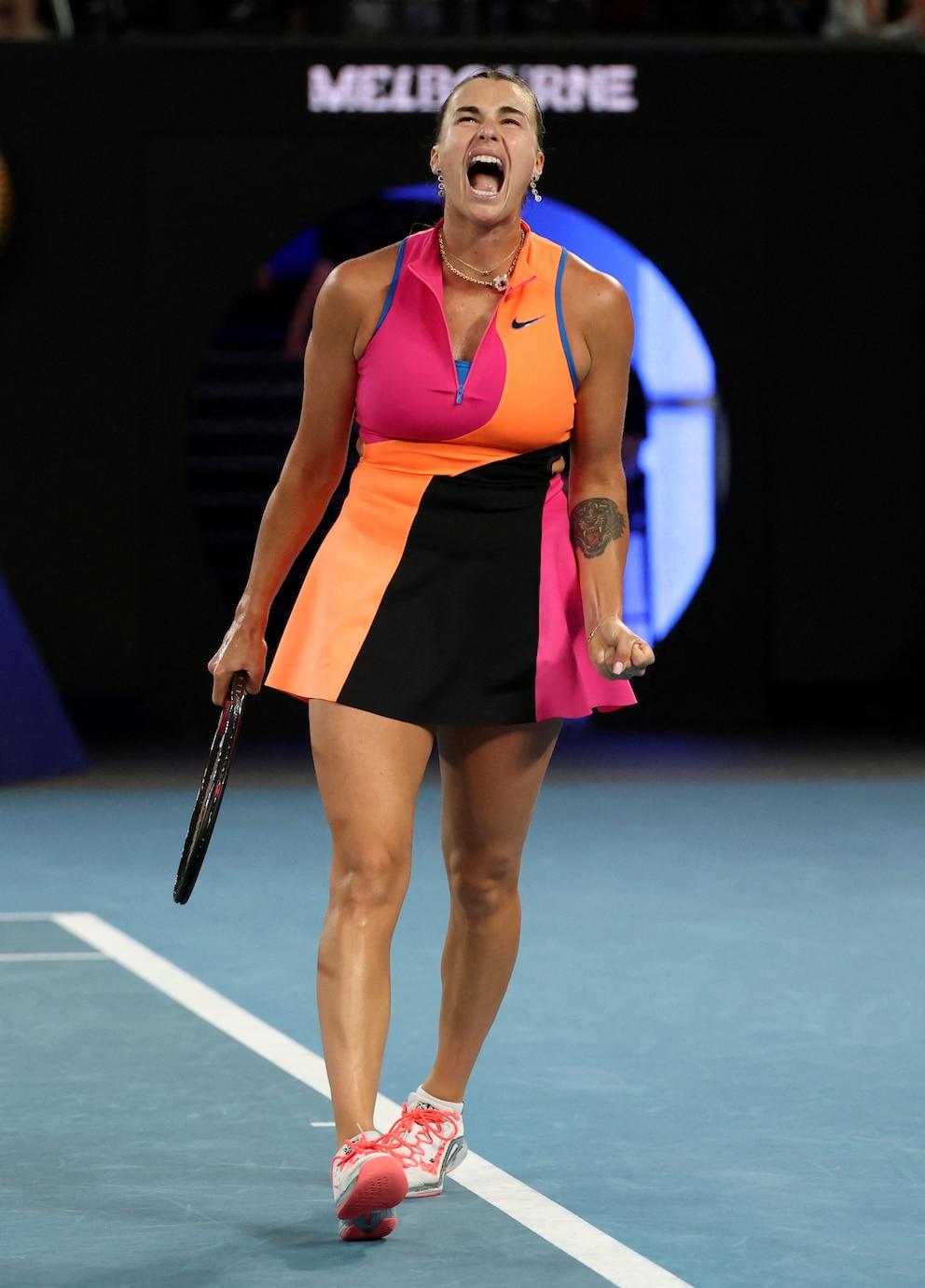
Although she had a 15-0 advantage after this sanction, Svitolina could not hold her serve in this game and began the decline in the first set that ended with another break to lose it 6-2.Although she began by breaking Sabalenka’s serve for the only time at the start of the second set, the Belarusian recovered and broke the Ukrainian’s serve twice throughout the second set to finally take the match 6-3.The detail?Svitolina did not greet Sabalenka online, as has been repeated since the war between Russia and Ukraine.
“I don’t focus on that. She’s been doing it for so long that, well, it’s nothing… it’s her decision, and I respect it. I say it now and in the interview on the court, and I think she knows that I respect her as a player. I know that she respects me as a player. That’s all that matters to me. About the lack of handshake, it’s her decision. I respect her. I didn’t say anything to her after the match point. I just said thank you to the referee, and that was all,” Sabalenka said about thistheme.
Svitolina, 31, is ranked 12th in the WTA, but she became number 3 in the world and has accumulated 19 titles in her professional career: she lost for the sixth time to Sabalenka in a history that barely includes one victory for the Ukrainian.
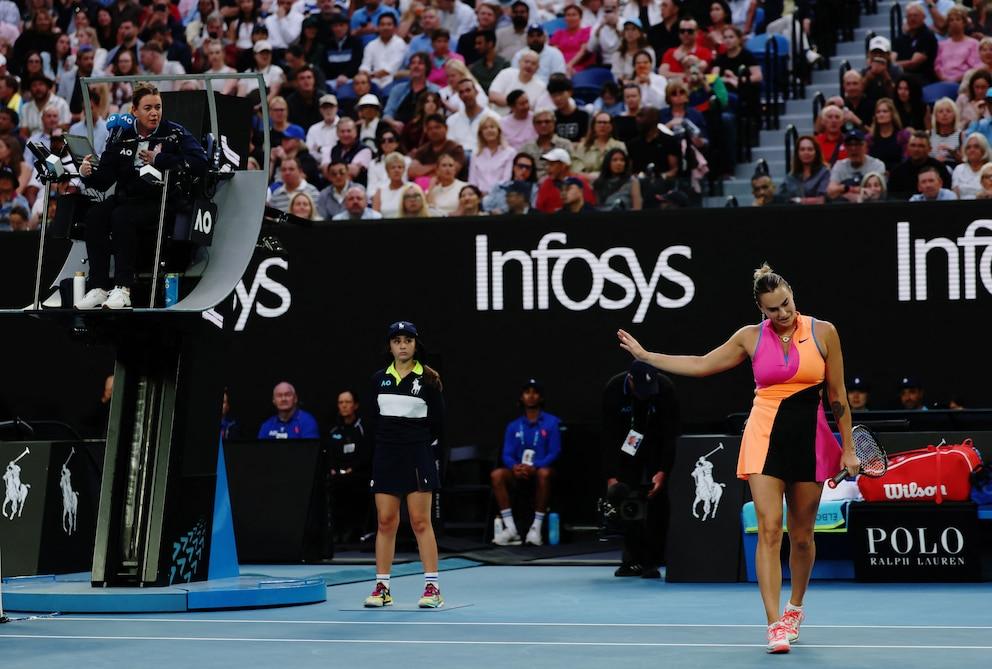
Aryna, who will compete in the grand final against the Russian Elena Rybakina (26 years old and 5th in the world), is the undisputed world number 1 at 27 years old.He has 22 trophies in his cabinets: four are Grand Slams that he won with two Australian Opens (2023 and 2024) and two other US Opens (2024 and 2025).
Sabalenka, who beat Ribakina in the 2023 final of this tournament, has just lost the definition of the first Grand Slam of the season against the American Madison Keys in 2024.

