


The beginning of the fourth phase of the economic program showed positive results with the Central Bank of the Argentine Republic (BCRA) accumulating purchases of more than USD 1.4 billion in 24 days and a decrease in official quotes, which reduced the gap with financial dollars.However, in this context, a “mini-stock” established by the Government remains in force, the validity of which is questioned by companies, amid the uncertainty about the duration of the current financial scenario.
Prior to the legislative elections, when the difference between the price of the official dollar and the financial ones (MEP and Cash with Settlement abroad, -CCL-) increased, the BCRA implemented a cross restriction to prevent arbitrage operations that allowed profits to be obtained.
Through Communication 8336, it was established that those who access the official dollar are disqualified from operating in the financial markets (MEP and CCL) for the following 90 days.Initially, the measure was applied to executives in the banking sector and was later extended to all human beings.
“The resident human person who buys the official dollar must commit not to make, directly, indirectly or on behalf and order of third parties, purchases of securities with settlement in foreign currency from the moment of acquisition and for the subsequent 90 calendar days,” they explained to Infobae from an important financial services company.
The only exception contemplates the purchase of securities with settlement in foreign currency based on the primary subscription of debt securities issued by residents in foreign currency, provided that the buyer keeps them in the portfolio for at least 15 business days.
The purchase of securities with settlement in foreign currency is also permitted within the framework of the reinvestment of charges in that currency corresponding to capital services and/or interest on securities issued by the National Treasury or the BCRA, within 15 business days.
“The cross restriction was a temporary measure that, after the elections, lost meaning,” Gonzalo Guiraldes, partner and economist at the consulting firm Audemus, told Infobae.He considers that, in the event that the Government decides to move forward with exchange rate flexibility, it would be pertinent to begin eliminating restrictions for companies.
Currently, the exchange market shows that the prices of the wholesale, retail, MEP and CCL dollars remain with minimal differences between them.In this context, analysts maintain that the continuity of the cross restriction seems less and less justified, unless the economic team projects another behavior for the official dollar with respect to the alternatives in the coming months.
When consulted by Infobae, BCRA sources assured that – until now – the possibility of lifting the cross restriction for human beings is not contemplated.
Discontent persists among market operators after the announcement that the 2025 dividends were released from the stocks, since in practice this is not fulfilled.“It depends on whether the shareholder is foreign or local and also on their participation in the company,” an important director of unaALyC told Infobae in off the record.
If the shareholder who receives dividends resorts to the market to obtain dollars through cash settlement (CCL), it interferes with the functioning of the Free Exchange Market.The same thing happens if you purchase bonds in dollars and then transfer them.“You can buy dollars at the Central Bank and transfer them abroad through your bank,” said the expert.However, he warned that this operation is complex due to the difficulties faced by clients.

When the shareholder has a bank account abroad, the bank in Argentina usually imposes obstacles to make the transfer, according to sources consulted.“The account officer refers the procedure to the foreign trade department, where they rarely respond by email, and less frequently in person or by telephone, which leads many to give up,” exemplified the informant.
There are alternatives, such as the purchase of negotiable obligations (ON) that can be purchased in the local market and allow payment in cable dollars, thus avoiding affecting the Free Exchange Market.
Although some shareholders choose to “break” the market because, although the gap is low with the MEP, it is greater with Cash with Settlement abroad.
“In a context where all companies pay attention to margins, every penny counts,” an operator told this medium.
For the short term, there is no optimism regarding the possibility of these restrictions being lifted, especially when Argentina could not meet the reserve accumulation goal set with the International Monetary Fund (IMF) of USD -2.6 billion by December 2025.
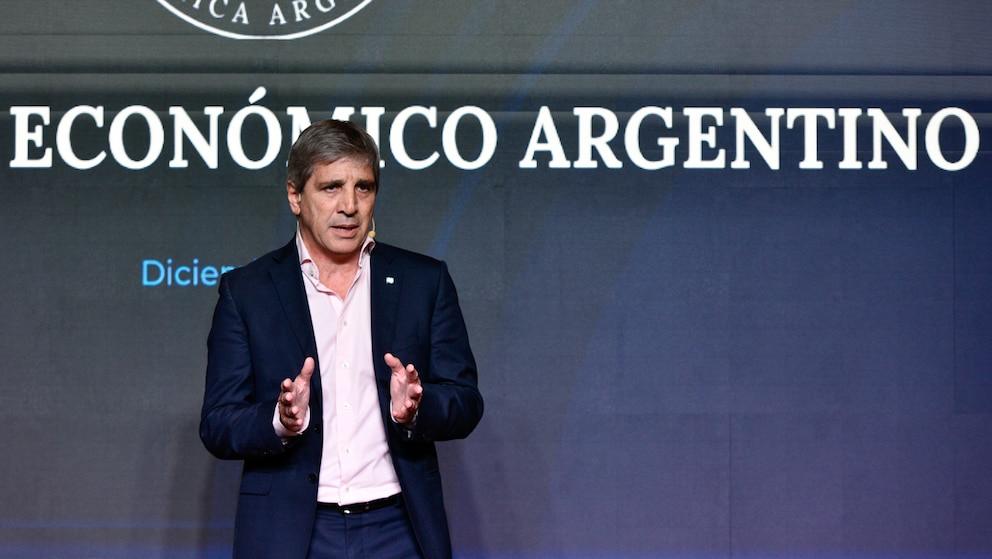
“Perhaps towards the second semester it could be more likely to occur,” said Minister Luis Caputo this week in interviews with television and radio media.

