


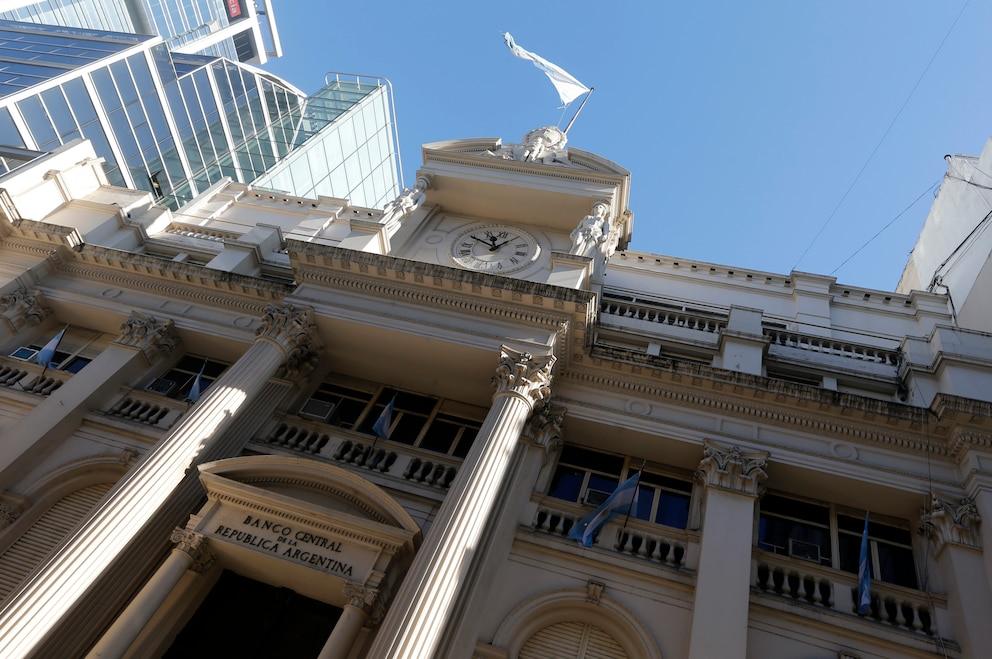
%20annual%20inflation%20of%202025%20(31.5%)%20confirm%C3%B3%20a%20strong%20deceleration%C3%B3n%20compared to%20a%20the%20a%C3%B1expectedos,%20but%20a%20monitoring%20of%20the%20prices%20in%20the%20month%20to%20month%20exhibits%20a%20bullish trend%20between%20june%20and%20decemberbre%20del%20a%C3%B1o%20past.%20Sec%C3%BAn%20a%20an%C3%A1lysis%20performed%20by%20Bank%20Central%20of%20la%20Rep%C3%BAblica%20Argentina%20(BCRA),%20the%20process%20of%20disinflation%C3%B3nface%C3%A1%20some%20%E2%80%9Risks%E2%80%9D%20in%20the%20beginning%20of%202026.
Specifically, in its latest monetary policy report, the BCRA indicated that the process of lowering inflation could go through challenges linked to seasonal factors, corrections of regulated prices and the updating of the methodology for measuring the Consumer Price Index (CPI) of the National Institute of Statistics and Censuses (Indec).
One of the risks identified by the Central Bank is linked to the seasonality of the meat category.According to the report, “the seasonality of the Meat and derivatives group in the November-March period may affect the Core category of the CPI.”This component, which excludes regulated and seasonal prices, is closely followed by the monetary authority as an indicator of underlying inflationary dynamics.

In addition, the BCRA warned that March is usually a month with significant increases in other specific items.In particular, he pointed out that “in March the increases in the Education (Regulated) group and in Clothing (Seasonal) tend to have a significant impact.”In the case of clothing, the organization explained that these movements are “associated with the change of season for clothing.”
Another of the transitory risks mentioned in the report is related to regulated prices, especially in the energy sector.The Central Bank indicated that “a second transitory risk is the planned correction in residential electricity and gas rates due to the readjustment of the subsidy scheme, with an impact on the Regulated category.”
This type of adjustments, according to the monetary authority, could generate additional pressures on inflation in the short term, although of a limited nature in time.Furthermore, the organization stressed that these effects would not respond to a change in the underlying trend of the disinflationary process, but rather to specific modifications in administered prices.

The report also focused on the impact that updating the CPI basket could have.The Central Bank maintained that “the magnitude of these transitory impacts on inflation will also be affected by the weights of the consumption basket of the new CPI announced by Indec.”
In this sense, the entity recognized that the methodological change introduces an additional factor of uncertainty in the interpretation of the inflationary records for the first months of 2026, since the new weights can modify the relative weight of each item in the general index.
Beyond the risks identified for the first quarter, the Central Bank anticipated that, once these pressures were overcome, inflation would resume its downward path.According to the report, “once the temporary pressures have been overcome and the methodological changes of the CPI update internalized, inflation is expected to deepen its downward trend.”
The BCRA highlighted that signs are already being observed in that direction.In particular, he pointed out that “high-frequency inflation indicators linked to the food sector and monitored by the BCRA already show during the first weeks of January a moderation of price pressures on products that are not subject to seasonality factors.”
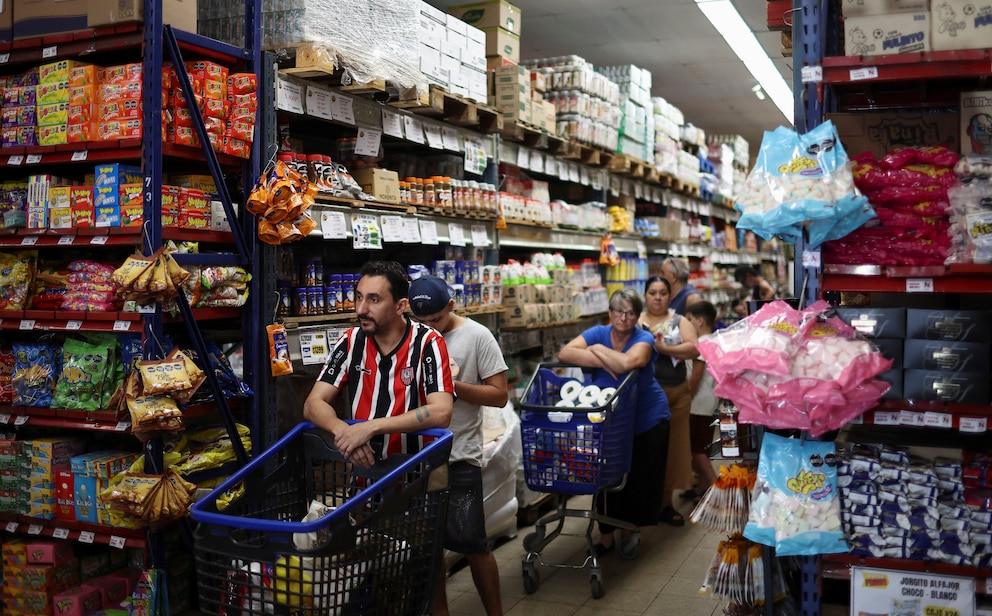
According to the official analysis, several elements could contribute to the reduction of inflation throughout 2026. Among them, the Central Bank mentioned “the maintenance of the contractionary bias of monetary policy, the greater expected exchange rate stability and a reduction in inflationary inertia.”
At that point, the agency explained that the slowdown in inflationary inertia is reflected, for example, in wage agreements, and that these factors “may have a special impact on the trajectory of inflation in the second quarter.”
In this way, the BCRA proposed a scenario in which the first months of 2026 could show variations conditioned by specific and methodological factors, but in which the underlying trend would continue to be oriented toward a slowdown in prices as the year progresses.
The%20Survey%20of%20Expectations%20of%20Market%20(REM)%20which%20prepares%20monthly%20bytheBCRA,%20shows%20coherence%20with%20the%20escenario%20expected%20by%20the%20own%20monetaryauthority.%20Sec%C3%BAn%20the%20%C3%Bultimate%20publication%C3%B3n,%20the%20specialists%20consults%20anticipate%20inflation%C3%B3n%20be%C3%A1%20of%202%%20in%20January,%20of%201.8%%20in%20February%20and%20of%201.9%%20in%20March.This%20confirms%20that%20there%20expectations%20of%20slowdown%20of%20the%20rate%20of%20prices, although%20with%20some%20ups and downs.
For%20m%C3%A1s%20forward,%20the%20experts%20consulted%20in%20the%20REM%20estimate%20that%20the%20IPC%20be%C3%A1%20of 1.7%%20in%20April,%20of%201.6%%20in%20May%20and%20of%201.5%%20in%20June.
For%20your%20part,%20some%20%20private%20consultants%20have%20shared%20pron%C3%bastic%20some%20less optimistic%20for%20the%20first%20month%20of%20a%C3%B1o.%20%E2%80%9CThe%20expectations%20of%20inflation%C3%B3n%20for%20January%20maintain%20dispersed%20in%20around%20to%202,3%%E2%80%9D,%20featured%20in%20a%20report%20from%20Adcap%20thatreconstructs%20the%20%C3%BAlatest%20publications%20from%20the%20consultants%20Analytica%20(2.5%),%20EcoGo%20(2.3%),%20Balance%20(2.3%),%20FMyA%20(2.1%),%20Alphacast%20(2.2%)%20y%20Freedom%20y%20Progress(2.6%).

