


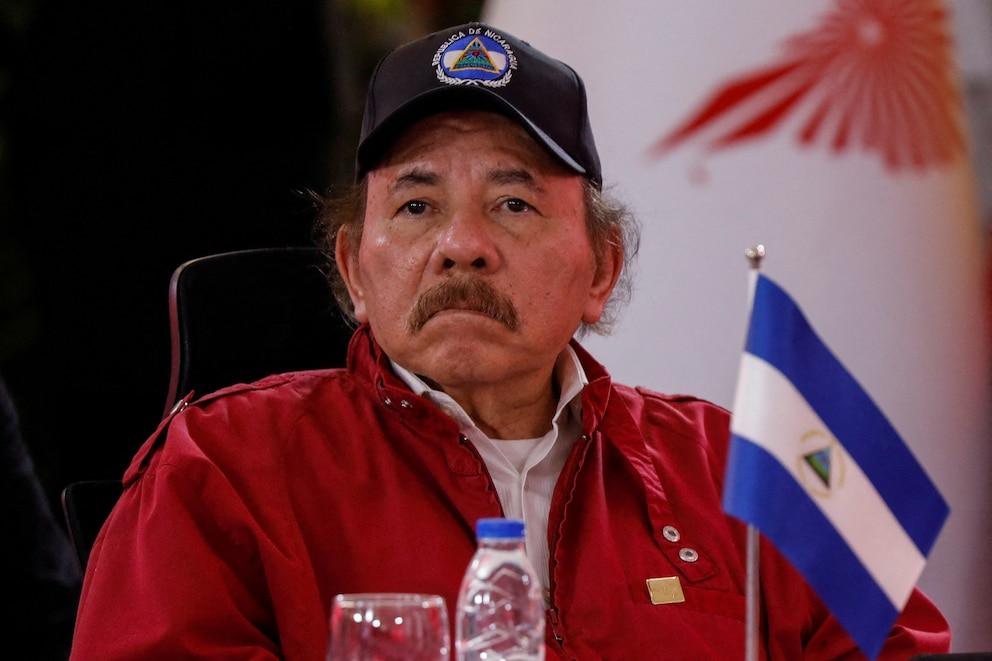
The Ministry of Foreign Affairs has ordered the expulsion of the Nicaraguan ambassador in Madrid, Mauricio Carlo Gelli, and another diplomat accredited to the Embassy.As sources from the ministry led by JoséManuel Albares confirm to Infobae, the expulsion, which was ordered this Sunday, has been decreed “in strict reciprocity in the face of the unjust expulsion of the ambassador and the second chief of staff of Spain in Nicaragua”, Sergio Farré Salvá, ordered by the dictatorship of Daniel Ortega.“The Government of Spain will continue working to have the best relations with the brotherly people of Nicaragua,” the same sources limit themselves to saying.
Foreign Affairs has not offered more details about the decision made by the Ortega regime, whose re-election in November 2021 was not recognized by the Spanish Government.Farré, a career diplomat since 2005, was appointed to the Council of Ministers on December 2 and was welcomed on the 13th of the same month.
In fact, the Spanish Foreign Service congratulated the appointment on its social networks, highlighting that 2026 marks 175 years since the establishment of diplomatic relations between Spain and Nicaragua.
But this incident, however, is not the only chapter in the crisis in relations between Madrid and Managua.In August 2021, with Albares having just arrived at Foreign Affairs, the ambassador in Managua, María del MarFernández-Palacios, was called for consultations, following a statement from the Nicaraguan Foreign Ministry in which interference on the part of Spain was denounced and the GAL or Catalonia were used to criticize the Government.
Last 2022, Nicaragua removed the diplomat, Carlos Midence, from his duties in Madrid.In a statement collected by the EFE agency, the Nicaraguan Ministry of Foreign Affairs defended its decision in response to “the continuous pressures and interference threats against our ambassador, which make the exercise of diplomatic work impossible.”
It should be remembered that the expulsion occurs in the midst of the crisis in Venezuela after the capture of the regime’s leader, Nicolás Maduro, who is one of Ortega’s closest allies.
The European Union (EU) also does not recognize the legitimacy of the Sadinist leader, who has remained in power since 2007 after recent elections “without democratic guarantees.”The last elections were held by force of repression, persecution and censorship, and with seven opposition presidential candidates imprisoned.In fact, last September, the Twenty-Seven bloc agreed to maintain sanctions against Nicaragua for democratic deterioration and systematic rights abuses dating back to the 2018 opposition protests.
The restrictive measures affect a total of 21 people and three entities, including Rosario Murillo, vice president of Nicaragua and Ortega’s wife, and the couple’s closest circle including their children, family members and advisors. The blacklist also extends to police officers accused of repressing civil society and the democratic opposition in Nicaragua through excessive use of force, arrests and torture.

