


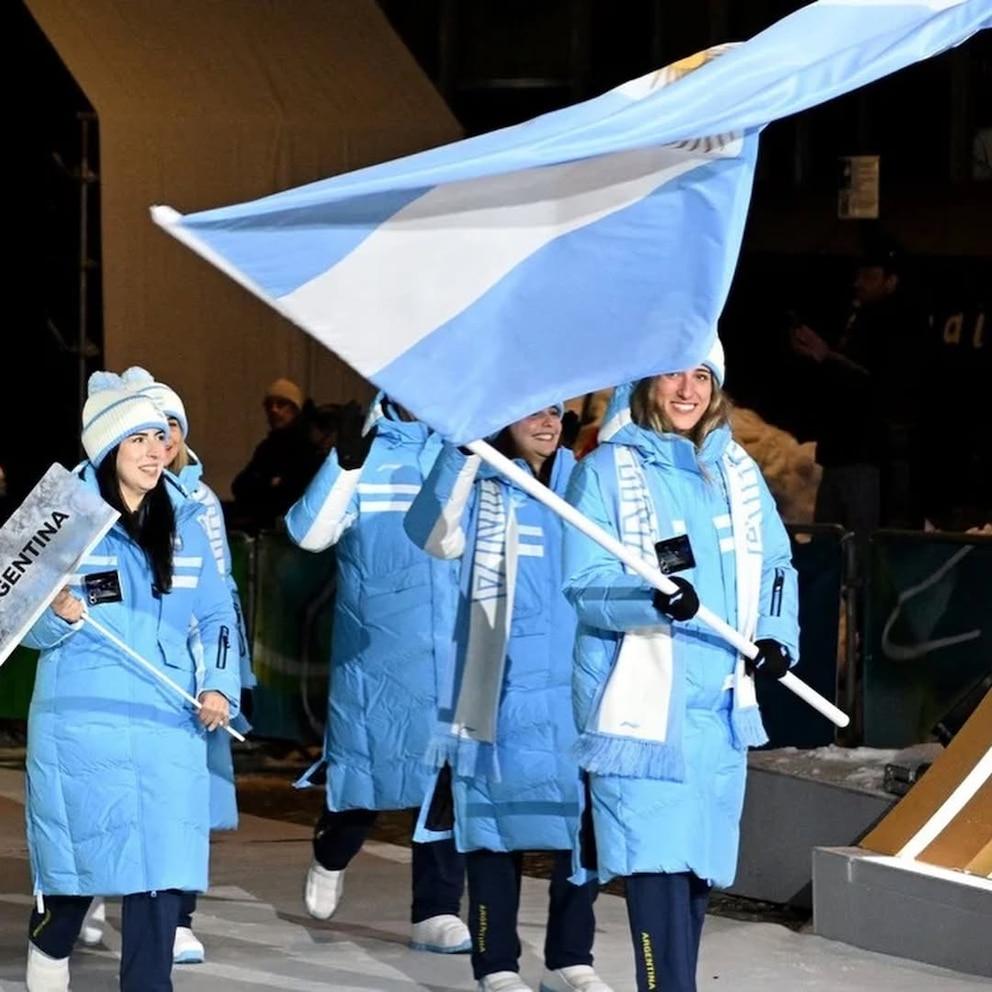
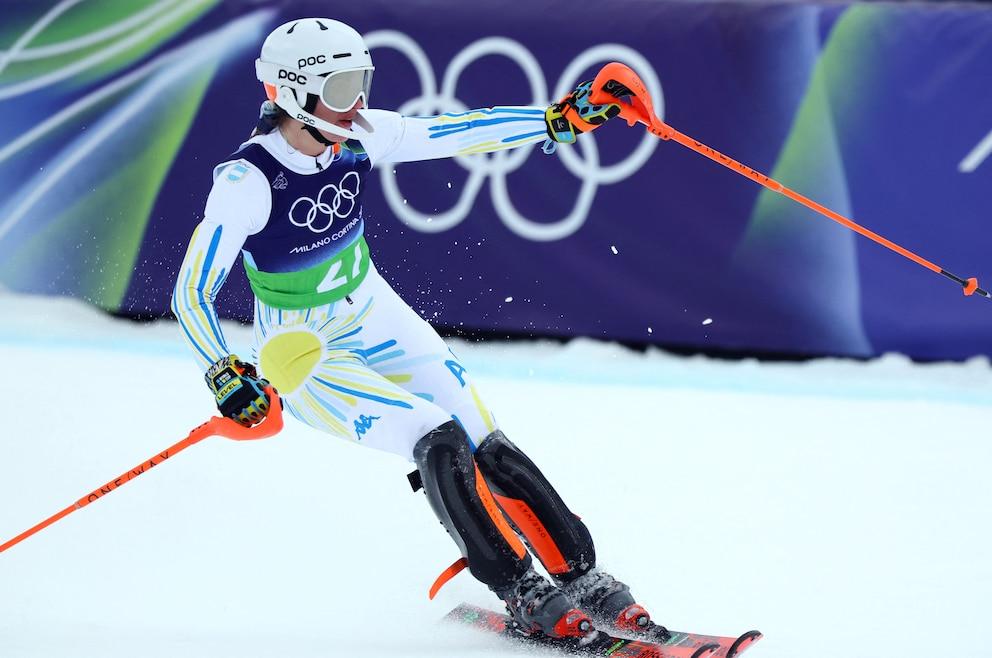
Who would have imagined that that girl from San Carlos de Bariloche who put on skis for the first time when she was two years old was going to make history for Argentine winter sports at the Milano-Cortina 2026 Winter Olympic Games. Francesca Baruzzi, who again carried the flag in the opening ceremony as well as in the event in Beijing 2022, achieved a creditable 17th place (she was 11th in her series) withNicole Begué in the combined alpine skiing test, the best result in the discipline.
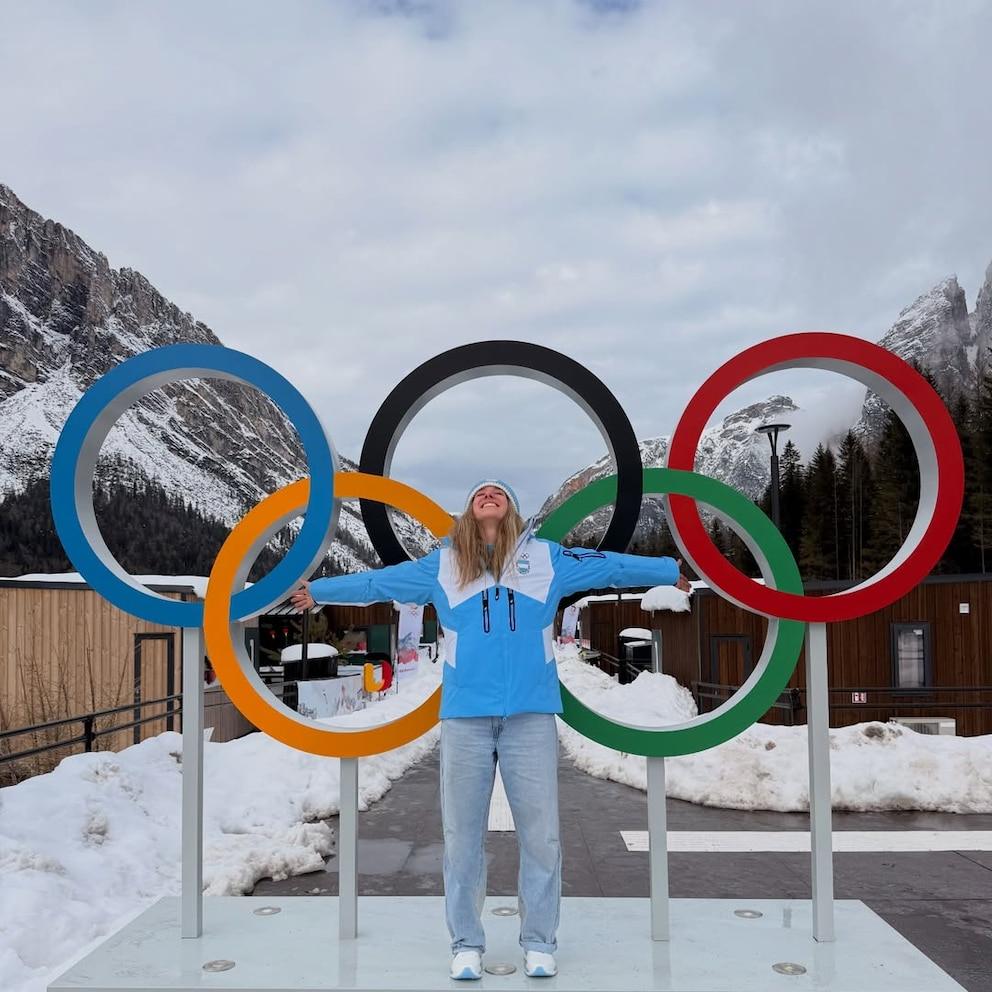
The action has already begun in the multiple venues of the first Winter Olympic edition that takes place in more than one city.And there are eight Argentine representatives. Among them, there is Francesca, who spoke with Infobae with the happiness of once again being chosen to wear the best colors in the world at the inauguration, but she also took the opportunity to tell those who do not know about snow sports, that our athletes seek to create culture so that every day there are more fans of disciplines that, for cultural reasons, do not have the necessary space to grow even more than what they have been doing cycle after cycle on their way to the Olympic Games.
“In addition to my personal goal of results, my goal is also to make the sport known, so that more and more kids practice winter sports. Also taking advantage of what you said, in our country we have a giant mountain range. I don’t want to sell Argentina more than what they already sell it, but with the best mountains that can be seen, I tell you that I have seen mountains in all the countries of the world, I tell you that the mountains of Argentina are the best. I want to contribute to a winter revolution,” he reflects.
But in addition to putting Argentina on the map of the Olympic world, this 27-year-old young woman opened the door of her life to us.About his effort to qualify for his second Games, or what he did to recover from three serious injuries that put his career in check and what it’s like to feel almost like a Formula 1 driver racing on ice.”My sport is about speed, adrenaline and emotion, which consists of making a circuit down the mountain as quickly as possible. The heats last around a minute, minute and a half, so it is a speed sport and we reach between 120 or 130 kilometers per hour. You memorize each curve, you know how many curves there are, generally between 50 and 60 and you have to memorize each one. Think about how fast you are going to go through that curve, because”Slowing down and seeing it is not the same as understanding that you are going to pass by at 80 or 100 kilometers per hour. In other words, you have to do a lot of visualization. In that sense, it is very similar to F1,” he said from his space in the Olympic Village of Cortinad’Ampezzo, the picturesque city that is one of the competition spaces in the middle of the Dolomite Alps.
“I feel that after all those thoughts of doubts due to the injuries, I got here today, that is, I was able to overcome it, improve beyond the injuries and reach a higher level than I was before I was injured. I feel that it is like a confirmation that if you try and with resilience, everything comes,” said Fran, who already in his first outing on a circuit that he knows only an hour before going out on the track, achieved an incredible result.One as great as its history of improvement and in which it continues to seek to leave the Argentine mark in every place where its skis pass at high speed.
– What does it mean for you to continue being an Olympic athlete after your debut at the Lillehammer Games in 2016?
– Yes, the truth is that I think I have grown a lot, in addition to my age, in these last 10 years of experience, of knowing what the Olympic Games really mean, the values, I feel that I have grown a lot in that sense.That every time I participated in the Games it was like an experience that I took with me, that it was a learning experience.And I feel that at this point in my career I come with a lot of experience in every sense, like being calm with all the work I did to get here, knowing how to handle myself in every way, how to handle myself with the media, how to handle myself in the Village, how to handle myself in the races, how to handle myself with other athletes.I feel that all of this is gained with experience and yes, in my first youth game, I was not competing with such top athletes, because in the end we are still youth, but four years ago in Beijing, everything made me nervous because I was competing with my idols and I said: “No, no, what am I doing here?”And suddenly now I arrive with another mentality, with a mentality of: “They are not just my idols, I mean, yes, I admire them all, but they are my rivals in the end and I feel in the same position as them.”So, I feel that I arrive there with more imprint on these Games.
– Since there is not much tradition of winter sports in Argentina, you and the rest of the athletes in the delegation have to take advantage of these opportunities to raise awareness, so that winter sports in our country can develop more, right?
– Yes, exactly.In addition to my personal goal of results, my goal is also to make the sport known, so that more and more kids practice winter sports.Also taking advantage of what you said, in our country we have a giant mountain range.I don’t want to sell Argentina more than they already sell it, but with the best mountains that can be seen, I tell you, I have seen mountains in all the countries of the world, I tell you that the mountains of Argentina are the best.I kind of have that as a long-term goal, also to be able to continue, once I retire, to be able to continue adding to this winter revolution, to continue adding kids and to continue adding people who watch winter sports, who understand winter sports, who understand that we have winter representatives.And with that everything else also grows.If it is attractive to the public, you will also get more sponsors, you will get more support.With that support you can develop more.You can create a generation of kids with a clear line of support so they can reach the top, as happens in developed countries in winter sports, like Austria and Italy, which have 150 million children skiing.That’s like a dream I have, which is obviously difficult, especially in a country like Argentina, so variable and so complicated in so many ways.But hey, whenever I can add my grain of sand to make that happen, I do it, whether by sharing on networks or giving notes so that people understand a little bit what it’s about.
– When you started skiing in Bariloche, your parents and family were fundamental for you to be where you are today. What is your situation today regarding being able to make a living from your career?It is a good way to tell people the task you have to do to have become a professional.
– Difícil (risas).It’s not difficult, but it’s like sometimes you forget where you started and where you are now.Sometimes it happens to me that I take for granted everything I have and everything I did to get to where I am, really.Note, I am going to lie and tell you that it is a cheap sport, because it is not, because there is a lot of investment behind it, especially in the first years.I mean, yes, obviously now I have sponsors, with brands that help me with clothing, skis, material, everything, but it is still an expensive sport.And the entire process prior to getting to where I am was an investment.But now I look at it and say “well, it was worth all that investment, both monetary and time. A lot of time, a lot of time away from my house, a lot of time away from my family, my friends, alone, going around the world, which sounds divine, but in the end, I tell you that being away for eight months with a suitcase on top of a van… It’s not like being on vacation either. The truth is that if I look at it now I say “yes, it was worth it”, especially having the privilege of representing Argentina inOlympic Games and being the flag bearer as well.
-How did you manage to qualify for your second Olympic Games after its debut in 2022?
– We started preparing for these Games two years ago with the 2024 South American season. So that the public understands, skiing is practically based on three very important components, which are technique, physical and mental.I know that all sports are based on these three components, but I say this to link the parameters of preparation.As for the technical, we have been working like this for two years on small details to be in the best technical position for these Games, in fact, for the season, because not many things can be varied in the European season in terms of technique.So we started working to get the points for the classification.In the case of alpine skiing, you have to be within the best 40° in the world to have your own quota, which was what I was aiming for.This way we could have two places and be able to run the team combined.The physical aspect, on the other hand, I have been working on for almost 10 years, in which I try to maintain all the components: be strong, but we also need a lot of reactivity and a lot of power in our sport.So, don’t go too far with force, as focused.And the mental thing, well, working in races, in the World Cup, trying to be mentally prepared for each race, reaching the right point of performance.In other words, to perform as well as possible in each race to be sure of the mentality I want to have in the Games.We work from July to September throughout the winter season of South America, in Ushuaia and Chile, which are places with very good conditions to train and also to do the South American tour competitions, which are necessary to add these points for the classification.Starting in October, the North American tour begins in the northern hemisphere, which is Europe and the United States.There we started running the World Cup to achieve this feeling of strong mentality and performance in the race.So since October I’ve been racing almost every weekend.
– What does any Argentine who doesn’t know your sport have to know about what it’s like to be a participant in alpine skiing?
– My sport is a sport of speed, adrenaline and emotion that consists of making a circuit down the mountain as quickly as possible.The heats last around a minute, minute and a half, so it is a speed sport and we reach between 120 or 130 kilometers per hour.It’s a skiing sprint.
– What does it feel like when you are at such speed on skis?
– From the outside it looks much worse than it feels from the inside.Let’s see, I’ve been skiing for 25 years.I mean, I’m very much in my comfort zone, but I feel that at that speed it’s like you reach a point where everything comes to you in slow motion, like you’re immersed in the moment and in the concentration of the race, which is like time stops and you see everything in slow motion, even if you’re going 100 kilometers per hour.Then I start to think… In the car going 120, guy making sharp turns like that, I say: “No” (laughs).
– You wouldn’t do it, would you?
– I imagine myself on a road in Bariloche, with the curves it has, going up to Cerro Catedral, going at 120 kilometers per hour.And I say: “No, no, well.”I’m kind of ready to slow down.But I know that from the outside it looks much more adrenaline-inducing.Surely someone who is not used to skiing at that speed, going at that speed, feels it going fast.But nothing, I feel like that, like the gate opens, which is the start, and time stops.And I have a lot of time to think about what I have to do and to choose the fastest lines.
– What is it like knowing the circuit where you are going to run shortly before going out into the snow?
– In alpine skiing, what is special about the circuit is marked the day before.In other words, you don’t know the circuit you’re going to have until the morning of the race.On the morning of the race they give you an hour to recognize that circuit.That is, you are going down, skiing slowly, you cannot go fast, only braking to recognize and look closely at the tightest curves.And at half an hour long.But yes, in this case I know the track because I did the world championship in 2021 on the same track, so I have the experience of how they made the layout.What’s more, it’s going to be injected, which is watered with ice, that is, with water so that it freezes, like pure ice, which is what I like the most, so good.
– How much does knowing that you are going to encounter a circuit that you may not know and have so much time to learn influence your preparation before and before the race?
– In all races the same thing happens, that they give you this time to recognize the circuit and what you have to do is memorize it as if your life depended on it.That is, you memorize each curve, you know how many curves there are, generally between 50 and 60 curves and you have to memorize each one.Think about how fast you are going to go through that curve, because braking and seeing it is not the same as understanding that you are going to go through there at 80 or 100 kilometers per hour.In other words, you have to do a lot of visualization.In that sense, I feel that it is very similar to Formula 1, that they visualize the race circuit, like they know the curve, they know when they enter, when they leave, like you have the circuit recorded in your head.
– It’s all very technical.I imagine then that visualization is key to being able to face a competition in extreme conditions and at high speed where you give your body away.
– Yes, obviously.In the end, our technique training, which is what we do every day, we also deal with doing that visualization part.That is, I simulate the same thing as in the race, I go like this, recognizing little by little, memorizing the route to also train my mind to remember that, because in the end it is not so easy to remember what the 60 curves are like, to say siesta is longer, this one is shorter, this one is three meters, this one is 12 meters, you have to train that part of your memory as well.
– No athlete is immune to suffering injuries, but it was a fairly complicated stage for you in which you suffered several complications.How did you go through that stage and do you manage the value of staying healthy to continue competing?
– Yes, the truth is that it is a sport where injuries are quite normal.I tell you that within the World Cup circuit, which is the 60 best, there is no one who is safe from having had an injury at some point in their career.So it is a sport that is quite harmful to the body.Personally, yes, I had three cruciate ligament tears in a period of four years.So it was quite a lot… On top of that, it is an injury that takes a long time to recover from.It’s 10 months of recovery.So I feel that arriving is a reward for that resilience. I had the peace of mind to think that everything was going to turn out well, that I was going to be able to overcome the injuries and be able to ski again as I skied before, without fear, without being able to push my body to the limit once.After having had knee surgery three times, I feel that it is like a reward to be here now.After having so many doubts along the way of saying: “Hey, and if I don’t recover well, is it worth it to keep trying and is it worth exposing my body to this again?” Like in the end, if you start thinking about the long term, you also say: “I’m putting my body that once my sports career ends I’m going to have to continue with the same body, it’s not that I change my body, that’s it, I start over.”It’s the same thing, that in the end, high-performance sports, I think all high-performance sports, it’s not that I tell you “it’s great for your health.” So nothing, I feel that after all that and after all those thoughts of doubts, getting here today is saying that I was able to overcome it, improve beyond the injuries and reach a higher level than you were before I was injured. I feel that it is like a confirmation that if you try and with resilience, everything comes.
– What are you going to look for in these Milano-Cortina Games?
– As for realistic results, I am going to look for a top 15 or an Olympic diploma in the race on February 15, which is the giant slalom event.It’s my strong point, so I’m putting all the focus there.But obviously one always dreams of more, I always dream of a medal.Do I see it realistic?No, but in the end one has to dream.If I can’t dream it, I’m probably not going to do it, so we have to aim high.And nothing, then also to enjoy these Games that in the end I look at them and say: “It’s just another race. Yes, but they are an Olympic Games and you have to enjoy it. Luckily I have a few days without competitions. Anyway, you don’t go to the Olympic Games every year, nor ever in your life, either. So you have to enjoy it too. It’s part of that reward that I told you and to give it your all, but also to enjoy the moment.
– How much did you enjoy carrying the Argentine flag again at the opening?
– I really wanted to do it in San Siro, because it is an emblem of Milan, but I had to be in Cortina doing the parade, because it is the second venue and since I am there in the Villa, I play there, but it was incredible to feel that again.I swear that the feeling I had when I entered Beijing with the flag was a feeling of fulfillment so great that I had never felt in my life, and I was eager to repeat it.
*Video editing: Sol Rossi

