


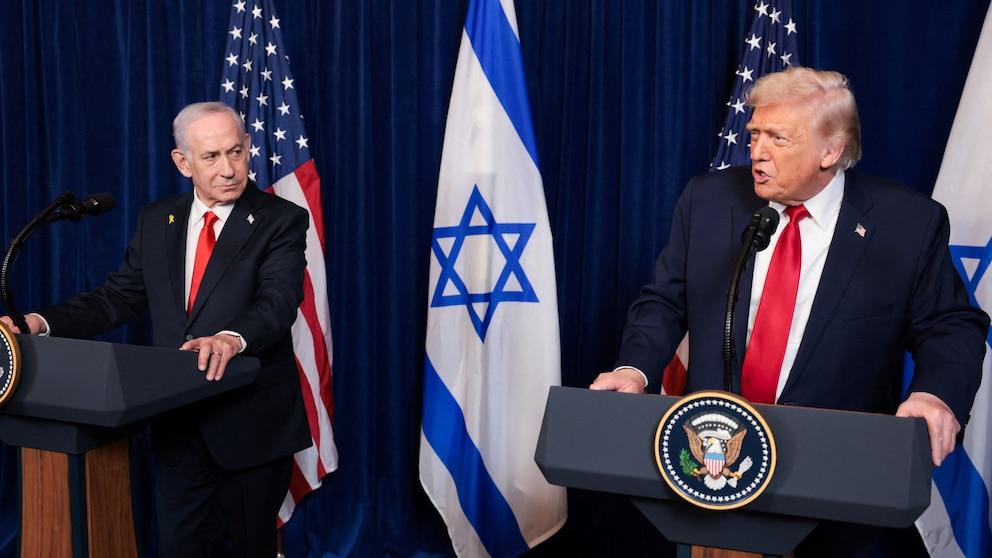
Israeli Prime Minister Benjamin Netanyahu will meet with US President Donald Trump on Wednesday in Washington to discuss the status of nuclear negotiations with Iran.The meeting will focus on discussing the limitation of the Iranian nuclear program, control over ballistic missiles and the end of Tehran’s support for armed groups in the region.
The premier “believes that any negotiations must include limitations on ballistic missiles and the cessation of support for the Iranian axis,” his office said in a statement released this Saturday.
This position was already conveyed to the special envoy for the Middle East, Steve Witkoff, during meetings held this week.
On the Iranian side, the regime’s Foreign Minister, Abbas Araqchi, has reiterated that nuclear development constitutes an “inalienable right” for his country.The head of Persian diplomacy emphasizes that the ballistic missile program will not be negotiated under any scenario, and that Iran’s willingness to dialogue is limited exclusively to the level of uranium enrichment.
“Zero percent enrichment is out of the scope of negotiations. The level of enrichment depends on our needs, and enriched uranium will not leave Iran,” Araqchi said in an interview with Al Jazeera in Doha, after resuming nuclear talks with the US in Muscat, Oman.
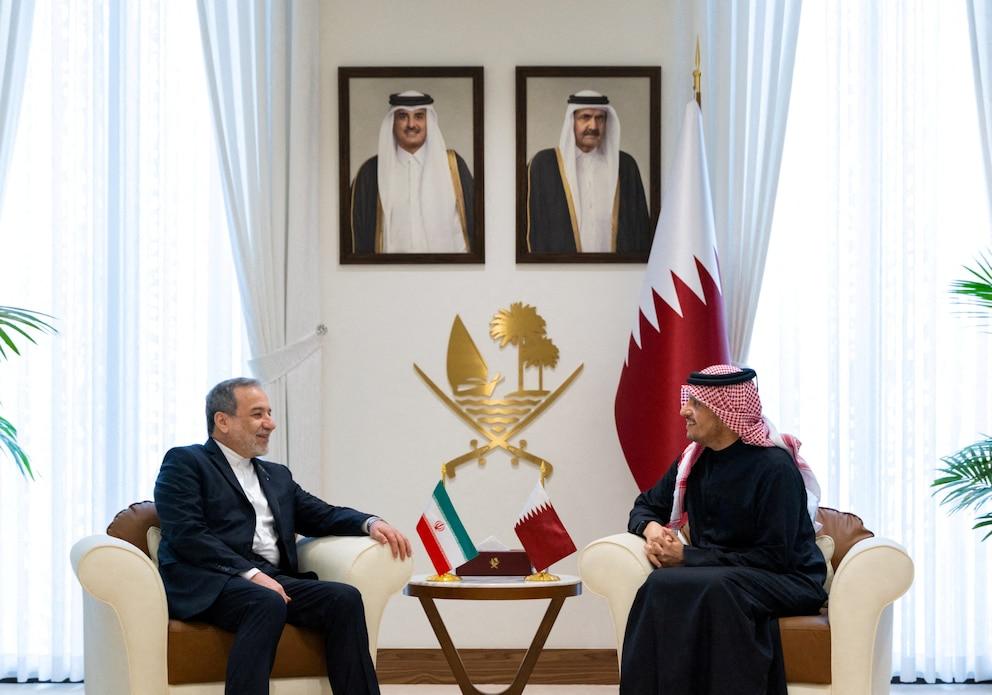
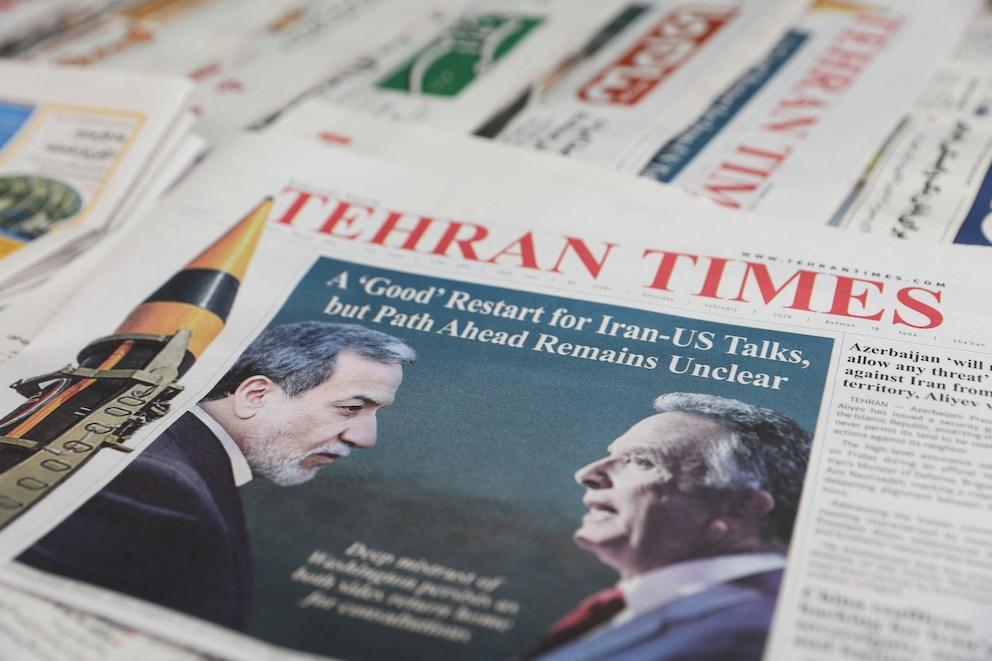
These negotiations take place in one of the most critical periods for the Islamic Republic since 1979, after recent internal protests, a serious economic crisis and severe lack of resources.Recent talks between American representatives and the Iranian delegation, held in Muscat, Oman, were conducted indirectly and revolved solely around the atomic program.
The United States has increased pressure on Iran through a combination of sanctions and military warnings.The US government has imposed restrictions on 15 entities, two individuals and 14 vessels linked to the illicit oil trade.In addition, President Trump signed an executive order that contemplates tariffs on countries that import goods or services from Iran.
In the military sphere, a dozen warships and an aircraft carrier have been deployed in the Middle East as a warning, while Trump even considered the possibility of attacking Iranian territory in response to the repression of recent protests.However, this option was ruled out due to pressure from allied countries such as Oman, Saudi Arabia and Qatar, concerned about possible retaliation from Tehran.
The Iranian regime, for its part, has warned that any US attack would provoke a direct response against military bases present in the region.This context keeps both Washington’s allies in the Gulf and Israel on alert, who perceive the Iranian advance as a threat to local strategic security.
After the last round of talks, both parties recognize that differences persist and that there is still “a long way to go to establish trust.”However, it is expected that there will be new rounds of dialogue, although a specific date has not been announced.
Meanwhile, the Iranian leadership has strictly reminded that the development and possession of ballistic missiles will remain outside the scope of any future negotiations.

