


In%20an%20interview%20exclusive%20in%20Infobae%20in%20vivo,%20Mariano%20Biocca,%20executive director%20of%20la%20C%C3%A1mara%20Argentina%20Fintech,%20soshad%20that%20the%20exclusi%C3%B3n%20of%20virtual%20wallets%20%20as an option%C3%B3n%20for%20the%20collection%20of%20salaries%20%E2%80%9Cleave%20out%20to%20la%20part%20modern%20of%20argentine%20financialsystem%E2%80%9D.%20During%20the%20debate,%20highlights%C3%B3%20that%20%E2%80%9Cel%2075%%20of%20all%20losmovimientos%20de%20monero%20digital%20en%20la%20Rep%C3%BAblica%20Argentina%20involve%20a%20una%20virtual%20en%20a%20de%20las%20tips%E2%80%9D.
In dialogue with the Infobae al Regreso team, made up of Gonzalo Aziz, Diego Iglesias, Malena de los Ríos, Matías Barbería and Mica Mendelevich, Biocca emphasized the central role that wallets occupy in everyday life: “Today everyone is using wallets. Just look at children, nephews, nephews, parents. If people have already chosen them for their daily lives, what do we base on to eliminate the possibility of someone saying ‘meCan I use a wallet to collect my salary?He stressed that the reform, as proposed, “takes away alternatives from the worker,” while those who prefer banks can continue using them.
Biocca explained that digital wallets not only facilitate payments, but also allow them to “generate credit history for millions of people who were underserved by the traditional financial system.”He remarked: “Today six million people have opened credit with a fintech company, and half had never accessed a formal one before.”According to his vision, “wallets were encouraged to lend where others did not, and that allowed many Argentines to enter the formal circuit.”
The manager described the expansion of investment accounts associated with these platforms: “Today there are 25 million investment accounts in Argentina. They have multiplied by 50 in the last seven or eight years. They are small savers who channel their money to the capital market, which ends up financing SMEs and companies.”For Biocca, this shows that “wallets have a central role in the development of credit and the formalization of the economy.”
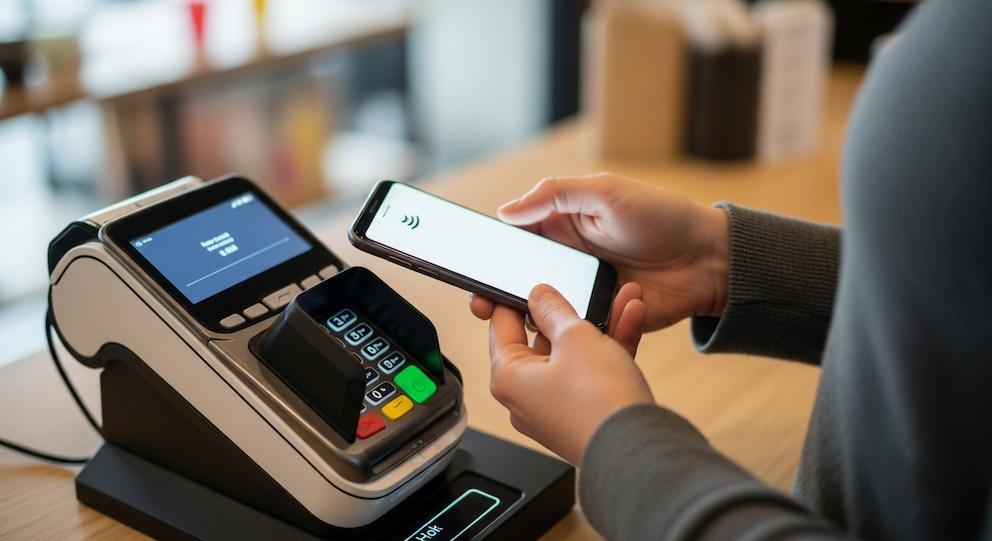
Asked by Malena de los Ríos about the controls and regulation of wallets, Biocca assured: “Digital wallets are fully regulated and supervised by the Central Bank of the Argentine Republic. They comply with the same cybersecurity standards as banks.”He stressed that “all user money is deposited in financial entities and is not used for other purposes,” thus differentiating the operation from banks, which can lend and invest their clients’ funds.
He reaffirmed that the fintech system “is functionally integrated with the banking world,” which requires maintaining “the same operating standards so as not to put the chain at risk.”For Biocca, “it is a lie that money is safer in a bank than in a wallet, because it always ends up in a regulated financial entity.”
The driver Gonzalo Aziz inquired about the political motives behind the exclusion of the wallets.Biocca considered: “There may be a reason linked to the Government’s need to seduce governors with provincial banks, which would be harmed if virtual wallets are enabled.”Even so, he questioned the approach: “Instead of generating a value proposition for the user, it is assumed that if this is opened, it is lost. And the loser ends up being the worker, who cannot freely choose where to receive his salary.”
Regarding expectations for the parliamentary debate, Biocca expressed: “Hope is the last thing that is lost. We know that it is very difficult, but we also know that the deputies are aware that wallets are already a systemic part of the daily lives of Argentines.”He insisted that “removing the wallets from article 35 of the project is taking away modernity from the Argentine labor system.”
Infobae accompanies you every day on YouTube with interviews, analysis and the most outstanding information, in a close and dynamic format.
• From 7 to 9: Infobae al Amanecer: Nacho Giron, Luciana Rubinska and Belén Escobar
• From 9 to 12: Infobae at Nine: Gonzalo Sánchez, Tatiana Schapiro, RamónIndart and Cecilia Boufflet
• From 12 to 3 p.m.: Infobae at Noon: Maru Duffard, Andrei Serbin Pont, JimenaGrandinetti, Fede Mayol and Facundo Kablan
• From 3 to 6 p.m.: Infobae in the Afternoon: Manu Jove, Maia Jastreblansky and Paula GuardiaBourdin;Marcos Shaw, Lara López Calvo and Tomás Trapé rotate during the week
• From 6 to 9 p.m.: Infobae to the Return: Gonzalo Aziz, Diego Iglesias, Malena de losRíos and Matías Barbería;Gustavo Lazzari, Martín Tetaz and MicaMendelevich rotate during the week

