


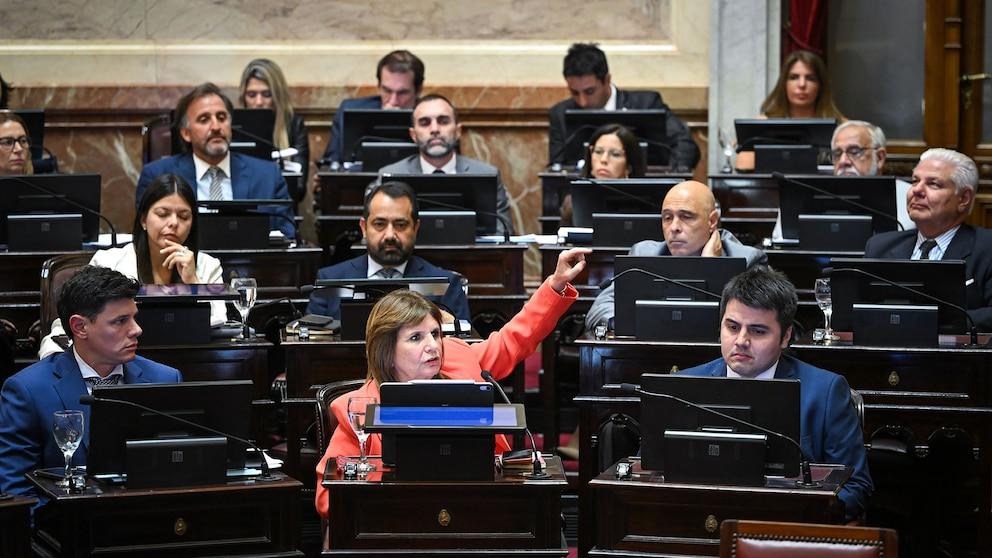
In the event that the labor reform obtains the other half-sanction of the Chamber of Deputies, the Argentine labor cost experiences a significant reduction with the Labor Assistance Fund (FAL) and the Labor Formalization Incentive Regime (RIFL) as the main axes of the new regulatory scheme.But despite this, the country will remain among those with the greatest tax pressure on formal employment.
The%20proposal%20official%20prev%C3%A9%20a%20reconfiguration%C3%B3n%20of%20the%20structure%20of%20contributions%20andcontributions%20a%20through%C3%A9s%20of%20FAL,%20intended%20to%20cover%20the%20payments%20of%20compensationand%20legal%20obligations%20of%20the%20employers%20private%20%E2%80%94excluding%20to%20workers%20not%20registered%E2%80%94,%20and%20of%20RIFL,%20who%20give%20benefits%20to%20whoislicense%20new%20relationships%20labor.%20Sec%C3%BAn%20el%20Instituto%20Argentino%20de%20An%C3%A1fiscallysis%20(IARAF),%20la%20cargo%20fiscal%20labor%20previous%20a%20la%20reforma%20ascend%C3%ADa%20al%2034,6%on%20el%20cost%20labor%20total,%20locating%20a%20la%20Argentina%20in%20the%20third%20place%20among%20pa%C3%ADses%20with%20higher%20pressure%C3%B3n,%20only%20behind%C3%A1s%20of%20Austria%20and%20France.%20The%20average%20of%20Organization%C3%B3n%20for%20the%20Cooperation%C3%B3n%20and%20the%20Development%20Econ%C3%B3mics%20(OECD)%20was%20placed in%2021.6%;
With%20the%20reform,%20the%20load%20for%20large%20companies%20in%20the%20Argentina%20remains%20at34.6%,%20but%20for%20SMEs%20low%20to%2033.3%%20and%20for%20employees%20including%20in%20the%20RIFL%20isreduced%20to%2027.8%.%20This%20adjustment%20traslada%20al%20pa%C3%ADs%20al%20fifth%20position%20for%20large companies,%20al%20s%C3%A9optimal%20for%20SMEs%20and%20al%20decimos6th%20for%20workers%20under%20elr%C3%A9gimen%20of%20incentive,%20of%20agreement%20with%20the%20report%20of%20IARAF.
The%20FAL%20must%20be%20constituted%20by%20each%20employer%20a%20through%C3%A9s%20of%20a%20account%20spec%C3%ADficatedin%20an%20authorized%20entity%20by%20the%20Commissioni%C3%B3n%20National%20of%20Values,%20in accordance with%20a%20regulations%C3%B3n%20arranged%20by%20the%20Ministry%20of%20Econom%C3%ADa.%20The%20funds%20are%20integratedwith%20contributions%20monthly%20mandatory,%20income%20from%20investments,%20voluntary contributions%20and%20other%20resources%20compatible%20with%20the%20law.%20For%20large%20companies,%20thecontributionuci%C3%B3n%20mandatory%20represents%20the%201%%20and%20for%20SMEs,%20the%202.5%%20of%20labor cost,%20although%20the%20Executive%20Power%20can%20raise%20these%20percentages.
The%20RIFL,%20in%20therefore,%20grants%20a%20reduction%C3%B3n%20relevant%20in%20employer%20loads%20during%2048%20months%20for%20employers%20who%20formalize%20workers%20previously%20notregistered%20or%20inactive%20in%20the%20formal%20sector%20for%20to%20less%20six%20months.%20Thebenefit%20is%20optional%20and%20aims%20to%20incentivar%20the%20registration%C3%B3n.%20The%20report%20oftheIARAF%20details%20what%20the%20reduction%C3%B3n%20of%20loads%20es%20particularly%20marked%20during%20thefirst%20four%20a%C3%B1os%20for%20the%20employees%20reached%20by%20the%20RIFL:%20employer%20contributions%20decrease%20from%2027%%20to%2015%,%20what%20implies%20what%20the%20loademployment%20total%20decreases%20from%2044%%20to%2032%%20on%20the%20gross%20salary.%20In%20the%20case%20of%20SMEss,%20the%20total%20cost%20decreases%20from%2044%%20to%2041.5%,%20and%20for%20large%20companies,%20from44%%20to%2043%.
The administration of the funds falls on entities authorized by the National Securities Commission and the Customs Collection and Control Agency (ARCA) acts as a referral agent, without responsibility for the availability of individual accounts, to channel the resources.
The%20an%C3%A1lysis%20of%20IARAF%20also%C3%A9n%20compares%20the%20named%20cu%C3%B1a%20fiscal%20%E2%80%94the%20sum%20ofcontributions%20personal,%20contributions%20employer%20e%20tax%20a%20the%20profits%20less%20transfers%20state%E2%80%94%20in%20relationship%C3%B3n%20with%20the%20cost%20labor%20total.%20Before%20the%20reform,%20the%20Argentina%20occupied%20the%20position%2025%20between%2039%20pa%C3%ADses,%20with%20a%20load%20of 34.6%,%20by%20below%20of%20average%20of%20the%20OECD.%20After%20the%20changes,%20la%20cu%C3%B1a%20fiscal%20lowa%2034,1%%20in%20large%20companies,%20a%2033,4%%20in%20SMEs%20and%20a%2027.8%%20for%20employees%20under%20theRIFL,%20maintaining%20the%20position%2025%20for%20the%20r%C3%A9moan%20general%20and%20displacing%20to%20pa%C3%ADs%20toposition%2032%20under%20the%20r%C3%A9moan%20of%20incentive.
In%20how much%20to%20the%20burden%20employer%20on%20the%20cost%20labor%20total%20%E2%80%94without%20union contributions%E2%80%94,%20the%20percentage%20previous%20to%20the%20reform%20was%20del%2021,2%,%20locating%20a%20laArgentina%20in%20el%20d%C3%A9cimo%20place%20between%20los%20pa%C3%ADses%20evaluated.%20With%20las%20modificationis, the%20employer%20burden%20decreases%20to%2020,6%%20in%20large%20companies%20and%20to%2019,7%%20in%20SMEs, taking%20to%20pa%C3%ADs%20to%20position%2011.%20Para%20the%20employees%20under%20the%20RIFL,%20the%20employerload%20falls%20to%2013%,%20what%20%20equals%20to%20position%2020%20among%20the%2039%20pa%C3%ADareanalyzed.
The report highlights that, despite the reduction in tax pressure on formal employment, the difference with countries with lower burdens—such as New Zealand, Chile and Colombia—continues to be significant.In these cases, the tax burden on formal employment is practically zero, while Argentina maintains a high tax pressure structure compared to the OECD average.
The new legislation maintains the current structure and compensation regime unchanged: the funds created will only cover registered workers with at least twelve months of seniority, excluding those who are not formally incorporated.The IARAF concludes that, although the reforms shift the country’s relative position in international rankings, the tax burden on formal employment in Argentina for 2024 remains high in comparative terms.

