


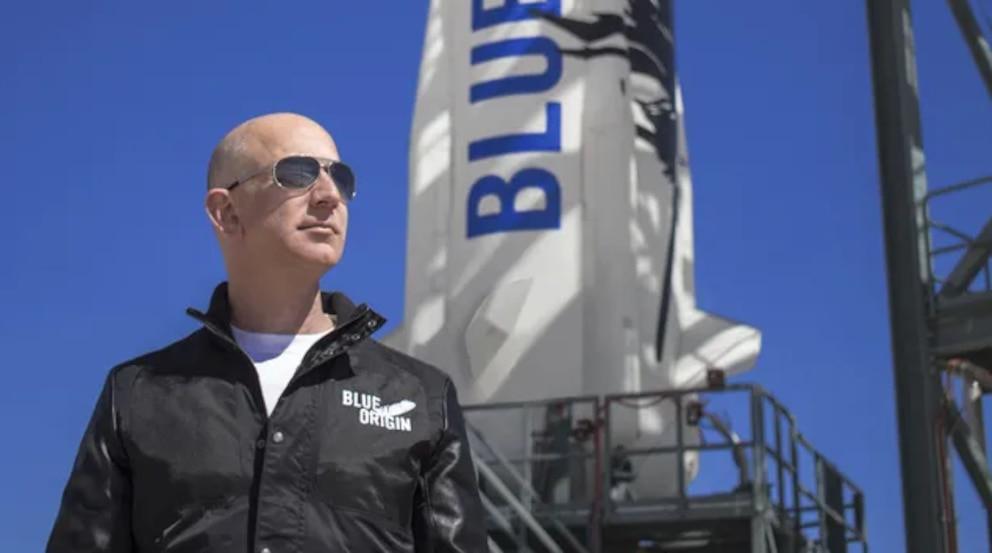
Blue Origin, the space exploration company founded by Jeff Bezos, announced on January 30 the temporary suspension of its space tourism flights aboard the New Shepard suborbital rocket.The company’s new focus will be to accelerate the development of technologies and capabilities for manned missions to the Moon, in line with NASA’s plans to return and establish a stable presence on the natural satellite.
Since 2021, Blue Origin has offered suborbital flights of approximately ten minutes, taking passengers beyond the Kármán line – the point considered the threshold of outer space – located 100 kilometers above sea level.
These trips, aimed mainly at people with high purchasing power, celebrities and special guests, allowed Blue Origin to transport 98 people in total.Among the most notable passengers are Jeff Bezos himself, actor William Shatner, athlete Michael Strahan, journalist Gayle King and singer Katy Perry.
The company has not disclosed the exact number of customers who expect to travel in the future or ticket prices.Now, those who had reservations for upcoming flights will have to wait, since Blue Origin has not specified when tourist operations will resume.
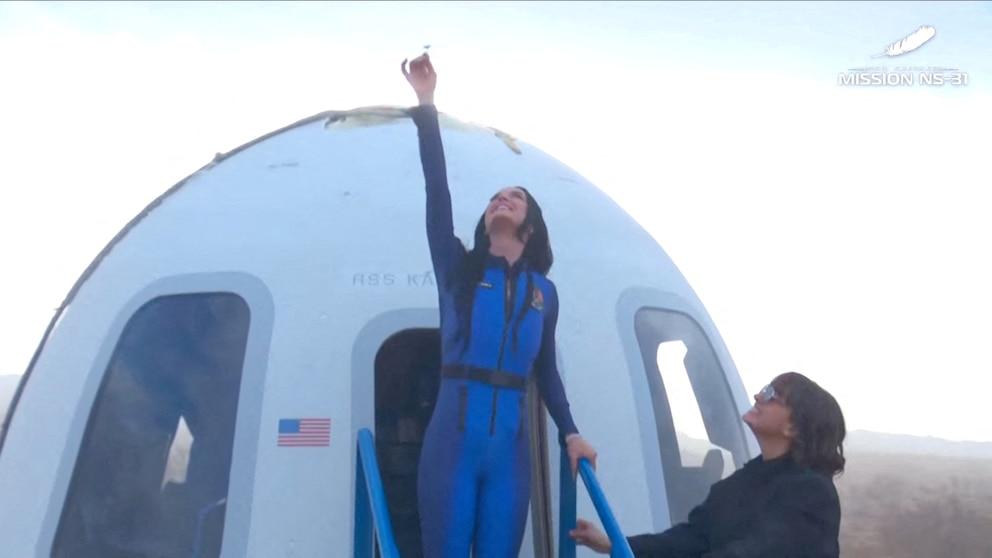
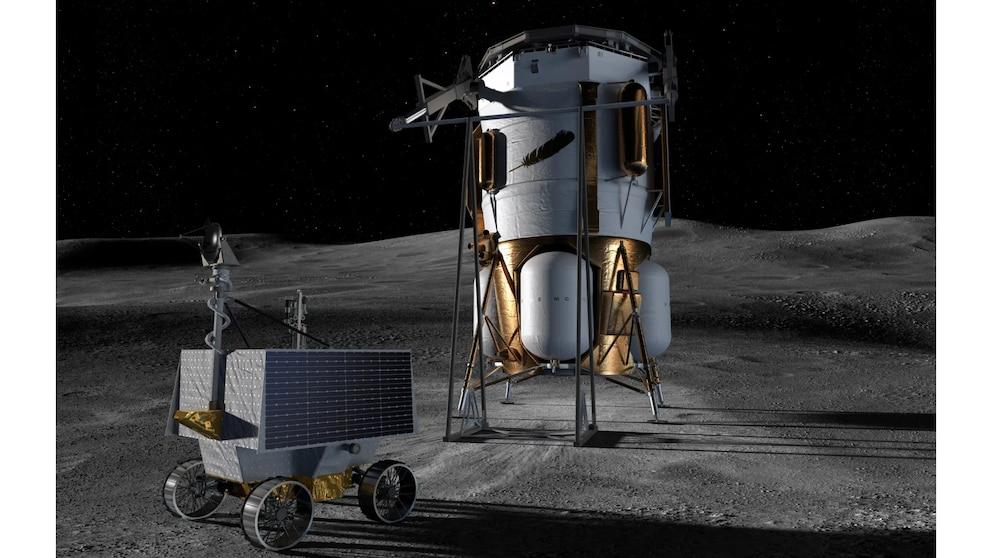
In its statement, the company explained that this decision responds to the need to concentrate resources and talent on projects that allow “further accelerating the development of human lunar capabilities.”The goal is to directly contribute to the return of American astronauts to the lunar surface and the establishment of a permanent and sustained presence on the Moon.
Blue Origin’s reorientation occurs in a context of renewed international competition for lunar exploration.Both Blue Origin and SpaceX, Elon Musk’s company, have contracts with NASA to develop landers capable of transporting astronauts from lunar orbit to the surface.
SpaceX is in charge of the module that should be used in the ArtemisIII mission, the first American moon landing since the Apollo program, scheduled for 2028.However, possible technical delays could open the door for BlueOrigin to take the lead if it can move faster in the development of its own module.
Sean Duffy, Secretary of Transportation and former acting administrator of NASA, indicated in recent statements that the agency is not willing to depend on a single supplier.
“If SpaceX falls behind, but Blue Origin can do it first, congratulations to Blue Origin! But we’re not going to wait for just one company. We’re going to push this forward and win the second space race against China,” Duffy said on CNBC’s “Squawk Box.”
Political pressure is relevant, since several American legislators insist that NASA must place astronauts on the Moon before China, whose space program foresees a manned lunar landing by 2030. The first manned flight of the Artemis program is scheduled for next February 8, which will circumnavigate the Moon without landing on its surface.
The new administrator of NASA, Jared Isaacman, a millionaire and experienced in private space flights, has recognized the importance of accelerating deadlines and maintaining competitiveness against China.Isaacman reported that in January he held meetings with SpaceX and Blue Origin to “understand the latest plans to accelerate NASA’s Artemis schedule.”
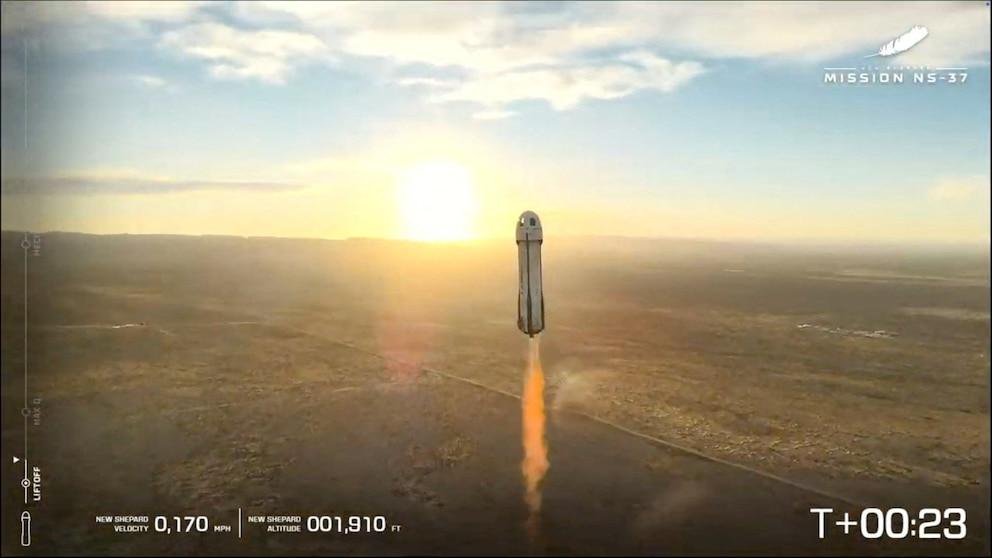
Blue Origin’s statement does not clarify how many people should expect to fly aboard the New Shepard when tourist operations resume, nor will any tickets purchased be refunded.For now, the priority is the Moon and meeting NASA’s demands within the framework of the Artemis program.
The decision marks a strategic shift for Jeff Bezos’ company, which puts its most visible and media side on pause to concentrate on the development of key technology for lunar exploration.The future of commercial space tourism remains, at least for the moment, outside of BlueOrigin’s immediate agenda, in the prelude to a new stage in the space race.

