


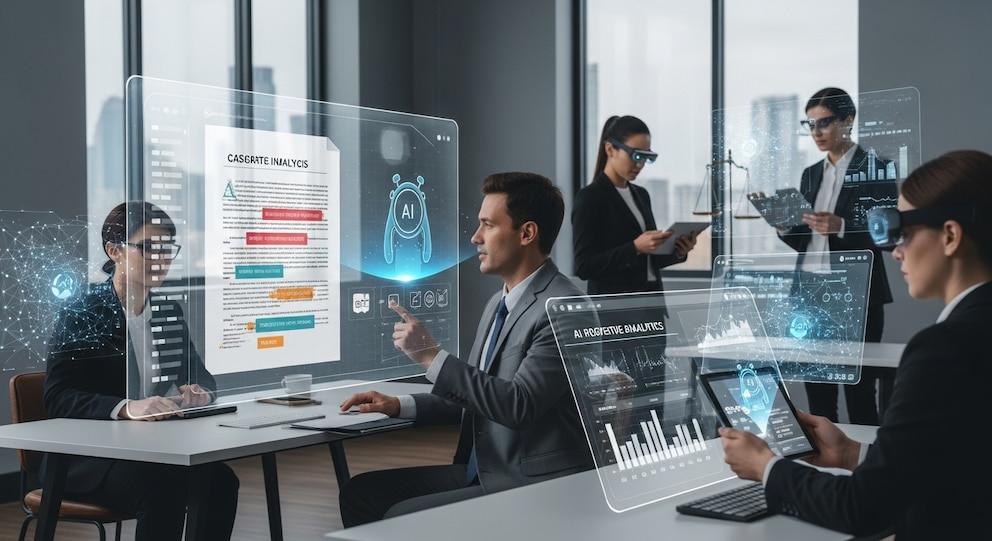
The%20adoption%C3%B3n%20of%20%20artificial%20intelligence(AI)%20in%20the%20work%20environments%20of%20United%20States%20continue%C3%BAa%20in%20promotion,%20with%20a%2012%of%20%20adults%20employees%20used%C3%A1doing it%20all%20%20d%C3%ADas%20and%20a%20proportion%C3%B3n%20a%C3%BAn%20most doing%C3%A9doing it%20on a%20manner.
Despite this growth, concern about potential job replacement by AI is low among workers, most of whom consider automation unlikely to threaten their jobs in the coming years.
According to a recent Gallup Workforce Poll, based on responses from more than 22,000 American workers, about a quarter of respondents use AI at least several times a week, while almost half use it a few times a year.

These%20data%20mark%20a%20significant%20increase%20compared%20to%20%20%20which%20reported%20a%20occasional use%20in%202023,%20reflecting%20the%20impact%20of%20toolclients%20like%20ChatGPT,%20that%20havefacilitated%20tasks%20like%20writing%C3%B3n%20of%20emails,%20programming%C3%B3n%20or%20creating%C3%B3n%20images%C3%A1genes.
The technology sector leads the adoption of AI: six out of 10 employees report frequent use and three out of 10 use it daily.This growth, although notable since 2023, shows signs of stabilization after the boom recorded between 2024 and 2025.
In finance, professionals like Andrea Tanzi, an investment banker at Bank of America, use AI every day to synthesize large volumes of information and manage administrative tasks through internal chatbots.

In the education sector, teacher Joyce Hatzidakis uses chatbots to improve communication with parents and write letters of recommendation, valuing the ability of these tools to adjust the tone and clarity of her messages.
A previous Gallup poll indicated that six in 10 AI users rely on virtual assistants, while four in 10 use it to consolidate information, generate ideas or learn new things.The use of AI is less common in sectors such as retail, healthcare and manufacturing.
Both the technology industry and the US government are actively promoting the integration of AI into workplaces and schools.However, debate persists about the true impact of these technologies on productivity and job opportunities.

Sam Manning, a researcher at the Center for AI Governance, points out that workers most exposed to AI tend to have higher levels of education and skills, making them more adaptable to changes.
“These employees, who typically have higher levels of education and a broader range of skills, are less vulnerable to disruptive changes at work,” Manning says.
However, the researcher warns that approximately 6.1 million workers in the United States, mainly in administrative and office roles, face high exposure to AI and fewer resources to adapt.
%2086%%20of%20this%20group%20are%20women,%20many%20of%20them%20older%20and%20located%20in%20cityspeque%C3%B1as,%20what%20reduces%20your%20work%20alternatives.%20Manning%20highlights:%20%E2%80%9CSi%20sus%20skills%20are%20automated,%20have%20less%20skills%20transferable%20to%20otherjobs%20and%20less%20savings,%20a%20shock%20of%20income%20could%C3%ADa%20be%20much%20m%C3%A1sharmful%E2%80%9D.

Despite%20advance%20of%20artificial%20intelligence%20in%20different%20sectors,%20concern%20%C3%B3n%20for%20replacement%20boral%20remains%20limited.%20A%20Gallup%20poll%20conducted%20in%202025%20reveals%20that%20%20half%20of%20%20employeess%20consider%20%E2%80%9Cnothinglikely%E2%80%9D%20losing%20your%20job%20due to%20fault%20of%20the%20IA%20or%20the%20automation%C3%B3n%20in%20lospr%C3%B3next%20five%20a%C3%B1os,%20although%20this%20proporci%C3%B3n%20ha%20ca%C3%ADdo%20respect%20al%2060%%20registered in%202023.
Some professionals, like the Reverend Michael Bingham, a pastor in Florida, do not feel any threat from AI.Bingham recounts his experience: a chatbot provided him with “gibberish” when consulting him about a medieval theologian, and he assures that he would not trust a “soulless” machine to write his sermons, always preferring “the power of God.”
In short, artificial intelligence continues to expand in American workplaces, especially in technology, finance and education, while fear of automation and job loss remains low among most employees.

