


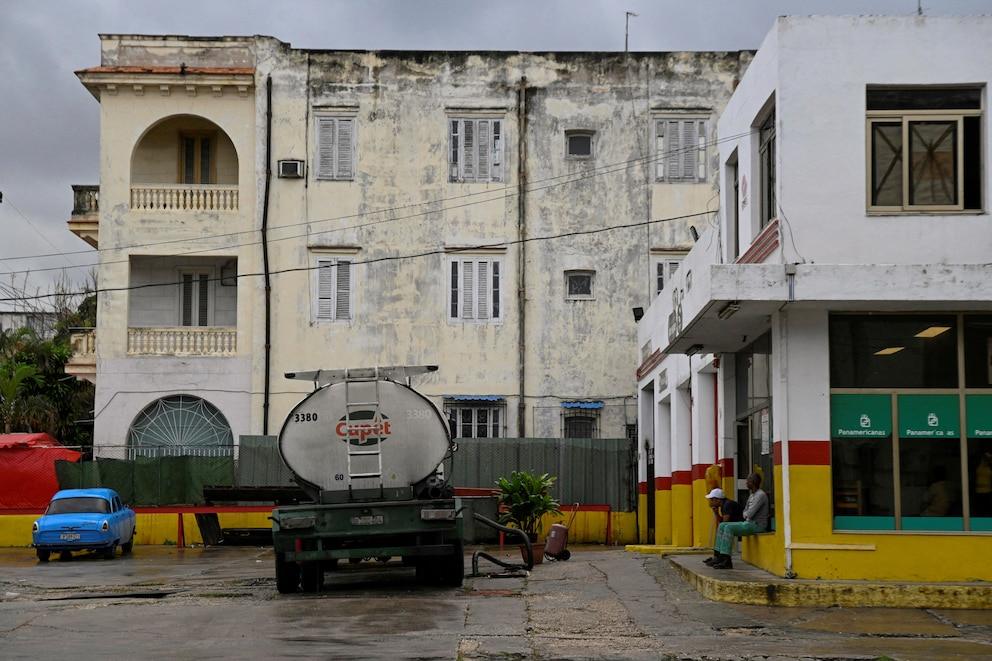
The dictatorship of Miguel Díaz-Canel in Cuba implemented a sustained scheme of reselling oil received from Venezuela that allowed it to obtain resources to sustain its repressive apparatus, as revealed by official US sources and confirmed to Infobae by two Cuban exile leaders.
From%20agree%20with%20an%20official%20cited%20by%20el%20peri%C3%B3dico%20Miami%20Herald,%20el%20r%C3%A9gimencuban%20resold%C3%B3%20near%20del%2060%%20del%20raw%20imported%20from%20Venezuela%20between%20end of%202024%20and%202025,%20in%20operations%20that%20generated%20millionaire%20income%20for%20the%20%C3%A9litegovernor.
The maneuver, corroborated by Rolando Cartaya, a researcher at the Cuban Conflict Observatory, involved the re-export of some 40,000 barrels a day to Asian markets, while the island’s population faced prolonged blackouts in the capital and the provinces.
%E2%80%9CLa%20Havana%20has%20of%20reserves%20of%20about%2014,500%20million%20of%20d%C3%B3lars,%20as%20demonstrated%C3%B3the%20investigation%C3%B3n%20of%20Miami%20Herald%20on%20the%20finance%20of%20group%20military%20GAESA,%20yha%20estado%20involved%20by%20a%C3%B1os%20in%20the%20trade%20illegal%20of%20petr%C3%B3leo,%20even reselling%20up to%20the%2060%%20of%20what%20that%20le%20sent%20Venezuela%E2%80%9D,%20affirmed%C3%B3%20Cartaya%20endi%C3%A1logo%20with%20Infobae.
The impact of the capture of former Venezuelan dictator Nicolás Maduro on January 3 was immediate in Cuba.Cartaya described that “the only oil that has been reaching the island is that from Mexico, which does not cover Cuban needs, but has allowed the regime to offer ‘lightning’ after blackouts of 12 to 15 hours in Havana and up to 30 hours in the provinces.”
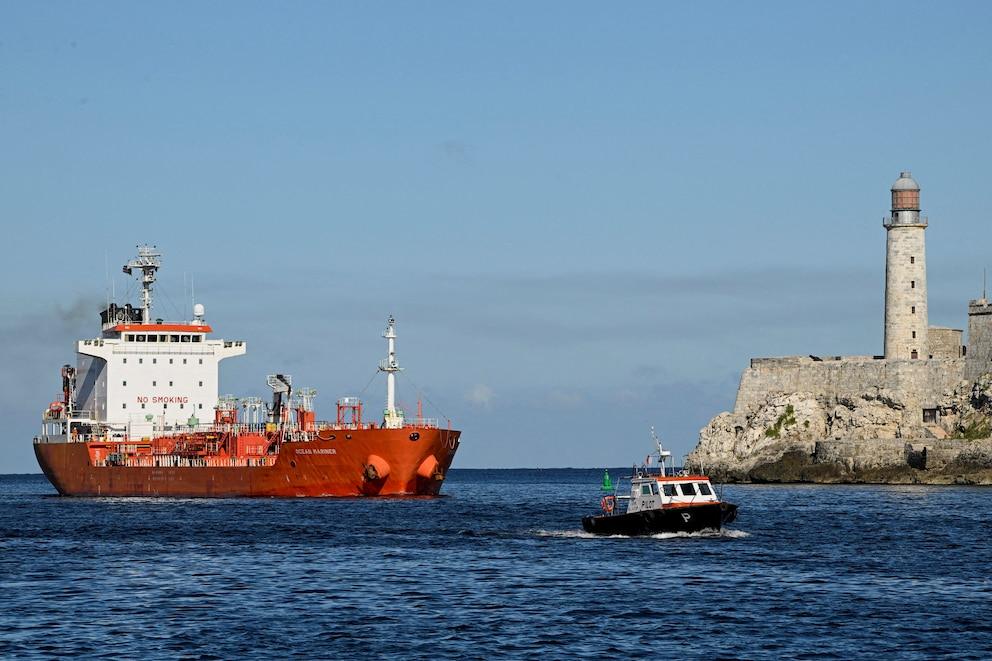
In that context, Claudia Sheinbaum’s administration argued that the crude oil shipments had a humanitarian nature.However, according to different sources, the Mexican government is now considering suspending supply in the face of international pressure.
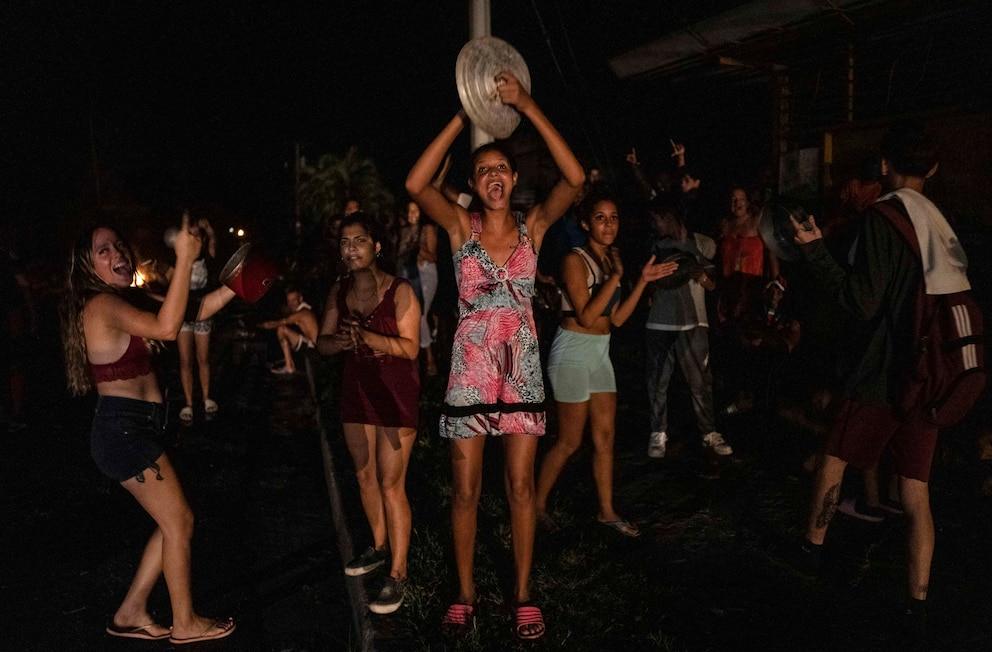
Monthly monitoring of protests carried out by the Cuban Conflict Observatory showed a growth in demonstrations linked to blackouts.“Electric outages have been the factor that has irritated Cubans the most over the years because it means not being able to sleep, not being able to preserve food, not being able to cook, they affect the pumping of water; and then these blackouts have had an impact on many in-person protests,” Cartaya explained.
He then mentioned that in the last months of 2025 there were records of protests, with incidents such as burning barricades and clashes with the police in municipalities of Havana.
The regime’s financing structure depends – Cartaya maintained – on resources administered by the military conglomerate GAESA.“The government still has some capacity to maneuver,” he said, referring to contingency plans that contemplate limiting electricity service to two hours a day and drastically reducing banking activity in the event of a worsening of the energy crisis.
According to the Miami Herald, the resale of Venezuelan crude oil generated up to $1.3 billion during the period analyzed, while the island imported nearly 70,000 barrels per day.The American publication cited leaked documents indicating that GAESA reported liquid assets of more than $14.5 billion in foreign accounts.
“The Cuban people, immersed in a brutal humanitarian crisis that includes a lack of electricity, water, food and medicine due to the ineptitude, intolerance and selfishness of the government, are fed up with them,” stressed Cartaya, who highlighted social disbelief in the face of official calls to “resist.”
For his part, also in dialogue with Infobae, Javier Larrondo, president of the NGO Prisoners Defenders, considered that “the income that they are trying to put a stop to is income that is not directed to the people, since the oil imported by Cuba was mostly dedicated to being resold and allowing the maintenance of the repressive system.”
According to Larrondo, “the regime has never cared about the very poor situation of the people.”The activist stressed that the process of state collapse is already advanced.”For some time now the regime has collapsed in its work as a State. There is no electricity, except in bursts, there is no running water in countless localities, there is a lack of medical personnel, a lack of medicines, a very poor situation in transportation and distribution, on the verge of not having a treasury. The regime is only, today more than ever, a mere criminal gang with the sole intention of remaining in power,” he noted;while he noted: “This requires liquidity and credit, and therefore, if the situation continues to worsen, in the medium term it will be much more complex to sustain repression.”
Repressive control remains the main official tool in the face of social protest.Cartaya recalled that “in November, six people in the municipality of Encrucijada, province of Villa Clara, were sentenced to sentences of three to eight years in prison for asking for electricity and touching pots.”In addition, he warned about the existence of a contingency plan called “Baraguá”, under the control of the Ministry of the Interior and the Attorney General’s Office, which contemplates mass arrests, isolation of political prisoners and suspension of fundamental rights through the declaration of a State of War.
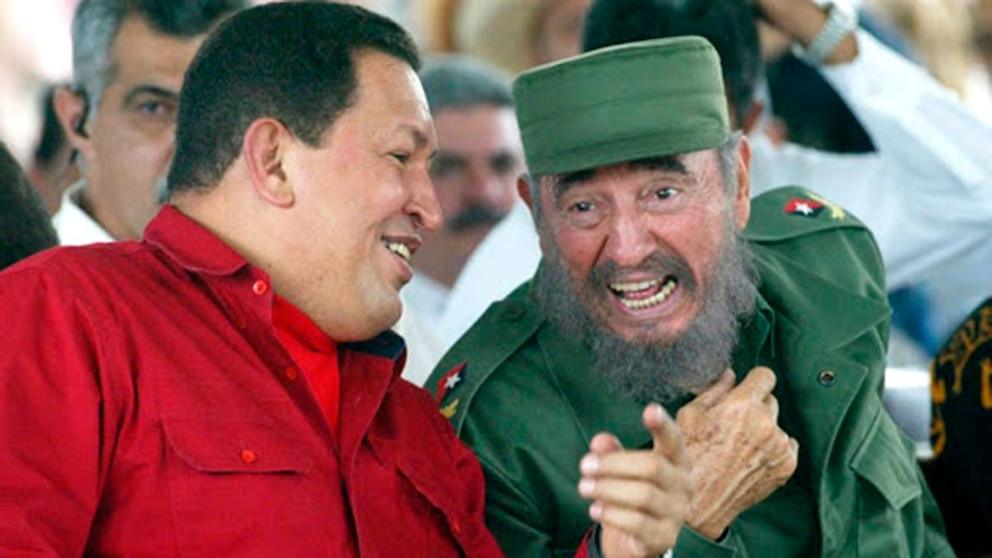
The oil agreement with Venezuela was established in the 2000s based on agreements between Hugo Chávez and Fidel Castro.In exchange for oil, Cuba sent tens of thousands of doctors and provided advice on security, intelligence and technology, contributing to the permanence of the governments of Chávez and Maduro. Cuban companies participated in the development of identification systems for the Venezuelan State and provided protection personnel to Nicolás Maduro.
Asked about the possibility of a larger social outbreak, Larrondo stated that “it is more than possible that the population will increasingly demonstrate, and also that the regime’s response will have fewer and fewer resources and will begin to overflow.”And he added that “a spiral of this type would lead to a turning point in which only indiscriminate, cruel and massive repression at the national level, as they did on 11J (July 11, 2021), arresting 8,000 people and torturing the vast majority of them, would be the only tool that the regime would have to stop the advance of freedom, but that movement could cost the regime the loss of power.”
Meanwhile, Cartaya warned about the regime’s ability to respond with violence: “This is the same regime that did not hesitate to sink the tugboat March 13 with nearly 70 men, women and children on board to teach a lesson in July 1994; the same one that shot down two civilian planes manned by four humanitarian workers from Hermanos al Rescate in February 1996; the one that advised the brutalrepression against Venezuelan civilians in the protests of 2014, 2017 and 2019;and the same one who ordered his special forces to break heads during the July 2021 uprising,” he described.
The immediate future depends on access to energy resources and the regime’s ability to maintain its control mechanisms.“Hope is a word that the people of Cuba had lost and now returns stronger than ever,” Larrondo concluded.

