


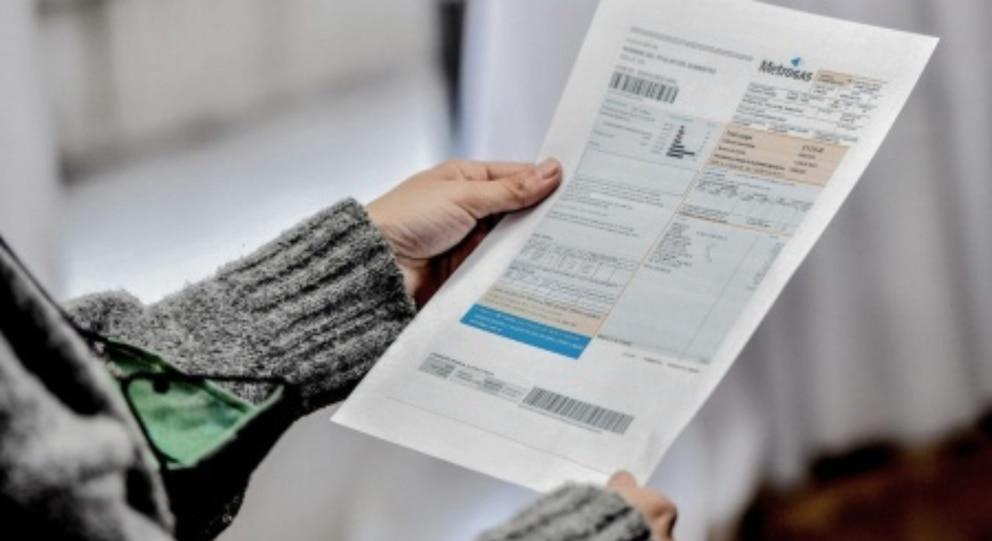
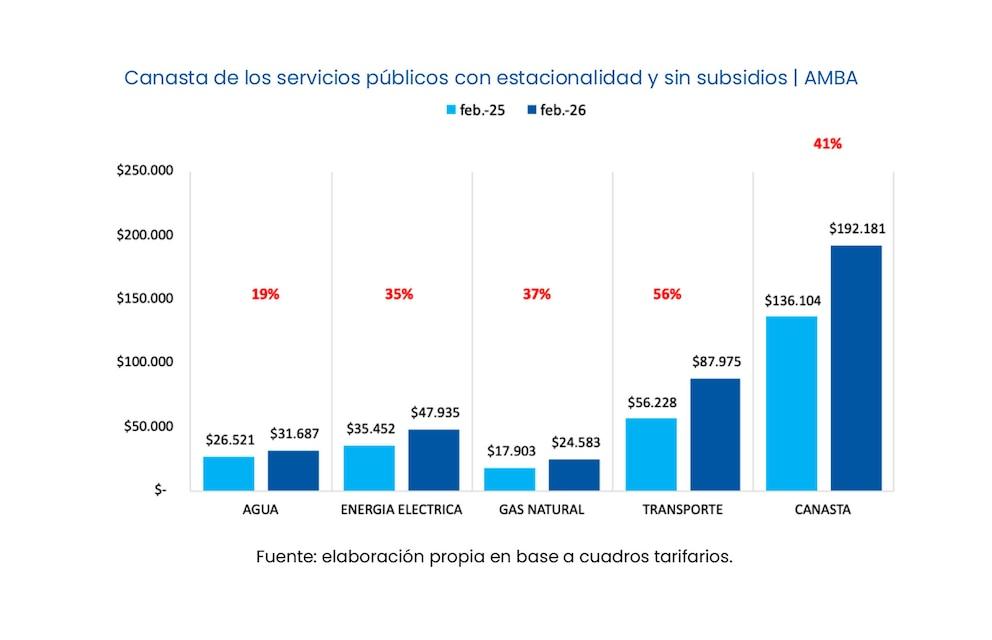
The cost of the basket of public services in the BuenosAires Metropolitan Area (AMBA) reached $192,181 per month in February for an average household without subsidies, according to a report from the Rates and Subsidies Observatory of the Interdisciplinary Institute of Political Economy (IIEP) of the University of Buenos Aires and CONICET.
The%20report,%20based%20on%20data%20official%20of%20the%20Secret%C3%ADa%20of%20Energ%C3%ADa,%20ENARGAS,INDEC%20and%20other%20government%20sources,%20show%C3%B3%20that%20spending%20grew%C3%B3%2041%%20respecto%20same%20month%20of%202025,%20although%20was%20reduced%200.3%%20compared%20to%20January%20due%20to%20estfactorsational%20and%20a%20a%20low%20in%20the%20consumption%20of%20energy%C3%ADa%20the%C3%A9electric%20and%20gas%20natural.
The%20structure%20revealed%20by%20the%20IIEP%20reflected%C3%B3%20the%20implementation%C3%B3n%20of%20new%20scheme%20Subsidies%20Energ%C3%A9tics%20Focused%20(SEF),%20that%20introduced%20changes%20in%20segmentation%C3%B3n%20of%20users%20and%20in%20%20coverage%20of%20costs%20of%20%20services%20p%C3%BAblicos.A%20starting%20of%20February,%20the%20schema%20distinguish%C3%B3%20among%20users%20of%20energy%C3%ADa%20the%C3%A9electricitywith%20and%20without%20subsidies,%20while%20in%20the%20sector%20of%20gas%20ning%C3%BAn%20home%20received%C3%B3bonuses%20in%20the%20price%20wholesale.%20The%20informe%20also%C3%A9n%20highlight%C3%B3%20that%20coverage%20rate%20average%20reach%C3%B3%20the%2065%%20of%20the%20costs,%20while%20the%20national%20State%20absorbed%C3%B3%20the%2035%%20remaining.
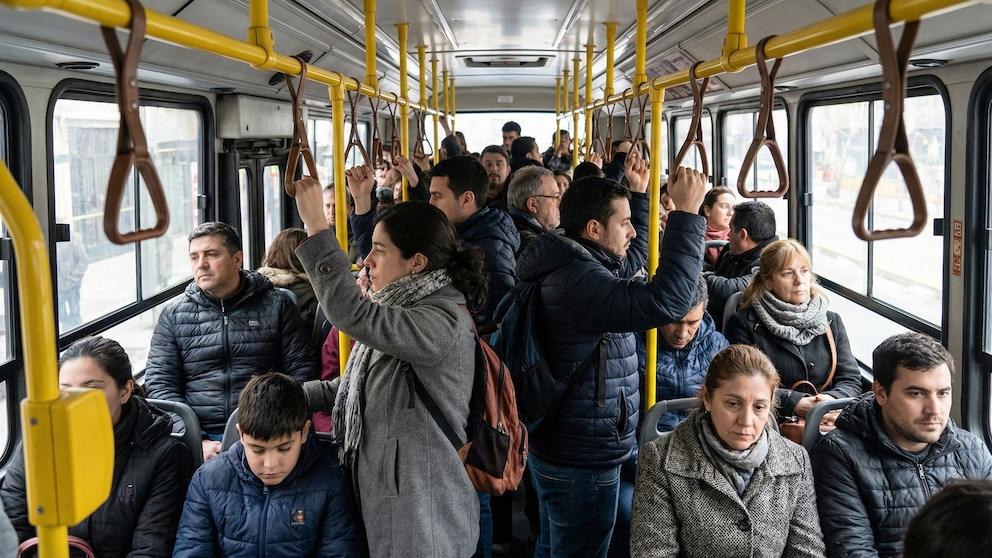
In the details of the basket, monthly spending on public transportation represented the most significant component, with $87,975, followed by the electric energy bill of $47,935 and the natural gas bill of $24,538, both values corresponding to users without subsidies.Spending on drinking water without subsidies was $31,687.The IIEP report explained that these values arose from the weighting of a representative household of the AMBA, considering average consumption and average zonal coefficient for water.
The%20an%C3%A1lysis%20of%20Observatory%20of%20Tariffs%20and%20Subsidies%20of%20IIEP%20underlines%C3%B3%20that%20thebasket%20of%20services%20p%C3%BAblicos%20represent%C3%B3%20the%2011%%20of%20salary%20average%20recordedestimate%20for%20the%20month%20of%20February,%20equivalent%20to%20$1,733,146.%20A%20salary%20of%20that level%20allowed%C3%B3%20cover%20nine%20baskets%20of%20services%20p%C3%BAblical,%20a%20figure%20that descended%C3%B3%20regarding%20to%20las%209.6%20baskets%20of%20February%20of%202025,%20what%20reflected%C3%B3%20an increase%20of%20the%20load%20of%20the%20services%20on%20the%20purchasing power.
The%20evolution%20of%20the%20coverage%20of%20costs%20show%C3%B3%20differences%20between%20the%20differentservices%20and%20segments%20of%20users.%20On%20energy%C3%ADa%20the%C3%A9electricity,%20the%20residentialusers%20without%20subsidy%20reach%20%20coverage%20of%20100%%20of%20supply%20cost,%20recovering%20previous%20levels%20to%20the%20implemententaci%C3%B3n%20of%20new scheme.%20For%20the%20users%20with%20subsidy,%20the%20coverage%20sub%C3%B3%20of%2029%%20in%20February%20of2025%20and%2033%%20in%20January%20of%202026%20to%2050%%20in%20February,%20what%20that%20implic%C3%B3%20a%20reduction%C3%B3n%20in%20the proportion%C3%B3n%20of%20costs%20financed%20by%20the%20State%20and%20a%20greater%20transfer%20to%20the%20tarifafinal.%20In%20the%20case%20of%20natural%20gas,%20the%20coverage%20reaches%C3%B3%20to%20101%%20for%20the%20average user%20without%20subsidies,%20since%20that%20in%20February%20did not%20exist%20bonuses%20sec%C3%BAn%20the%20guidelines%20of%20SEF.
The%20composition%C3%B3n%20of%20the%20invoices%20vari%C3%B3%20sec%C3%BAn%20the%20access%20to%20susubsidies.%20For%20users%20without%20subsidy%20in%20electricity,%20the%20energy%C3%ADa%20represent%C3%B3%20the%2036%%20of%20total amount,%20the%20value%20aggregate%20of%20distribution%C3%B3n%20(VAD)%20the%2038%%20and%20the%20taxes%20the%2027%.%20In%20households%20with%20subsidies,%20la%20energ%C3%ADa%20mean%C3%B3%20el%2019%,%20el%20VAD%20el%2053%%20y%20taxes%20el%2027%.%20In%20gas%20natural,%20the%20bill%20average%20of%20pa%C3%ADs%20for%20a%20usuarios without%20subsidies%20ascendi%C3%B3%20a%20$30,291,%20with%20a%20distribution%C3%B3n%20del%2032%%20for%20the%20priceof%20gas,%2046%%20for%20the%20VAD%20and%2022%%20for%20the%20taxes.
The%20report%20of%20IIEP%20detail%C3%B3%20that%20in%20February,%20the%20invoice%20average%20of%20energy%C3%ADael%C3%A9electric%20for%20users%20without%20bonuses%20up%C3%B3%2014.1%%20in%20the%20variable%20charge, while%20for%20who%20received%20subsidies%20was%20reduced%203.9%,%20due%20to the%20new scheme%20which%20established%20a%20cap%%2020%20300%20kWh%20monthly%20for%20the%20block%20subsidized.In%20gas%20natural,%20the%20elimination%C3%B3n%20of%20%20segments%20N2%20and%20N3%20derive%C3%B3%20in%20increments%20in%20variable%20position%20of%20117%%20and%2080%%20respectively%20for%20the%20ex%20beneficiaries,%20who went%20to%20integrate%20a%20%C3%BAnico%20segment%20without%20bonuses.
The%20weight%20of%20the%20services%20energy%C3%A9tics%20on%20the%20income%20varied%C3%B3%20of%20agreement%20with%20thelevel%20of%20subsidy%20and%20the%20amount%20of%20the%20family%20income.%20A%20home%20without%20subsidywith%20income%20equivalent%20a%20three%20baskets%20b%C3%A1sicas%20destination%C3%B3%202.1%%20of%20their%20resources%20to these%20services,%20while%20that%20a%20home%20with%20subsidy%20and%20a%20income%20equivalent%20toa%20basket%20b%C3%A1sica%20assign%C3%B3%204.4%.%20For%20quiin%20they received%20the%20salary%20m%C3%ADnimo,%20vital%20m%C3%B3vil,%20the%20weight%20of%20the%20services%20energ%C3%A9tics%20reached%C3%B3%20%208.6%%20of%20income.
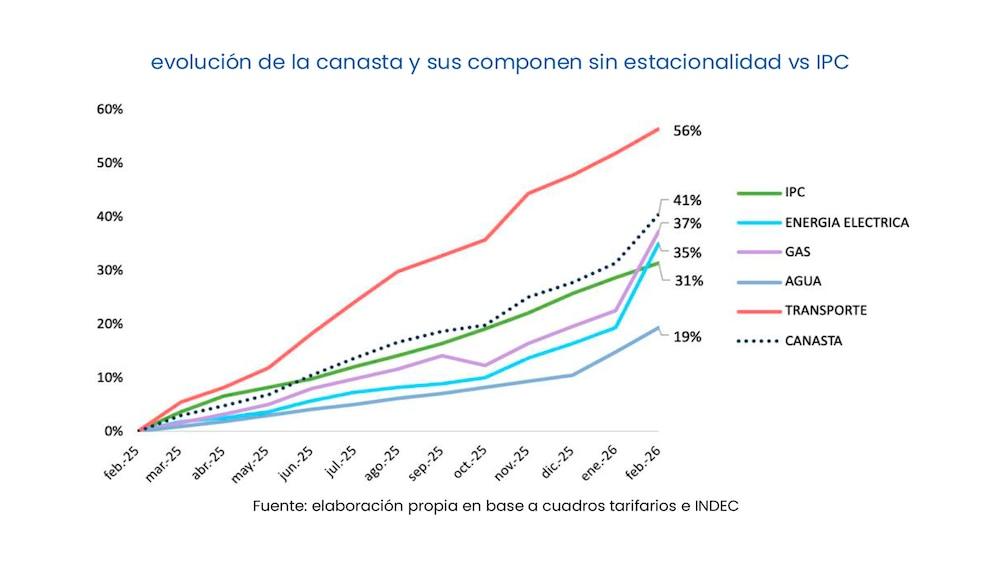
In%20the%20comparison%C3%B3n%20interannual,%20the%20report%20of%20IIEP%20registr%C3%B3%20que%20la%20invoice%20transport%20subi%C3%B3%2056%%20front%20a%20february%20de%202025,%20per%20above%20of%20the%20estimated%C3%B3inflation.%20The%20spending%20on%20water,%20electricity%20and%20gas%20natural%20increase%C3%B3%2019%,%2035%%20and%2037%respectively.%20The%20an%C 3%20percentage%20increase%20total%20from%2041%.%20The%20spending%20in%20energy%C3%ADa%20el%C3%A9electric%20sum%C3%B3nine%20points,%20el%20gas%20five%20and%20el%20water%20four.
The%20economic%20subsidies%20to%20the%20energy%20sectors%C3%ADa%20and%20transport%20recorded%20anincrease%20nominal%20from%20140%%20annual%20cumulative%20to%20February%20de%202026,%20with%20a%20variation%C3%B3nreal%20of%2082%%20annual.%20The%20energ%C3%ADa%20absorbi%C3%B3%20the%2086%%20of%20the%20accumulated%20subsidies%20and had%20a%20rising%20real%20dthe%20175%%20annual,%20mainly%20a%20through%C3%A9s%20of%20transfers%20aCAMMESA%20and%20ENARSA.%20The%20transfers%20a%20CAMMESA%20grew%2087%%20in%20t%C3%A9terms%20real, while%20the%20allocated%20to%20ENARSA%20increased%201872%.%20In%20contrast,%20subsidies%20to%20transport%20decreased%2043%%20in%20t%C3%A9terms%20real.
The%20report%20also%C3%A9n%20consign%C3%B3%20that%20the%20basket%20of%20services%20p%C3%BAblicos%20del%20AMBAexperiment%C3%B3%20a%20increaseto%20of%20593%%20from%20December%20of%202023%20until%20February%20of%202026, while%20that%20the%20level%20general%20of%20prices%20raised%C3%B3%20200%%20in%20the%20same%20per%C3%AAll.%20In%20thecomparison%C3%B3n%20interannual,%20the%20basket%20se%20increment%C3%B3%2041%,%20location%C3%A1rising%20ten%20points%20above%20of%20%C3%8Index%20of%20Prices%20at%20Consumer,%20which%20had%20a%20variation%C3%B3n%20of%2031%.
The dispersion of rates by region and distribution company persisted as a structural feature of the sector, influenced by differences in regulatory frameworks, the composition of costs and the existence of diverse tax burdens.The IIEP analysis highlighted that the comparison of rates between jurisdictions requires taking these factors into account to avoid erroneous interpretations.
The%20cost%20average%20of%20the%20basket%20of%20services%20p%C3%BAblicos%20includes%C3%B3%20also%C3%A9n%20the%20priceof%20liter%20of%20naphtha%20and%20gasoil%20premium,%20that%20in%20February%20of%202026%20average%C3%B3%20$1,877%20and$1,945%20respectively%20at%20level%20pa%C3%ADs,%20as%C3%AD%20as%20the%20coverage%20rate%20of collectives%20in%20the%20City%20Aut%C3%B3noma%20de%20Buenos%20Aires,%20que%20was%20of%2032%.%20The%20gapbetween%20the%20regulated%20cost%20and%20the%20estimated%20value%20by%20the%20IIEP%20result%C3%B3%20of%20116%.
By%20%C3%BLast,%20the%20report%20of%20Observatory%20of%20Tariffs%20and%20Subsidies%20of%20IIEP%20consign%C3%B3que%20la%20reduction%C3%B3n%20real%20of%20the%20compensations%20to%20transport%20of%20AMBA%20for collectives%20and%20subway%20was%20of%2034%%20from%202023.%20A%20partir%20of%202026,%20the%20determination%C3%B3n%20ofthe%20costs%20t%C3%A9conical%20of%20transportation%20and%20the%20c%C3%A1calculation%20of%20the%20subsidios%20qued%C3%B3%20a%20chargeof%20each%20jurisdiction%C3%B3n,%20modifying%20a%20long%20tradition%C3%B3n%20of%20centralization%C3%B3nnational.

