


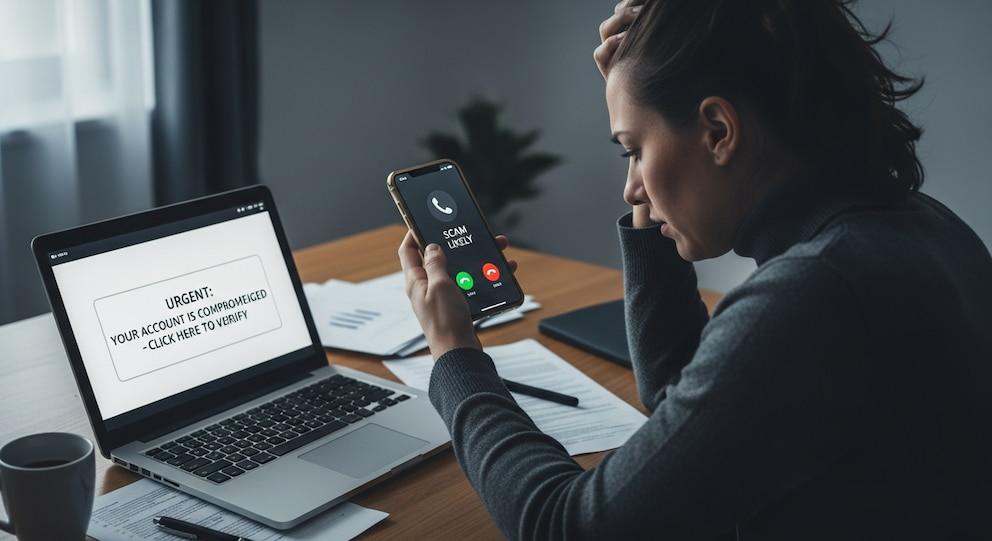
Responding with caution to calls from unknown numbers has become a key barrier to the spread of sophisticated telephone scams that affect users around the world.
According to organizations such as the National Cybersecurity Institute of Spain (INCIBE) and the United States Federal Trade Commission (FTC), the psychological manipulation used by cybercriminals facilitates the theft of personal data and unauthorized access to bank accounts.
In addition to obtaining financial information, fraudsters now create credible stories using sensitive data extracted from stolen databases, making it more difficult to detect fraud.
The FTC maintains that the possession of real data by an interlocutor does not confirm the authenticity of the call and requires users to exercise extreme caution when contacted.

International organizations highlight the need to maintain confidentiality and never provide additional information during an unsolicited call.The FTC suggests cutting off communication after requesting basic information: company name, reason for contact, and official number.
Subsequently, it is advisable to verify the legitimacy of the call through independent means, such as apps or the official websites of the entities.
Trying to trust numbers provided during the call can be risky, because scammers often promote fake numbers.Always contacting through secure, independent and previously known channels minimizes the probability of being a victim of deception.

The advance of social engineering has allowed cybercriminals to create pressure situations to obtain compromising responses, especially verbal affirmations such as a simple “yes.”
INCIBE warns that recording an affirmative response can serve to impersonate identity in banking procedures or the signing of contracts without consent.
For this reason, avoiding answering affirmatively, even when faced with questions that seem harmless, is one of the main guidelines of experts.Even if the caller demonstrates knowledge of private information such as address or full name, providing an approval response increases the risk of fraud.
Among the main fraudulent methods is telephone phishing, a technique that seeks to collect passwords, card numbers or other banking data to perpetrate fraud.
Other variants include extortion or virtual kidnapping schemes, in which criminals use the information obtained to intimidate victims and obtain money transfers under duress.
The greatest danger occurs when the user responds or shares confidential information without confirming the identity of the interlocutor.Exposure to these risks increases if the victim keeps the conversation secret and does not share what happened.

Official guidelines highlight the importance of sharing any suspicious incidents with family or friends and rejecting the suggestion of keeping interactions with unknown numbers a secret.Transparency helps make fraud attempts visible and strengthens prevention in the nearby network of contacts.
Avoiding any exchange of private information and cutting off communication at the slightest suspicion is confirmed as the most effective method, along with directly verifying the identity of the caller via official means before making any decision.
Likewise, you should not trust communications that pretend to be from entities or close friends; cybercriminals can impersonate you in order to request data or money, so you should always verify the legitimacy of the call in other ways.
In this sense, telephone threats, increasingly more elaborate and personalized, turn caution into a defense to protect both individual privacy and economic assets.

