


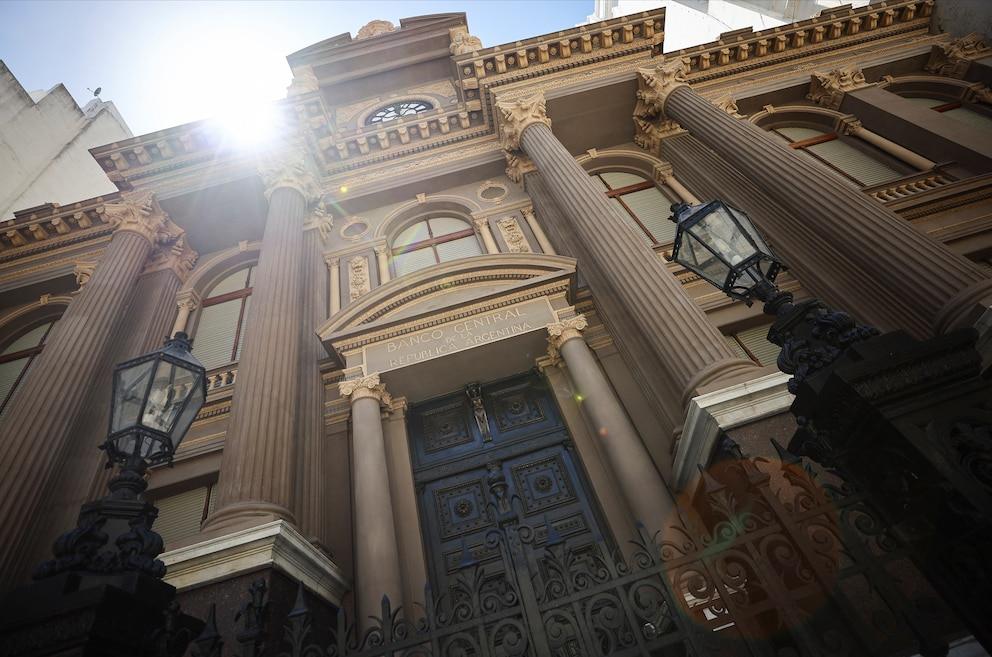
A%20few%20d%C3%ADas%20del%20closing%20de%20January,%20el%20Banco%20Central%20de%20la%20Rep%C3%BAblica%20Argentina(BCRA)ya%20super%C3%B3%20the%2010%%20of%20the%20goal%20of%20purchase%20of%20reservations%20international%20that%20fixed%C3%B3%20forall%202026.%20In%20pathin,%20the%20acquisition%C3%B3n%20of%20currencies%20within%20and%20outside%20of%20exchange market%20propiti%C3%B3%20a%20decline%20ofl%20risk%20pa%C3%ADs%20by%20under%20of%20the%20500%20pointsb%C3%A1sics,%20the%20lowest%20registration%20since%20June%20of%202018.
Over the course of the last 17 business days, the BCRA added USD 1,049 million, accompanying the start of the so-called “phase 4” of the economic program. Gross reserves, which do not include liabilities, reached USD 45,779 million, with an average daily increase of USD 39 million, a level not recorded since the first half of September 2021.
The%20official%20forecasts%20for%202026%20indicate%20that%20the%20purchase%20of%20currencies%20could%C3%ADlocate%20between%20USD%2010,000%20million%20and%20USD%2017,000%20million,%20depending%20on the process%20of%20remonetization%C3%B3n.%20The%20president%20of%20Banco%20Central,%20Santiago%20Bausili,remarked%C3%B3%20that%20the%20capacity%20to%20continue%20increasing%20the%20reserves%20be%C3%A1%20linked%20bothto%20the%20demand%20of%20pesos%20as%20to%20flow%20of%20d%C3%B3lares%20available%20in%20the%20market.%20Of%20this way,%20the%20monetary%20authority%20already%20was%20made%20with%20the%2010,49%%20of%20floor%20of%20the%20goal set%20for%20all%20the%20a%C3%B1o.
The growth of reserves was also favored by the international rise in the price of gold.The entity has nearly 1.98 million troy ounces, equivalent to 61.5 million tons, with a value that exceeded USD 5,100 per unit in the last round.
The pace of the entity’s purchases is explained, in part, by a greater income of foreign currency from the agro-export sector and by the taking on debt of private companies.According to figures from the Central Bank itself, some USD 3.6 billion still remain to be liquidated by companies that were financed abroad, which has expanded the supply of foreign currency in the exchange market.
For%20the%20purchases%20of%20d%C3%B3lar,%20the%20authority%20monetary%20fixed%C3%B3%20a%20l%C3%Supports%20daily%20of%205%on%20the%20volume%20operated%20in%20the%20Market%20Free%20of%20Changes.%20On%20certain occasions%20that%20cap%20was%20exceeded,%20and%20private%20sources%20attribute%20the%20difference%20to operations%20carried out%20outside%20of the%20usual%20circuit.
The Central Bank reported that it has the power to make block purchases outside the wholesale market, directly negotiating amounts and exchange rates with companies or institutions, with the aim of avoiding distortions in the general functioning of the market.
From Invecq they highlighted that the accumulation of reserves “ceased being a postponable objective and began to occupy a central role within the macroeconomic program” of Javier Milei’s government as of the turn of the year.
In this sense, the consulting firm’s analysts estimated that the Central Bank would have sold to the National Treasury about USD 450 million of the more than USD 1,000 acquired in the last three weeks.The Ministry of Economy will seek to strengthen its dollar deposits in view of the upcoming debt maturities in foreign currency.
“Going forward, it will be essential for the Central Bank to continue and deepen this dynamic [of currency purchases], so that the country risk is even more compressed and the desired rollover of the debt in dollars is achieved, necessary to truly improve the balance of the BCRA and give sustainability to the economic program, reducing possible exchange rate tensions,” they concluded.
The increase in reserves contributed to the country risk falling to 495 basis points, the lowest value since June 2018. The rise in bonds reflects a higher level of investor confidence in the official economic program, which now prioritizes adding international reserves.
After the victory of the ruling party in the legislative elections, the country risk—prepared by JP Morgan—receded more than 600 points.This scenario brings Argentina closer to international markets and, if the trend continues, it would improve the conditions for future debt placements abroad.
“Given the international context – with the FED interest rate -, for Argentina to be able to return to international markets and borrow at a reasonable rate, the country risk should fall to 400 points. Obviously, if it falls more, the better; but with 400 points it could already return to international markets at a reasonable rate,” said Iván Cachanosky, chief economist at the Libertad y Progreso Foundation.
At the same time, Cachanosky highlighted that the current decline in the indicator responds to “several drivers, but is mainly explained by two factors: first, Argentina maintains fiscal balance; and second, it has now begun to purchase reserves in a sustained manner.”

