



Getting the refrigerator to reach the optimal temperature in the shortest possible time depends on both avoiding common mistakes and applying certain simple tricks.Many users, without knowing it, adopt habits that slow down the process and waste energy, which can affect both the performance of the appliance and the preservation of food.
Among the most frequent failures, placing the refrigerator too close to the wall or in a corner without enough free space stands out, which makes heat dissipation difficult and forces the compressor to work excessively.
Another common mistake is to fill the refrigerator with hot or room temperature food immediately after plugging it in, saturating the cooling system and slowing the temperature drop.

Setting the thermostat to the coldest setting from the start may seem like a good idea, but it often has the opposite effect: the compressor runs non-stop, creating uneven patches of cold and slowing down the overall process.
Opening the door frequently does not help either, since every time you do, cold air escapes and the appliance must work again to recover the lost temperature.Additionally, neglecting the condition of the gaskets or exposing the refrigerator to external heat sources, such as direct sunlight or an oven, can make cooling even slower.
To speed up cooling, start by clearing the area around the appliance, leaving at least 5-7.5 centimeters of free space on all sides.

It is advisable to keep the refrigerator empty when you turn it on and avoid loading it with food until it reaches a stable temperature.Set the thermostat to a moderate temperature, around 3°C, and only reduce the level when the appliance is already cold.
Keep the door closed as much as possible and periodically check the condition of the gaskets and rear coils, as wear or dirt can hinder the efficiency of the system.A useful trick is to place a container with ice cubes inside to help the air reach the desired temperature faster.
Lastly, be patient: complete cooling can take up to 24 hours, but following these steps will ensure a faster, more efficient process.
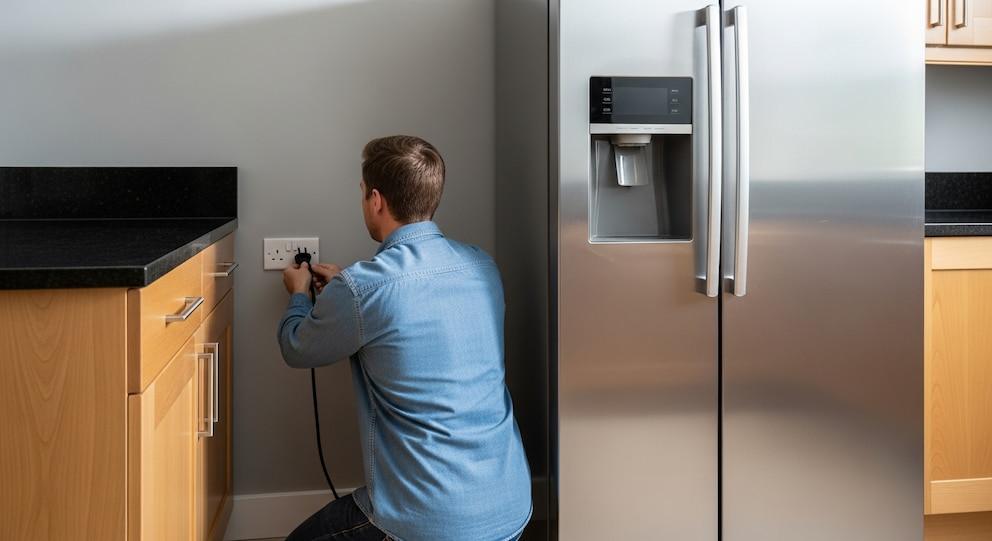
Unplugging the refrigerator thinking about saving energy can have negative consequences far beyond what was expected.Although at first glance it seems like a harmless practice, doing it repeatedly can cause hygiene problems, accelerate wear and tear on the appliance and, in some cases, even increase electricity consumption.
Specialists in the sector warn that turning the refrigerator on and off frequently reduces its useful life and can cause internal failures, in addition to compromising the correct conservation of food.
One of the main risks of this habit is damage to the compressor, which requires continuous operation to maintain lubrication and avoid premature wear.Every time the device is turned off and on again, the compressor must work harder to recover the internal temperature, which in the long run increases energy consumption instead of reducing it.
On the other hand, leaving food in an unlit refrigerator facilitates decomposition, encourages the proliferation of bacteria and the appearance of mold and bad odors.Not only does this pose a health hazard, but it can also leave the appliance in poor condition or require more expensive maintenance.

