


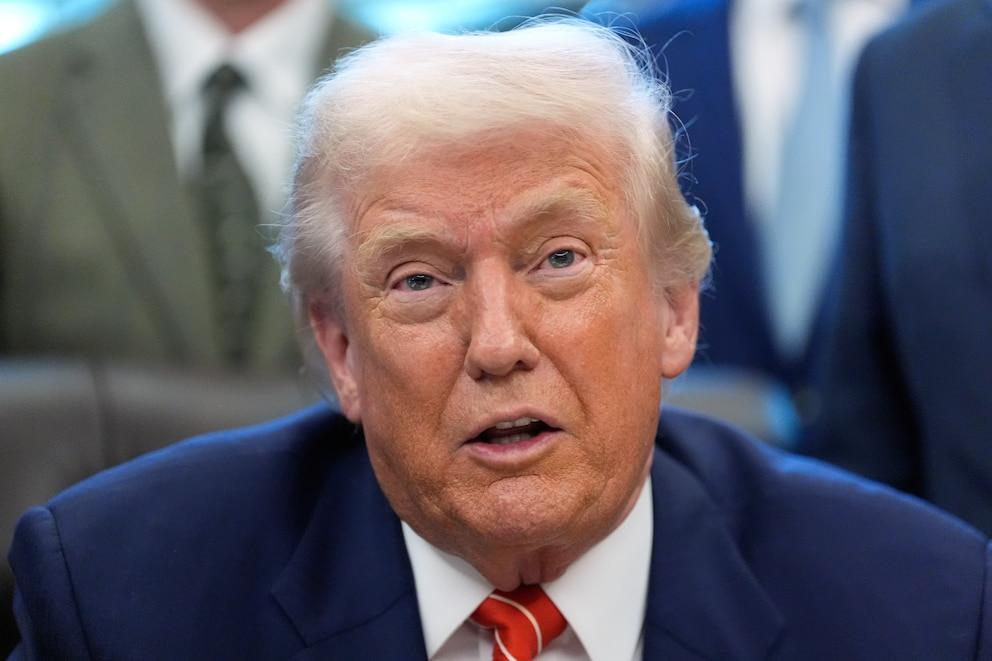
The president of the United States, Donald Trump, warned this Thursday that Iran will face “very traumatic consequences” if an agreement on its nuclear program is not reached, while confirming that the only alternative to diplomatic means will be a much tougher response from Washington.
Trump issued his warning after meeting at the White House with Israeli Prime Minister Benjamin Netanyahu, where both leaders addressed the status of negotiations between the United States and Iran on the future of the Iranian nuclear program.
“We have to reach an agreement, otherwise it will be very traumatic. I don’t want that to happen, but we have to make an agreement,” the president said to the press and stressed that he expects results within a month.
During the conference, Trump clarified that he had not discussed with Netanyahu the possibility of suspending dialogue with the Iranian regime, but insisted that if the talks fail, the US administration will move to a “phase two” with much more severe measures for Tehran.
“I will talk to them as much as I want, and we will see if we can reach an agreement with them. And if we can’t, we will have to go to phase two. Phase two will be very hard for them,” said the Republican leader.
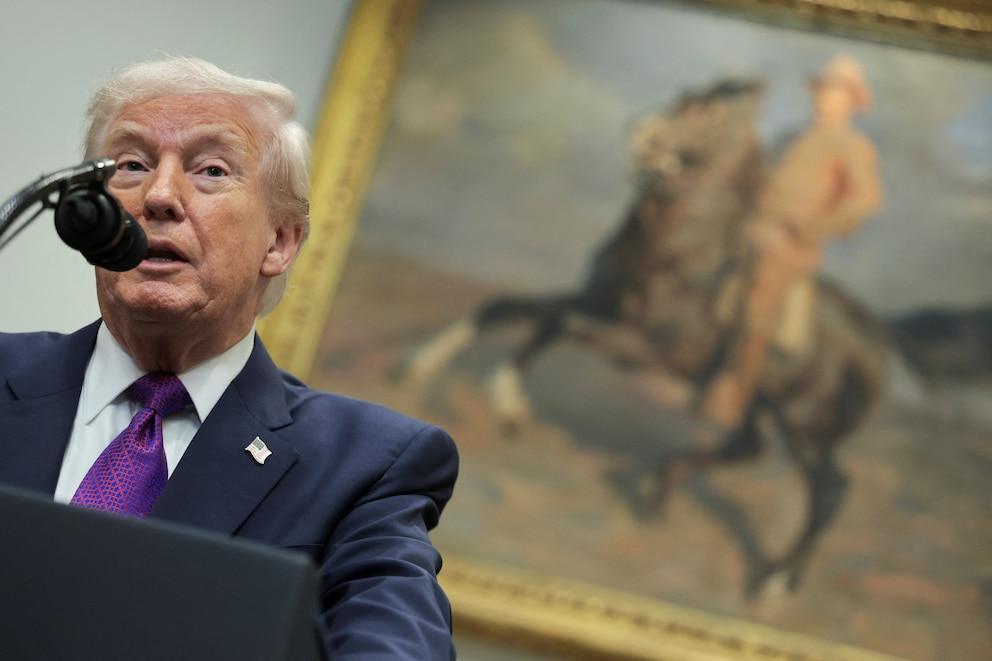
The context of these statements is the restart of nuclear negotiations between Washington and Tehran, after several months of tensions and the twelve-day war between Iran and Israel last June, in which the United States participated by bombing facilities linked to Iranian nuclear development.
Trump recalled that during the previous rounds Iran refused to close an agreement and that, as a consequence, the United States responded with Operation Midnight Hammer, which included attacks on three Persian nuclear facilities.
“Let’s hope that this time they are more reasonable and responsible,” the president remarked.
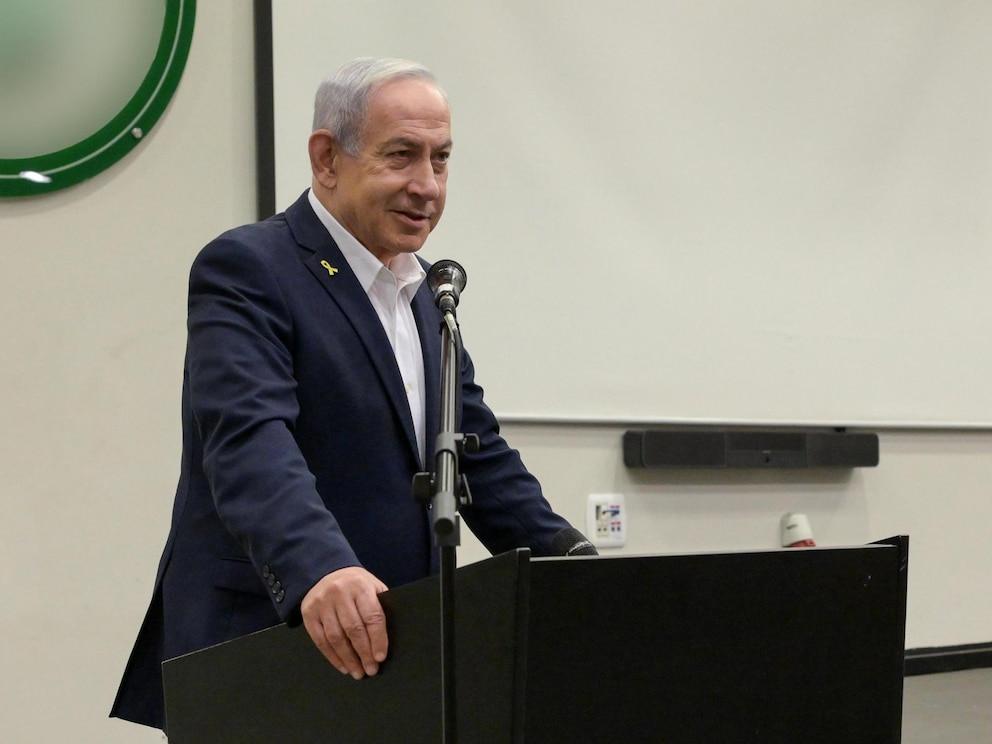
Netanyahu, for his part, acknowledged in statements to the press before returning to Israel that he expressed his skepticism about the possibility of reaching an agreement with Iran, but indicated that, if finalized, it should cover not only the nuclear program but also the arsenal of ballistic missiles and Iranian support for armed groups in the region.
“I said that if an agreement is reached, it must include the elements that are important to Israel: not only the nuclear program, but also ballistic missiles and groups allied with Iran,” the prime minister said.
Israel demands that any deal limit uranium enrichment, reduce the scope of the missile program and end Iranian support for militias such as Hezbollah.
Iran, on the other hand, has reiterated that it would only be willing to accept partial restrictions on its nuclear program in exchange for relief from international sanctions, and refuses to include its military or regional policy on the negotiating agenda.
In parallel to the diplomatic pressure, Trump confirmed that he is evaluating the deployment of a second aircraft carrier in the Middle East, joining the air-naval group already present in the area.
“We are considering sending a second aircraft carrier to the Middle East,” he said, referring to the military deterrence measures adopted by the Pentagon after the restart of diplomatic contacts.
Iran faces growing international pressure following the bombing of its facilities and the reinforcement of the US military presence in nearby waters.Despite this, President Trump insisted that his preference remains a negotiated solution and that dialogue will continue to close an agreement that limits Iranian nuclear development and reduces the risk of a new military escalation in the region.
Trump made it clear that the patience of the United States has limits and that, if concrete progress is not achieved, the US administration will resort to much more forceful measures to stop Iran’s nuclear and military expansion.
(With information from EFE and AFP)

