


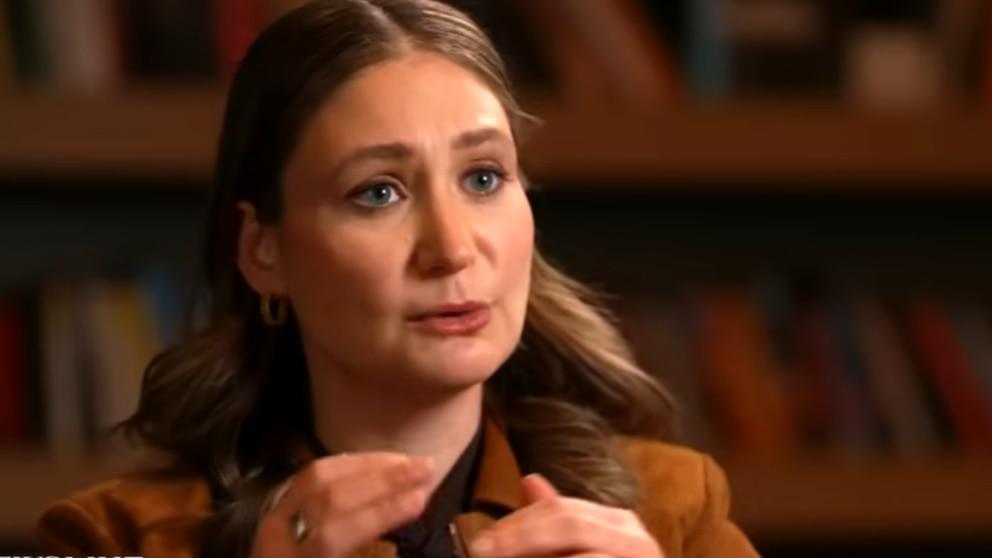
In the midst of the expansion of the artificial intelligence industry, professional training to access new technological jobs seems more important than ever.However, Daniela Amodei, president and co-founder of Anthropic—the company behind Claude—challenges the prevailing belief: to excel in the next generation of AI, knowing how to program is not enough.
According to Amodei, the humanities will be more relevant than ever for those who want a leading role in the sector.
During an interview with ABC News, Daniela Amodei provided a fresh perspective on the future of jobs in technology.Although the demand for specialists in science, technology, engineering and mathematics (STEM) remains high, the executive defends that the differential value will be provided by those who have studied the humanities.

Trained in Literature, Amodei maintains that skills such as critical thinking, understanding of history and the ability to understand human nature will be essential for the development of artificial intelligence.In his vision, AI models like Claude may excel at technical tasks, but what makes us unique as humans will become increasingly relevant.
In his words: “I believe in a world in which artificial intelligence is so realistic and capable of doing many things, that what makes us human will become much more important, not less important.”
The president of Anthropic insists that knowledge of the humanities is not just an added value, but a growing need in the sector: “I think studying the humanities will be more important than ever. Many of these [AI] models are very good in STEM. But I think this idea that there are things that make us uniquely human, [like] understanding ourselves, understanding history, understanding what motivates us.”

“I think that will always be very, very important. And that having critical thinking and learning to interact with other people will be increasingly important,” he added.
The most striking thing about Anthropic’s approach is that it is not limited to a futuristic or theoretical vision, but is already implemented in the personnel selection process.Amodei explains that his company values skills such as communication, emotional intelligence, compassion and curiosity when hiring new employees.
“When we want to hire people at Anthropic, we look for people who are great communicators. Who have excellent social skills and emotional intelligence. Who are kind and compassionate, curious and who want to help others. At the end of the day, people still really like interacting with other people. And in an ideal world, AI will complement those [human] skills,” Amodei said.

For the president of Anthropic, the challenge will be to educate artificial intelligence to better understand people and enhance human capabilities.Programming, designing, or solving complex problems will continue to be important, but there will come a point where the main focus will be teaching AI models to interact in a more human and empathetic way.
Social skills at work are essential to creating a positive work environment, facilitating collaboration and improving team productivity.These skills include effective communication, empathy, active listening and the ability to resolve conflicts, as well as teamwork and adaptation to different professional profiles.
In practice, a person with good social skills relates respectfully and assertively to his or her colleagues, knows how to express his or her ideas clearly, and is also willing to listen to and consider the opinions of others.This helps prevent misunderstandings and encourages cooperation, as all team members feel valued.
In addition, social skills allow you to negotiate, persuade and mediate disagreement situations, which is key to achieving common objectives and maintaining a harmonious work environment.Those who develop these capabilities are often perceived as natural leaders and are more likely to build trust, motivate others, and solve problems constructively within the organization.

