



The rise of artificial intelligence is generating shortages and price increases in key components for personal computers, particularly memory chips.Companies like Falcon Northwest, dedicated to the sale of high-performance PCs, have had to face the tripling of the cost of RAM in a matter of months, transferring this increase to the final price of their products.
“This is not a consumer-driven bubble,” Kelt Reeves, president of Falcon Northwest, told The New York Times.“No one expects this to be a passing phenomenon that will end soon.”
This phenomenon, driven by demand from technology giants such as OpenAI, Meta and Google, could directly affect the cost of personal computers and smartphones for the consumer.
The%20exponential%20growth%20of%20AI%20has%20caused%20%20%20memory%20manufacturers to%20prioritize%20a%20the%20%20%20data%20centers%20about%20the%20market%20of%20consumption%20traditional.TechInsights%20estimates%20that%20the%20pstrong%20of%20a%20PC%20average%20up%C3%A1%20in%20United States%20USD%20119,%20o%20a%2023%,%20this%20oto%C3%B1o%20compared%20to%20a%C3%B1or%20previous,%20due%20to%20increased cost of%20the%20RAM%20and%20the%20%20flash%20NAND memory.

This scenario is explained because manufacturers make greater profits by selling chips to technology companies that build data centers for artificial intelligence, instead of supplying PC and phone companies.
The consequence is a slowdown in consumer chip shipments and rising prices for consumers.“The memory market is crazy,” TechInsights analyst Mike Howard said at a recent technology conference.
At the same time, Amy Hood, Microsoft’s chief financial officer, anticipated that revenue from personal computers could decline due to the impact of memory prices.

The memory market has gone from fierce price competition to a stage of concentration, where Samsung, SK Hynix and Micron are the main suppliers.The rise of AI has raised demand for memory to unprecedented levels, displacing traditional customers.According to Jim Handy of Objective Analysis, the demand comes “almost exclusively from AI.”
Micron exemplifies this transformation: the company decided to abandon its direct-to-consumer business to focus on fast-growing strategic customers, such as AI data centers.
The company is investing in new factories in the US and Taiwan, but additional capacity will not be available until at least 2027, exacerbating current shortages.Manish Bhatia, vice president of Micron, told the aforementioned media that customers are receiving only between half and two-thirds of the memory they request.
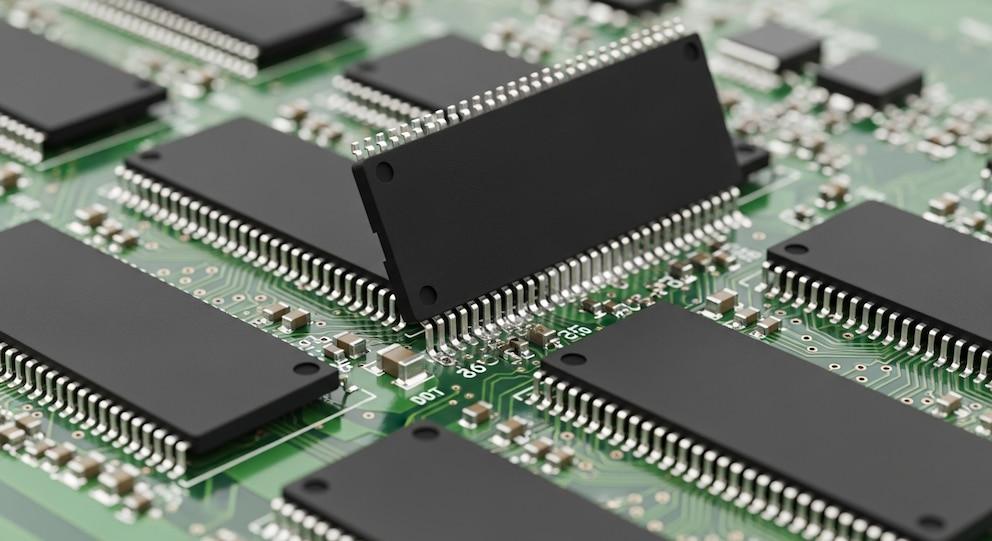
The demand for memory for AI is not limited to data storage, but is key to the speed and performance of applications such as chatbots. The industry is betting on high-bandwidth memory (HBM), which allows much faster data transfers by stacking RAM chips vertically.
Nvidia, a leader in the sector, uses 12 stacks of these chips in each package of its AI processors, which speeds up information processing.
This new context has doubled or tripled the price of PC RAM kits in a few months, going from USD 105 to USD 250, according to PCPartPicker.Price pressure affects both manufacturers and end consumers.
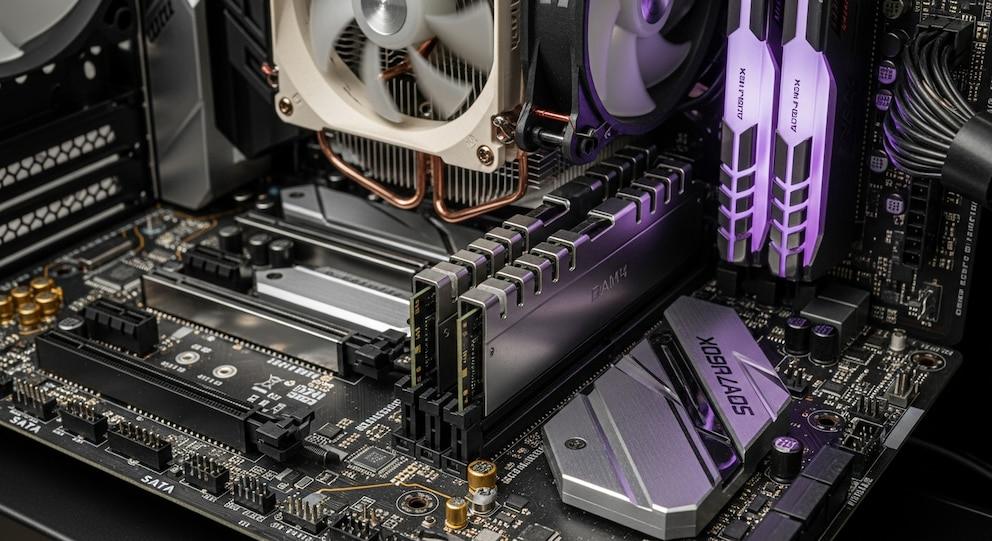
Despite the crisis, companies like Falcon Northwest have seen their revenue grow thanks to customers willing to pay for high-performance PCs. However, there is concern for the future: Buyers of more affordable computers could face unpleasant surprises if the trend continues.
The rise of artificial intelligence is transforming the entire chip supply chain and raising the cost of essential components.

