


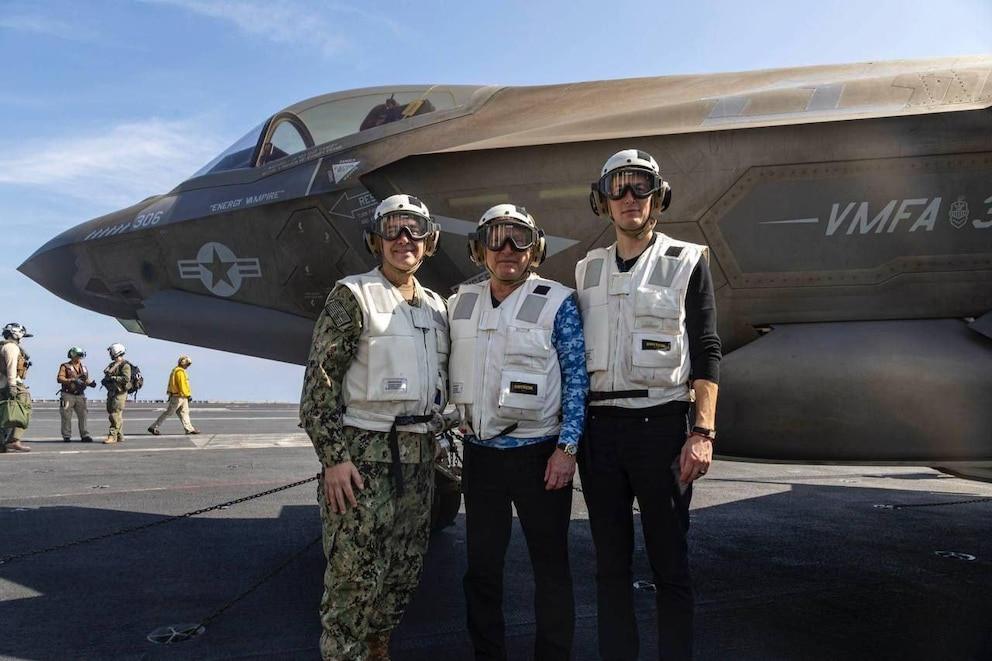
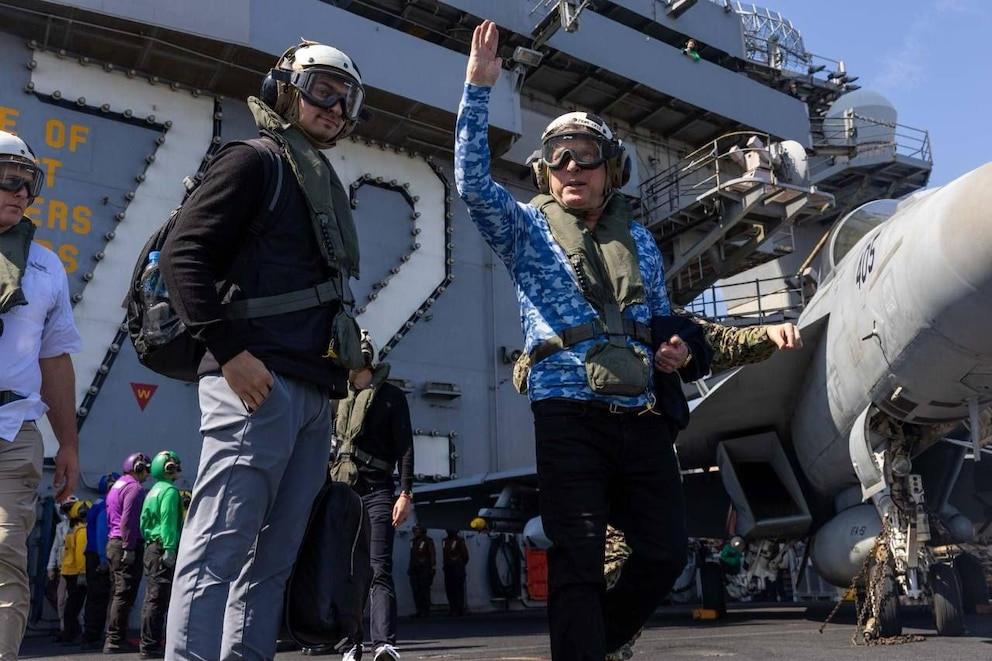
Donald Trump’s special envoy for the Middle East, Steve Witkoff, visited the USS Abraham Lincoln aircraft carrier in the Arabian Sea this Saturday, in a context marked by the progress of negotiations between the United States and Iran regarding the Iranian nuclear program.
Witkoff was accompanied by Admiral Brad Cooper, commander of the Naval Forces of the US Central Command, and by Jared Kushner, son-in-law and presidential advisor.
During the visit, Trump’s special envoy underscored a message of American strength in the region.“Today, Admiral Brad Cooper, Jared Kushner and I meet with the brave sailors and Marines aboard the Abraham Lincoln, who keep us safe and support President Trump’s message of peace through strength,” he noted.
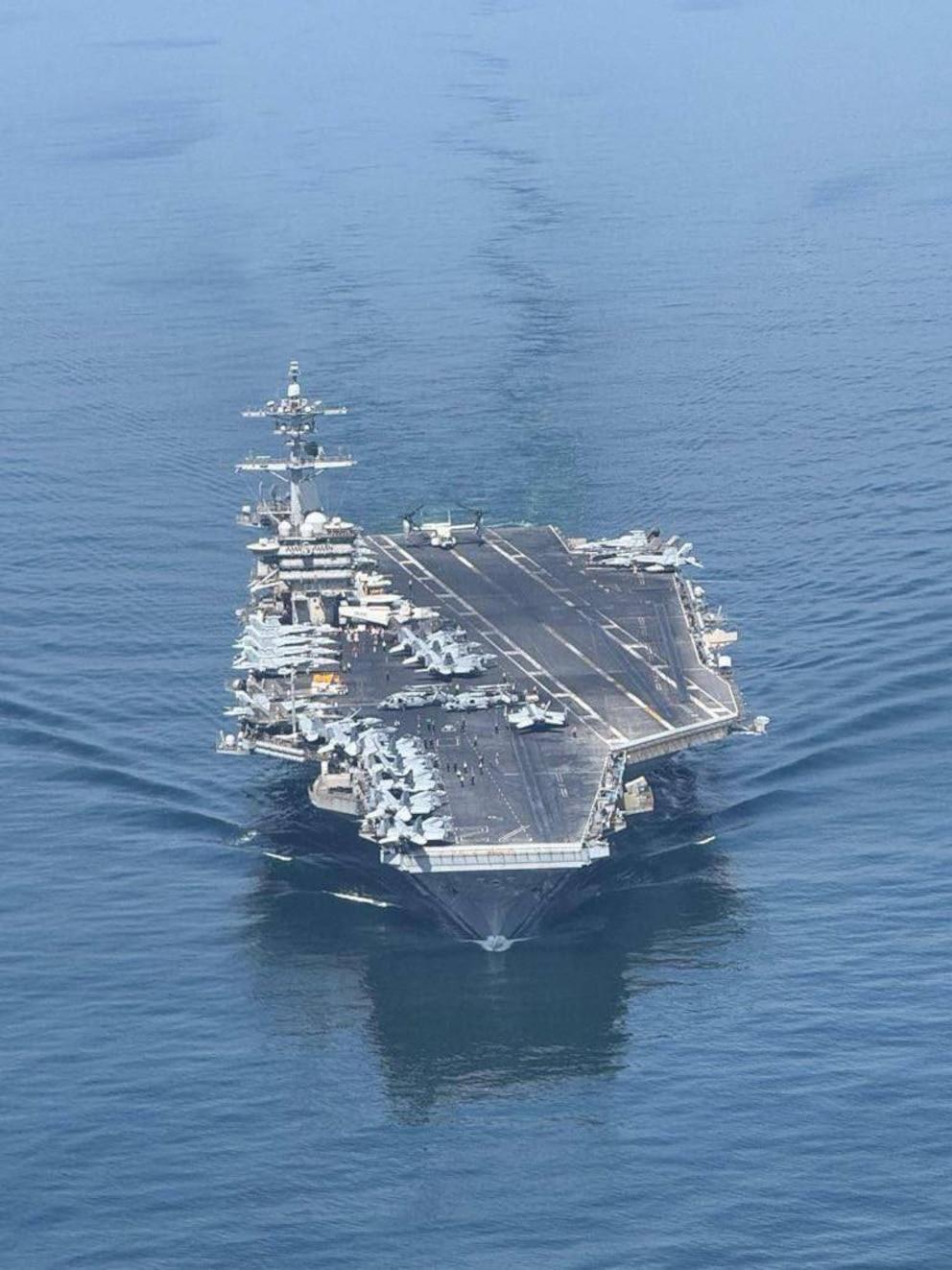
The presence of the aircraft carrier takes on special significance following the US military deployment in the Middle East and the intensification of pressure on Tehran.
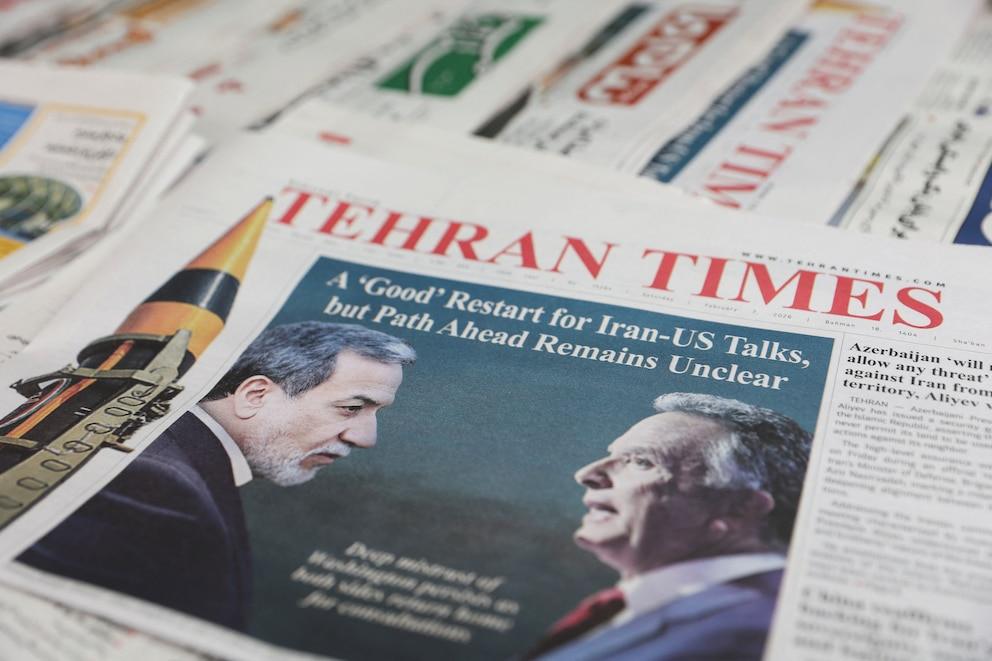
Nuclear negotiations between Washington and Tehran experienced a new boost on Friday, when representatives of both countries held a first round of indirect contacts in Muscat, Oman.Iranian Foreign Minister Abbas Araqchi described this meeting as “a good start” towards a possible “reassuring agreement.”However, Araqchi made clear that Iran’s “red lines” remain firm and warned of retaliation if there is US military aggression.
Araqchi insisted that “zero percent enrichment is outside the scope of the negotiations.”He added that the level of enrichment will depend on the country’s needs and that enriched uranium “will not leave Iran,” in statements provided to the Al Jazeera network.Furthermore, he reiterated that the development of ballistic missiles, considered by Tehran as a strictly defensive matter, “will never be negotiable.”
Earlier, President Trump had described the recent talks as “very good” and considered an agreement limited to the Iranian nuclear program acceptable.The US administration has imposed sanctions against multiple entities, individuals and vessels linked to the Iranian oil trade, in addition to signing an executive order on tariffs for countries that import goods or services from Iran.On a military level, a dozen warships were deployed and the aircraft carrier Abraham Lincoln acts as an emblem of the naval power of the United States in the area.
Despite diplomatic channels, Washington considered the possibility of direct military action if internal repression in Iran persisted, although it finally decided to rule it out – for the moment – due to the concern of allies such as Oman, Saudi Arabia and Qatar.From Tehran, the regime warned that it would respond with direct attacks on US bases in the region, in the event of an intervention.
Regarding the Iranian position, Araqchi stressed that the atomic program is an “inalienable right” for his country and that only technical issues, such as the level of uranium enrichment, will be the subject of dialogue with Washington. Categorically, he rejected defensive capabilities or the ballistic missile industry being part of the negotiations.
Israel’s role adds to the regional equation.Prime Minister Benjamin Netanyahu is scheduled to meet with President Trump on Wednesday in Washington to discuss the direction of negotiations.The office of the head of the Israeli Government reported that “the premier believes that any negotiations must include limitations on ballistic missiles and the cessation of support for the Iranian Army,” a position already conveyed to Witkoff in recent meetings.
Iran’s internal situation adds an additional layer of complexity to the international scenario.The country is going through one of its most serious crises since 1979, combining deep recession, scarcity of resources and widespread protests since January.The figures of victims of the repression differ significantly: the government mentions 3,117 deaths, the organization HRANA raises the figure to 6,955 and the UN special rapporteur, Mai Sato, points to up to 20,000, although the United Nations recognizes the difficulty of verification.

