


The humanoid robot Atlas, developed by Boston Dynamics, has impressed the technology community by passing tests that required its physical prowess.
In its most recent demonstrations, Atlas performed stunts typical of elite athletes, such as backflips, confirming a robot’s ability to execute complex movements and expanding the horizon of robotics.
This platform, oriented towards research and not the market, demonstrates the advancement of engineering by accurately replicating the range of movements and physical tasks of an average human being, which projects a range of future applications.
The Atlas humanoid embodies Boston Dynamics’ commitment to creating a robotic platform capable of operating in complex and variable environments.According to Scott Kuindersma, Atlas team leader, human-shaped robots are attractive for their potential to perform a variety of physical tasks, although they are not always the optimal choice for specific activities.
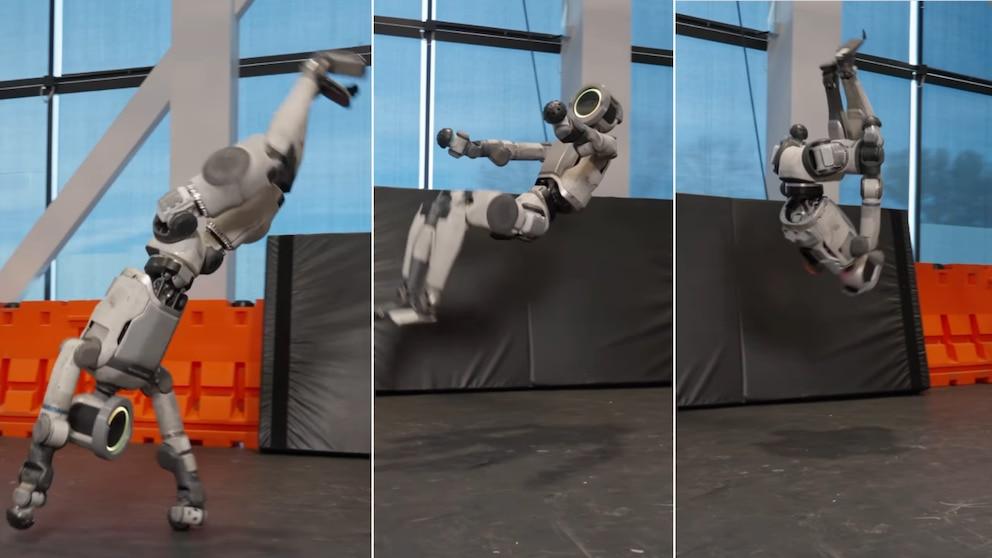
“They reflect our vision of a robot of the future capable of going anywhere and doing anything. They may not be the most suitable design for any particular task, but if you wanted to build a platform capable of performing a wide variety of physical tasks, we already know that a human form factor is capable of doing that,” Kuindersma explained.
The development of Atlas involves substantial technical challenges: the equipment must balance the relationship between strength and weight, improve autonomy, expand the range of motion and ensure physical robustness.
The control system requires algorithms that manage the physical complexity of the machine to generate coordinated, high-energy behaviors.Kuindersma added that pushing the limits of a humanoid robot like Atlas drives innovation in hardware and software that is incorporated into all of the company’s robots.
One of the most notable advances is the integration of real-time perception.Early versions of Atlas relied on pre-programmed routines;Current models detect and react to their environment, adapting behaviors on the fly.
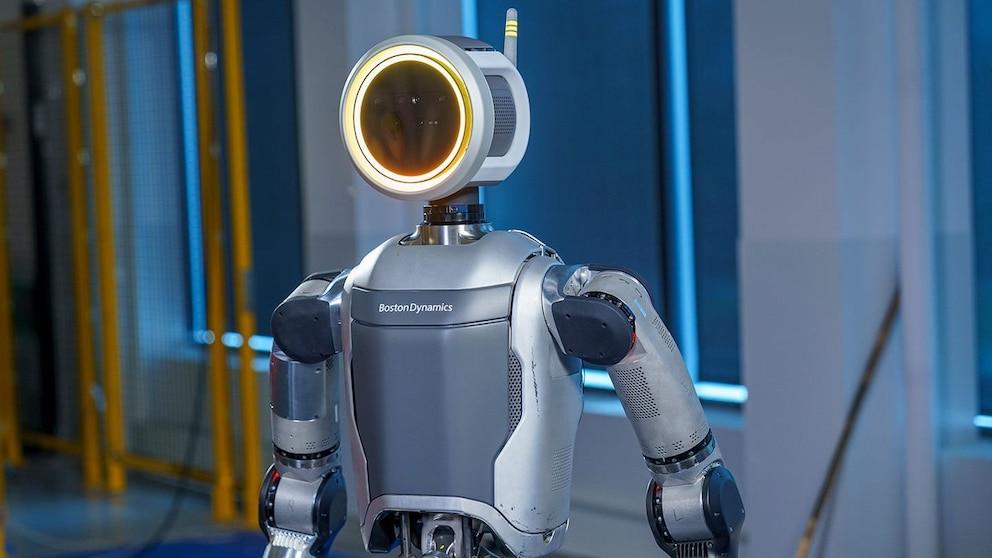
This capability reduces the need to previously define each movement for different scenarios and allows the robot to adjust existing patterns to new situations during task execution, which represents a key step towards robotic autonomy.
Parkour has become the main testing ground for the Atlas team.This discipline requires coordinated use of the body, maintaining balance in changing conditions, and the ability to link complex movements.
According to Yeuhi Abe, senior controls engineer on the project, the team used advanced simulation tools to prototype and refine acrobatic moves, such as the parkour jump over elevated beams.
Abe noted that “we were able to take advantage of the tools developed to create slow-movement movements in other contexts to quickly create a prototype that we refined through a combination of simulation and robot testing.”
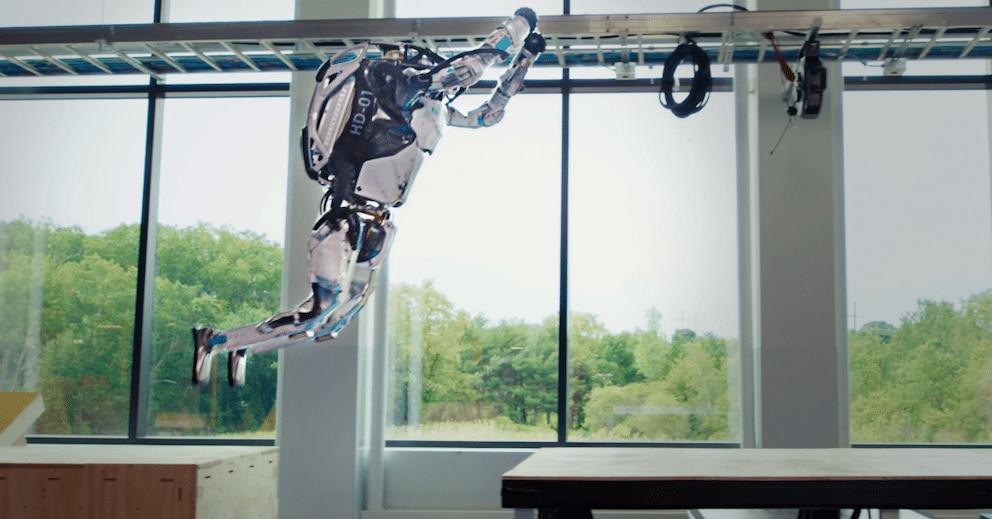
The jump on the balance beam, simple for a person, involved a significant challenge: the robot lacks a spine and shoulder blades, which limits its range of motion, and the torso is heavy, while the arm joints do not reach the strength of an average adult.These restrictions forced the team to look for innovative solutions to execute movements that, in humans, are almost instinctive.
Digital simulation has been fundamental to the evolution of Atlas, allowing new behaviors to be tested and adjusted without software changes affecting previously acquired capabilities.However, final validation is only achieved with physical tests, especially in maneuvers that limit the robot’s structure, such as jumps and acrobatics.
Although flips and acrobatics were already present in previous versions of Atlas, recent advances in perception and autonomous control make a substantial difference in its performance.
Currently, Atlas not only repeats routines, but adapts and executes its movements according to what it detects in its immediate environment, which anticipates a future where humanoid robots could operate alongside humans in diverse tasks, with physical dexterity that is difficult to distinguish from natural ones.

