


Boston Dynamics has completed the development phase of its Atlas humanoid robot, announcing its entry into production after final validation in research environments.The official presentation took place at CES 2026, where the company confirmed the imminent industrial deployment in collaboration with Hyundai Motor Group and GoogleDeepMind.
This advance places Atlas as a real platform for industrial automation and joint work with humans, leaving behind its prototype and experimentation stage, as detailed by both Boston Dynamics on its site and Xataka.
Atlas began its career as a hydraulic robot aimed at research and experimentation.In 2024, Boston Dynamics officially finalized that stage to focus on a fully electric design, aligned with real productive demands and ease of use and daily maintenance in large companies, according to Xataka.
The presentation at CES 2026 marked Atlas’ transition from technical demonstrations to being considered a finished industrial product.Boston Dynamics highlighted its focus on reliability, field service and long life.Robert Playter, executive director of the company, indicated that the objective of this leap is to satisfy the needs for automation and coexistence between humans and robots in factory environments.
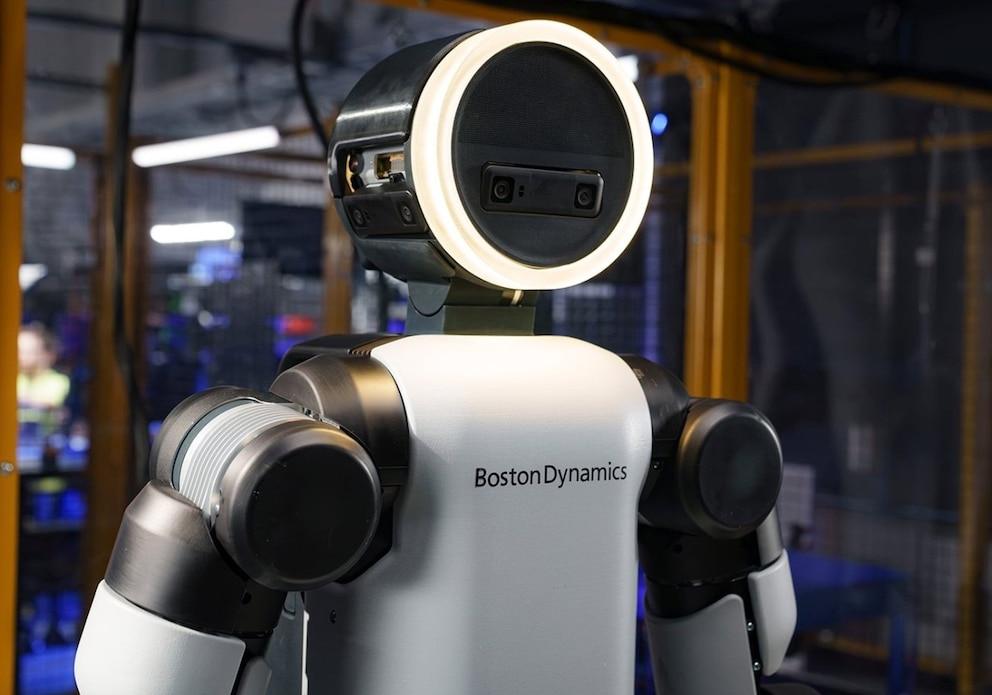
After its validation in research, the company plans to deploy Atlas in the automotive plant and in Hyundai’s Robotic Metaplant Application Center (RMAC).A joint roadmap points to the possibility of reaching up to 30,000 units annually, although these plans correspond to the group’s general expansion strategy, according to Xataka.
Atlas differentiates itself from proposals like Tesla’s by offering a platform that is not only experimental, but actually implemented in production lines, with an effective work cycle and the ability to be manufactured and repaired in a systematic way.
The new Atlas incorporates advanced technologies to face complex industrial environments.According to information from Boston Dynamics and Xataka, it can lift up to 50 kilograms and operate autonomously during standard shifts of up to 4 hours.
When the battery runs out, the robot itself makes the change without external help and resumes its work in less than 3 minutes using conventional 110 or 220 volt electrical outlets.
The design provides 56 degrees of freedom in the joints and a reach of 2.3 meters, allowing it to execute tasks that require precision, agility and collaboration in handling loads.The structure resists water and temperatures ranging between -20°C and 40°C, so it can operate both indoors and outdoors and adapt to demanding conditions.
In terms of security and coexistence, Atlas integrates sensors to detect the presence of people and systems that eliminate the need to install physical barriers.This approach facilitates collaboration in shared smart factories with human workers and other automated systems.
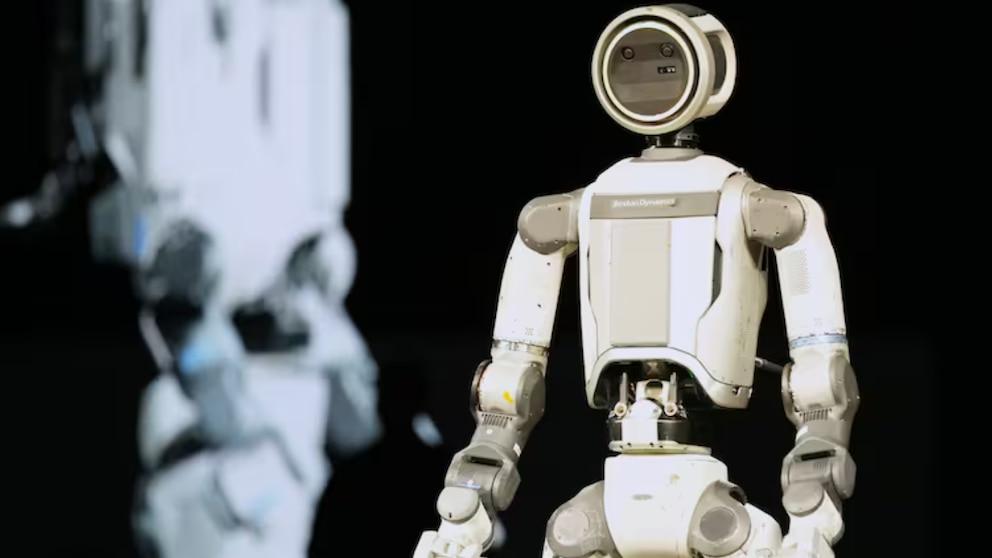
Additionally, the robot can instantly share learning new tasks with your entire fleet, accelerating the adaptation and implementation of changes or processes in different production locations.This functionality allows you to optimize start-up times and reinforces the adaptability of the system, according to Boston Dynamics.
The initial deployment of the robot will be carried out mainly in the automotive plant and in Hyundai’s Robotics Metaplant Application Center (RMAC), promoting its integration into the supply chain and manufacturing operations, as specified by Xataka.
Boston Dynamics emphasizes that the platform responds to the key requirements of the automotive sector and, in particular, the assembly and maintenance needs expressed by Hyundai as the first industrial and majority partner customer.
Atlas integrates with the manufacturing execution system (MES) and warehouse management system (WMS) through proprietary Orbit software, enabling centralized monitoring and control of entire robot fleets from a single interface.
The system can operate in autonomous mode, performing tasks independently, or in supervised mode via remote control or tablet, thus adapting to multifunctional workflows in the industry.
The adaptation of Atlas to the industrial environment is not limited to the performance of physical tasks.It is designed to integrate with the digital information and management flows that structure modern production, facilitating both material handling and logistical support, and ensuring effective collaboration with human personnel.
Boston Dynamics and Robotics
Robert Playter, CEO of Boston Dynamics, stressed that the usefulness of humanoid robots will depend on their flexibility to execute tasks in diverse areas and applications.For his part, Marc Raibert, executive director of the RAI Institute, stressed: “Working on Atlas with Boston Dynamics will allow us to achieve advances in reinforced machine learning on, possibly, the most sophisticated humanoid robot available.”
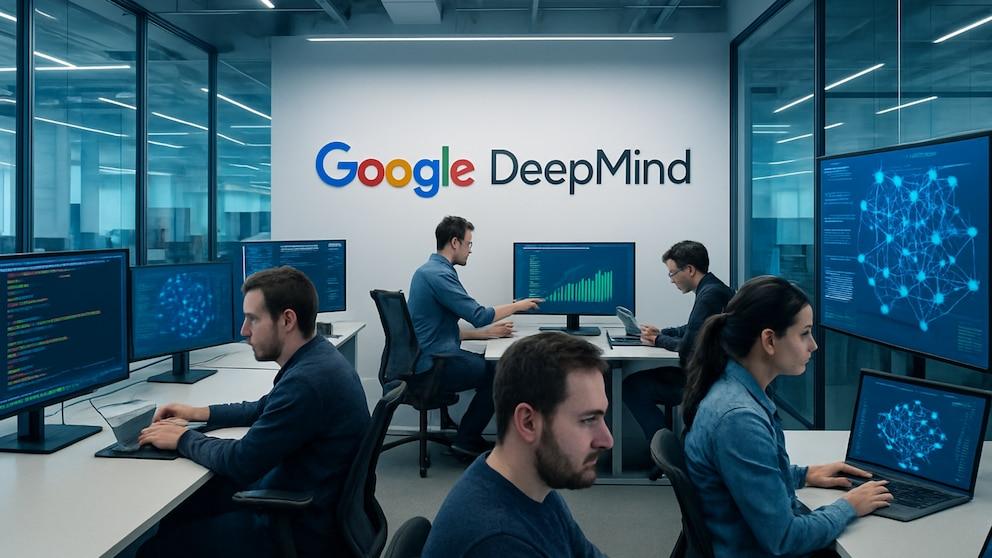
According to Boston Dynamics, the collaboration with Google DeepMind is aimed at providing Atlas with advanced cognitive capabilities through the integration of artificial intelligence models developed by the Google division.
This strategy seeks to accelerate Atlas’ learning and adaptability in complex production scenarios, allowing it to assume new roles and solve problems without predefined routines.
Atlas is positioned as a reference in advanced industrial robotics, with the potential to transform production processes and the way in which humans and machines interact in smart factories.Its design allows it to address both repetitive tasks and operations that require immediate decision-making, opening its application to areas such as logistics, the handling of hazardous materials or assisted care.
Boston Dynamics highlights that the purpose of Atlas is to bring robotics to everyday life, facilitating tasks and promoting productivity in various sectors.Thanks to its capabilities and the regular updates planned by the company and its partners, its applications are expected to expand even further in the coming years.
The consolidation of Atlas represents a new paradigm for the industry, providing an intuitive and versatile tool that redefines the standard of human-robot collaboration and anticipates a revolution in the way production plants operate.

