


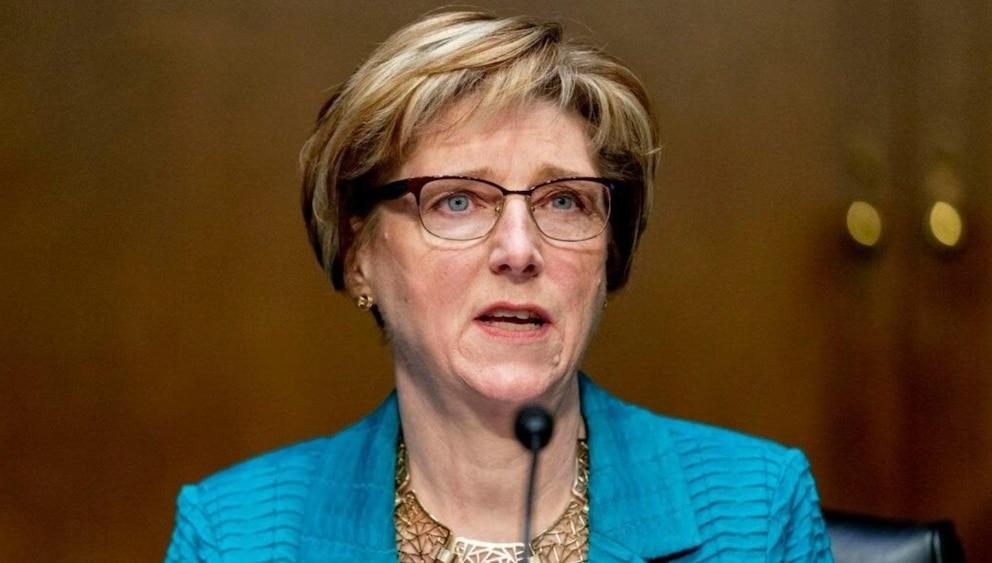
The United States chargé d’affaires in Caracas, Laura Dogu, announced that she discussed the Venezuelan economic recovery in a meeting with the Chevron team, shortly after her arrival in the country.
In the embassy’s
“My team and I remain focused on the work ahead: making President Trump’s vision for the recovery of the Venezuelan economy a reality,” Dogu said.
He assured that they seek to “guarantee the return of prosperity” to Venezuela and that this process, as he mentioned, must benefit the population of both countries.
Dogu arrived in Caracas last Saturday with the aim of reopening the US diplomatic mission, in the context of bilateral rapprochements after the capture of Nicolás Maduro by US forces during a military attack on January 3.

On Monday, Dogu met at the Miraflores Palace with the president in charge, Delcy Rodríguez, and the president of Parliament, Jorge Rodríguez. During the meeting, he reiterated the three phases proposed by the US Secretary of State, Marco Rubio: stabilization, recovery and democratic transition.
On January 9, the interim government led by Rodríguez announced the beginning of an “exploratory process of a diplomatic nature” with the United States, aimed at reestablishing diplomatic missions and dealing with the consequences of what they describe as the “kidnapping” of Maduro and his wife, Representative Cilia Flores.
As part of these measures, on January 29 the Venezuelan Parliament, with a Chavista majority, unanimously approved the reform of the Organic Hydrocarbons Law.
That same day, the US Treasury Department issued a general license authorizing certain transactions with Venezuelan oil.This decision marked a change from the policy of Donald Trump, who imposed sanctions on PDVSA in 2019 during his first administration.

In another order, the Democratic Unitary Platform (PUD), the main opposition coalition in Venezuela, questioned this Friday the “serious omissions” and exclusions present in the general amnesty bill promoted by the acting president Delcy Rodríguez and approved in the first discussion by the Parliament.
The bloc warned that the text contains “serious omissions,” such as the exclusion of “large groups of civil and military political prisoners” and relevant historical periods that are not contemplated in the law.
The organization also pointed out, in a statement released through the social network
In addition, he criticized that the project does not guarantee the “safe return” of exiles nor does it lift the political disqualifications of leaders opposed to former dictator Nicolás Maduro.
On the other hand, the PUD expressed its concern that the application of the amnesty remains in the hands of the Public Ministry and the current justice system, which it accuses of being “instruments of political persecution.”

