


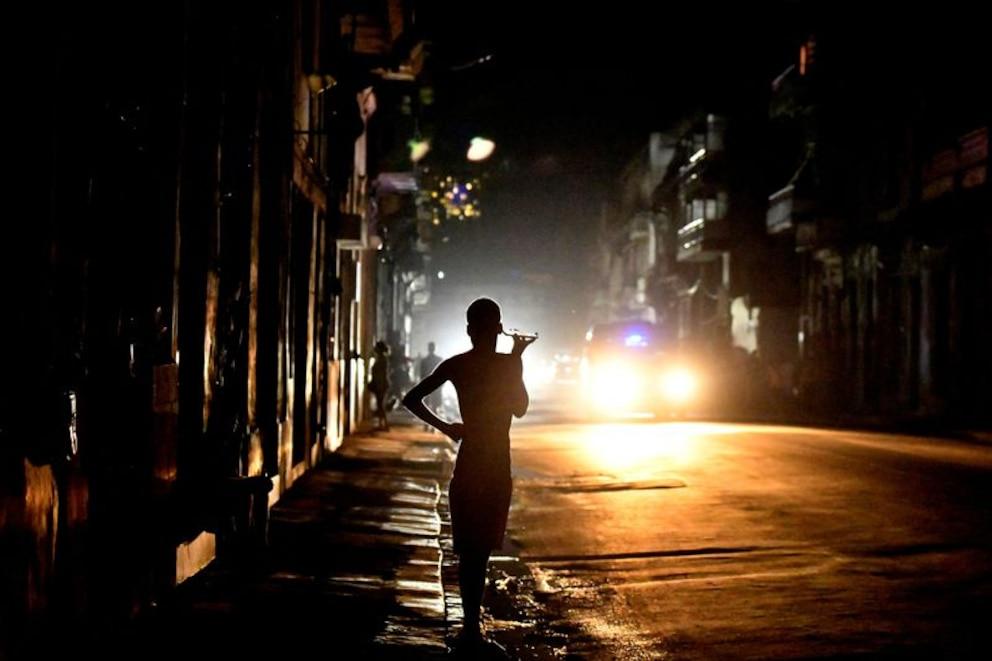
The United States embassy in Cuba warned this Tuesday about the serious deterioration of the island’s electrical system and the increase in protests led by the Miguel Díaz-Canel regime against American interests and citizens.
The security alert spread on social networks indicates that electricity outages occur daily in different regions, including neighborhoods in Havana, and affect essential services such as water, refrigeration, communication and transportation.
According to the diplomatic headquarters, the national electrical grid is going through a critical situation, with both scheduled and unforeseen interruptions that impact the daily lives of the local population and those who visit the country.
“Cuba’s national electrical grid is increasingly unstable and electricity outages, both scheduled and unscheduled, occur daily throughout the country, including Havana,” the US delegation noted in its message.
The warning also highlights fuel shortages, which have caused long lines at gas stations and put at risk the operations of businesses, hotels and hospitals, which depend on generators to maintain their operations.
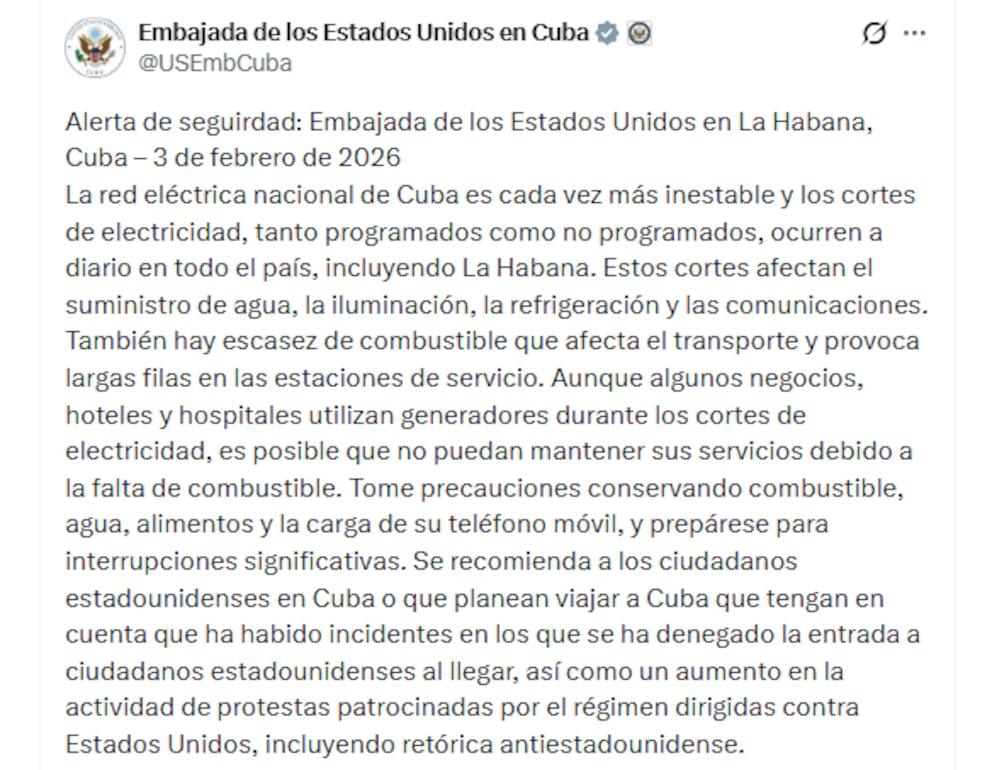
The embassy recommended U.S. citizens in Cuba, or those planning to travel soon, to take precautions against the possibility of prolonged power outages and limitations in access to basic supplies.
Suggestions include keeping mobile devices and portable batteries charged, storing non-perishable food and water, having flashlights and batteries accessible, and providing alternatives for storing medications or using electrical medical equipment.
“Prepare for significant disruptions,” the official text warned.
In the same statement, the United States representation warned about the increase in protests promoted by the Cuban regime and the use of anti-American rhetoric in public demonstrations.
“There have been incidents where U.S. citizens have been denied entry upon arrival, as well as an increase in regime-sponsored protest activity directed against the United States, including anti-U.S. rhetoric,” the notice states.
The consular authorities recalled that the safety of their citizens is a priority and recommended monitoring official sources for daily updates.
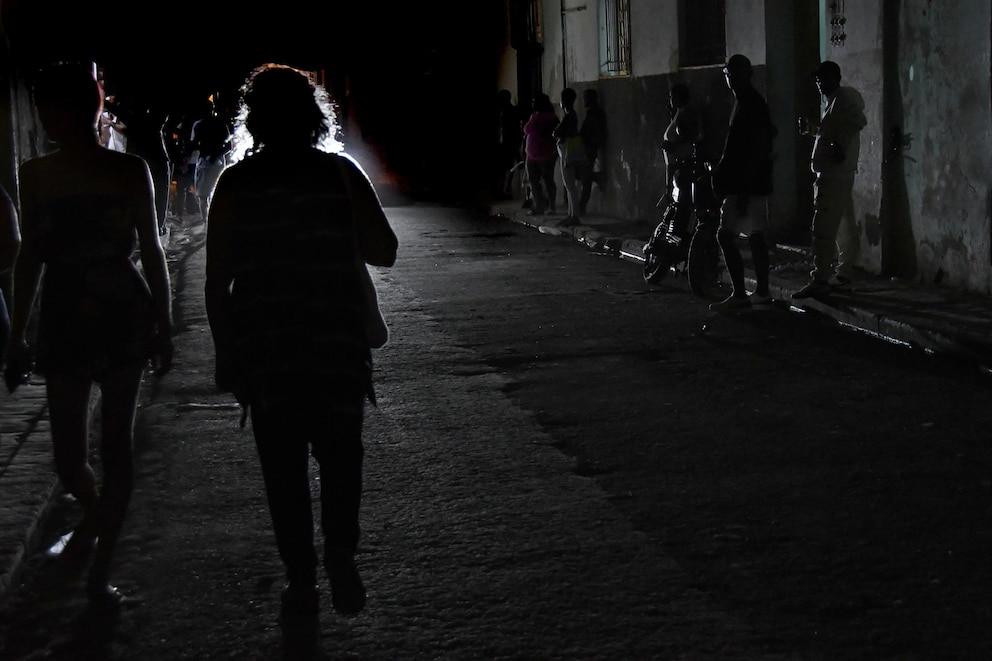
The%20energy%20crisis%C3%A9tica%20that%20affects%20a%20Cuba%20has%20aggravated%C3%B3%20since%20mid%20of%202024%20and%20has reached%20figures%20r%C3%A9cord%20of%20blackouts.%20Recent%20data%20of%20the%20state%20Uni%C3%B3nThe%C3%A9electric%20(UNE)%20show%20that,%20during%20the%20peaks%20of%20demand,%20the%20generation%C3%B3nel%C3%A9electric%20available%20not%20arrives%20to%20cover%20the%20needs%20m%C3%ADanimal%20of%20pa%C3%ADs,%20what%20cause%20that%20up%20the%2062%%20of%20the%20island%20being%20without%20supply%20simult%C3%A1lineally%20at certain%20moments.
Currently, nine of the country’s sixteen thermoelectric plants are not operational due to breakdowns or lack of fuel.This energy deficit directly affects the economy and has been a trigger for social protests in recent years.
Independent specialists consulted estimate that between 8,000 and 10,000 million dollars would be needed to restore the Cuban energy infrastructure and guarantee a stable supply.
The Cuban dictatorship attributes the worsening of the crisis to United States sanctions and the reduction in the supply of Venezuelan oil, while external analysts point to a lack of structural investment and centralized management of the sector.
The United States embassy advised its citizens to stay in touch with family and friends, review updates issued by the UNE and register for the STEP alert system to receive relevant consular information.
The statement also has telephone numbers and contact emails for urgent assistance, highlighting that the situation could change without prior notice.
The electricity crisis and fuel shortage continue to generate social unrest, the most visible expression of which has been the protests and street blockades in several provinces, many of which have the participation or tolerance of the Cuban regime.
The embassy insisted on the importance of taking preventive measures and remaining alert to possible variations in the political and energy context in Cuba.

