


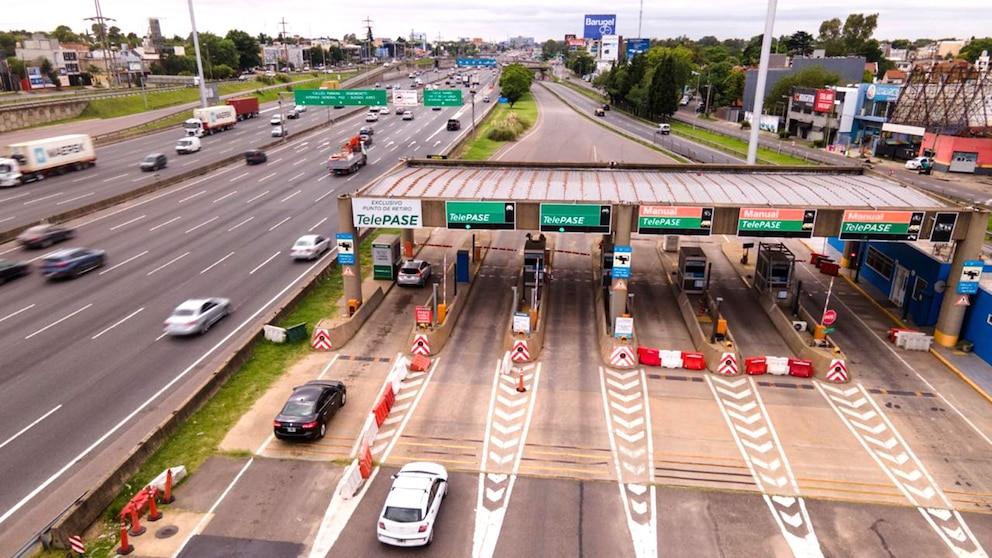
In the context of the new tariff schemes proposed for the North and West Accesses to the City of Buenos Aires, National Roads called for a citizen consultation aimed at bringing the population closer to information related to the updating of tariffs and the rehabilitation and improvement works planned on the route.
According to the guidelines established by the Ministry of Public Works, the proposed adjustment in rates is linked to the need to ensure the adequate provision of the service, the conservation of road infrastructure and the performance of rehabilitation tasks that allow improving safety, passability and comfort conditions for users.
“Comprehensive roadway rehabilitation work is planned, improvements in horizontal and vertical signage, adaptations to drainage systems, structural maintenance and other interventions aimed at optimizing the operation of accesses and prolonging the useful life of the existing infrastructure,” Vialidad reported.
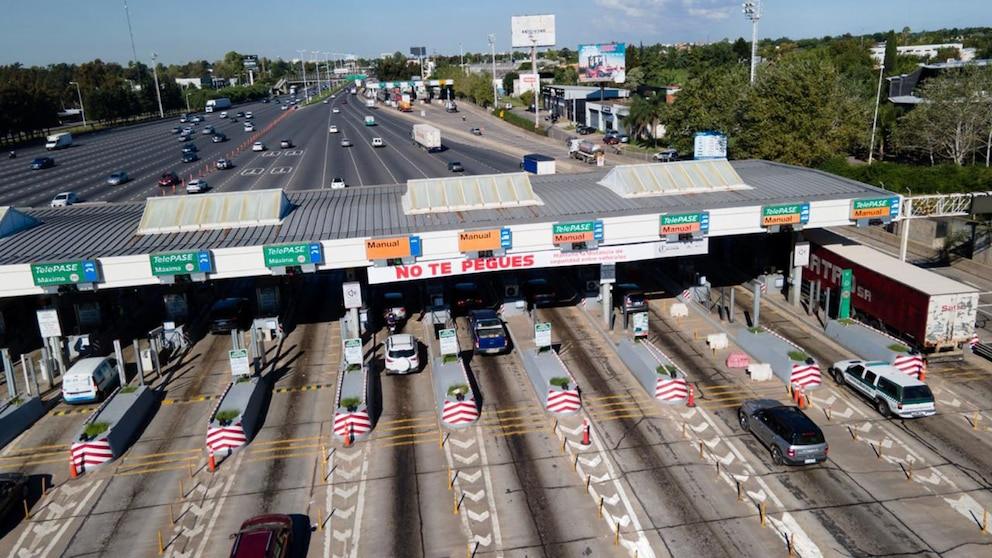
The proposal incorporates adjustments in the manual and electronic collection methods. The tariff tables establish a differentiation that may result in the application of a tariff of up to double for those who use manual collection methods, always within the maximum values set, with the aim of encouraging a gradual transition towards the TelePASE system.
“This measure is part of the process of modernizing the toll system and constitutes a prior step to the implementation of more agile collection schemes, such as the free flow system, in accordance with current regulations and in line with what is planned for the Federal Concessions Network,” official sources assured.
“At the same time, it allows reducing delays at toll stations, improving the flow of traffic and reducing travel times. In this context, National Roads especially encourages the use of the TelePASE system, which represents a more convenient alternative for users since it allows access to cheaper rates, expedites collection and avoids unnecessary detentions at toll stations,” they added.The device can be ordered through the official TelePASE website.
The planned updates represent the first tariff adjustments made after more than a year without modifications.
In both corridors, the use of TelePASE currently costs $699.09 during off-peak hours and $838.93 during peak hours, while the proposed rate raises those values to $994.15 and $1,112.99, respectively.
For electronic payment without TelePASE, the projected rate amounts to $1,988.30 outside peak hours and $2,385.97 during peak hours.Meanwhile, manual payment – the most expensive modality – would go from the current $700 in non-peak and $900 in peak to $2,000 and $2,400, respectively, according to the official proposal that covers the North and West accesses equally.
“It should be noted that the proposed tariff schedules were prepared considering the updating mechanisms provided for in the current concession contracts, along with criteria of gradualness, reasonableness and predictability, in order to safeguard the economic interests of users and ensure the execution of the works necessary for the maintenance and improvement of the road infrastructure,” said road.
The call to participate in the citizen consultation will be online as of its publication in the Official Gazette and will last for a period of 15 administrative business days.
During this period, interested parties will be able to access the draft regulations, the proposed tariff tables, details of the planned works and the form for the presentation of opinions and proposals through the current National Roads Citizen Consultations website.
Once the process is completed, the organization’s technical team will prepare a report that will systematize the presentations made by citizens.Then, the new approved tariff schedule will be disseminated through its publication in the Official Gazette and in graphic media.

