


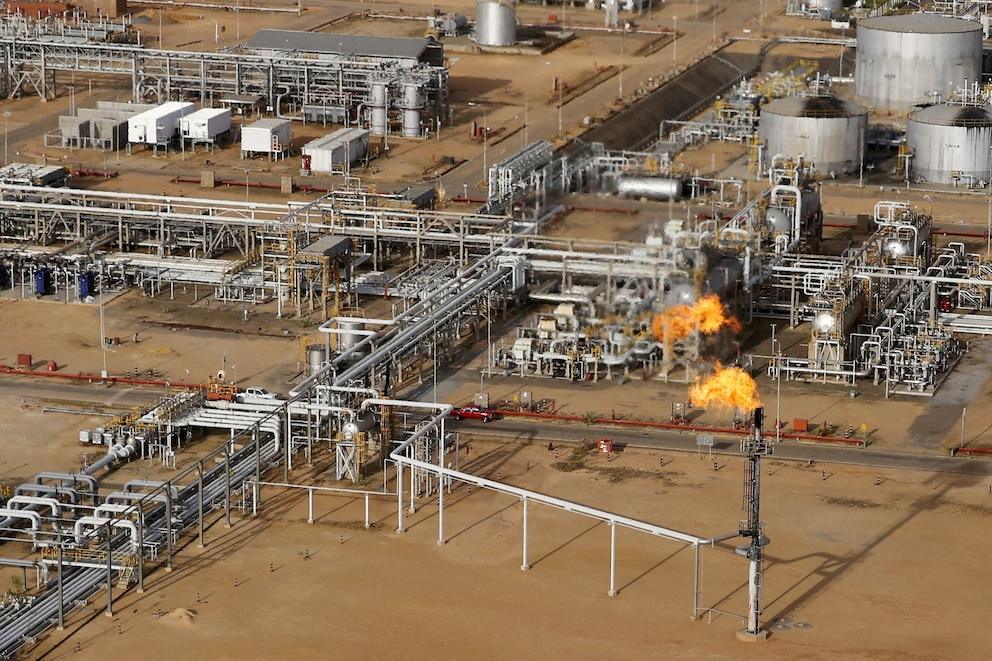
The Trump administration will exercise direct control over revenues derived from the sale of Venezuelan oil currently under sanctions, initially allocating those resources to basic government services such as security and health, as Secretary of State Marco Rubio announced on Wednesday before the Senate Foreign Relations Committee.The supervision system, which involves the deposit of funds in accounts controlled by the US Treasury Department, is part of Washington’s strategy to influence the political transition of the South American country after the capture of Nicolás Maduro on January 3.
The mechanism functions as a financial intervention designed to maintain some operational stability in Venezuela while the United States defines the future of the Chavista regime led by Delcy Rodríguez, who took over as acting president after the operation that extracted Maduro from Caracas.Rubio specified that the funds will be deposited in accounts that the US Treasury will supervise, and that Venezuela will be able to use that money to pay for police services or purchase medicines, but under strict audit to verify that it is used as authorized.The system will allow Washington to approve or reject the monthly budgets presented by Chavismo.
The Secretary of State presented the scheme as an emergency measure to avoid a “systemic collapse” in Venezuela, while rejecting that the United States will subsidize investments in the country’s oil industry.The account was initially established in Qatar to avoid embargoes by American creditors and avoid legal complications arising from Washington’s failure to recognize the legitimacy of the Maduro regime.According to Rubio, hundreds of millions of dollars have already been reserved, with a projection of up to an additional 3 billion.
The structure is based on a technical distinction that Rubio highlighted before the senators: “It is an account that belongs to Venezuela, but has US sanctions as a blocking mechanism. We only control the dispersion of the money, we do not control the money itself.”The model partially replicates financial supervision systems used in post-conflict reconstruction contexts, although with the particularity that the United States does not limit itself to auditing, but rather decides what expenses it authorizes.
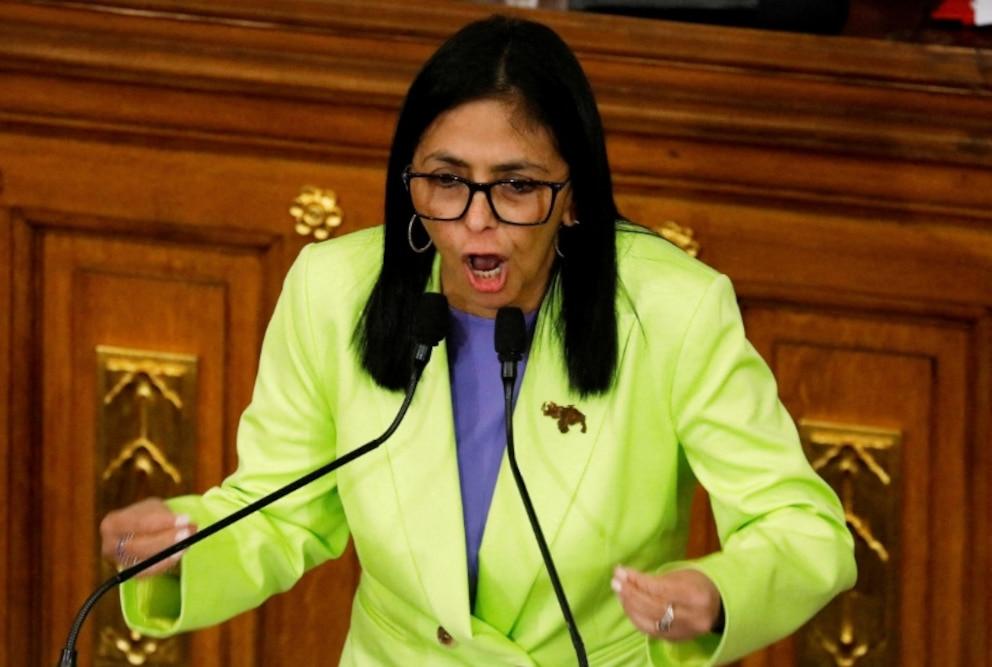
The leader of Venezuela’s regime, Delcy Rodríguez, had announced on January 20 that cash from oil sales would flow into two sovereign funds: one to support ailing health services and another to reinforce public infrastructure, including the electrical grid.Venezuelan hospitals are going through a critical situation in which patients must provide basic supplies for their own care, from syringes to surgical screws, in addition to paying for laboratory tests and images in private centers.During a televised event days after taking office, Rodríguez pointed out that his government and the US administration have established “respectful and courteous communication channels” since Maduro’s capture.
The%20petr%C3%B3leo%20Venezuelan%20is%20found%20in%20the%20center%20of%20a%20complex%20disputageopol%C3%ADtica%20que%20Trump%20has%20become%20%20priority%20of%20su%20pol%C3%ADtica%20exterior%20towardsAm%C3%A9rica%20Latina.%20Venezuela%20posee%20the%20largest%20reserves%20of%20crude%20in%20the world, with%20303.200%20million%20of%20barrels%20sec%C3%BAn%20data%20of%20the%20Organization%C3%B3n%20of%20Pa%C3%ADsExporters%20of%20Petr%C3%B3leo,%20what%20represents%20approximately%20the%2019%%20of the%20global total.%20This%20figure%20exceeds%20by%20six%20%20of%20American%20reserves%20and%20doubles%20of%20Saudi Arabia%20However,%20the%20production%C3%B3n%20current%20contrastram%C3%A1ethically%20with%20that%20potential:%20in%202025%20the%20pa%C3%ADs%20bombe%C3%B3%20a%20average%20of%201.08million%20of%20barrels%20daily,%20a%20fracci%C3%B3n%20of%20the%203,1%20million%20that%20produced%C3%ADa%20in 1998,%20before%20of%20that%20Hugo%20Ch%C3%Sometimes%20came%20to%20power.
Most of Venezuela’s reserves are concentrated in the Orinoco Oil Belt, where extra-heavy crude oil is expensive to extract and process due to its high density.This type of oil requires special diluents, such as gasoline, to be transported.For years, Venezuela received these diluents from Russia through the so-called “ghost fleet,” a network of old oil tankers that operates outside international regulations to evade sanctions.
The Venezuelan oil industry has operated for years through a sophisticated sanctions evasion network that involves dozens of ghost ships, intermediary companies and alternative payment mechanisms.These tankers, which number more than 70 according to independent analyses, transported approximately 400,000 barrels per day to Chinese refineries in 2024.The tactics include turning off or spoofing GPS signals, constantly changing names and flags, conducting offshore crude transfers to conceal its origin, and operating with unclear owners registered in opaque jurisdictions.
China%20consolidated%C3%B3%20as%20the%20main%20destination%20of%20Venezuelan%20crude%20after%20the breakup%20with%20United States%20in%202019.%20In%20September%20of%202024,%20the%2084%%20del%20petr%C3%B3leoexported%20by%20Venezuela%20was%20directed%C3%B3%20to%20gigante%20asi%C3%A1tico,%20directly%20or indirectly.%20The%20transactions%20regarded%20del%20d%C3%B3lar%20American%20and%20were made%20in%20yuan%20or%20through%20cryptocurrencies, particularly%20the%20stablecoin%20Tether,%20sec%C3%BAn%20documents%20del%20Departamento%20ofJusticia%20American.%20This%20scheme%20allowed%C3%B3%20the%20r%C3%A9gimen%20of%20Maduro%20sustain%20flows%20of%20income%20despite%20the%20financial%20encirclement%20of the West.
The naval blockade that Trump ordered in December on “all sanctioned oil tankers” entering or leaving Venezuela unleashed an operational crisis.At least seven vessels have since been seized by US forces in the Caribbean and Atlantic.The tankers began emerging from the shadows days after Maduro’s capture, when some activated their transponders to reveal locations they had kept hidden for months.The Marbella supertanker, whose position was a mystery for more than a year, suddenly appeared off the Venezuelan coast with 1.9 million barrels on board.
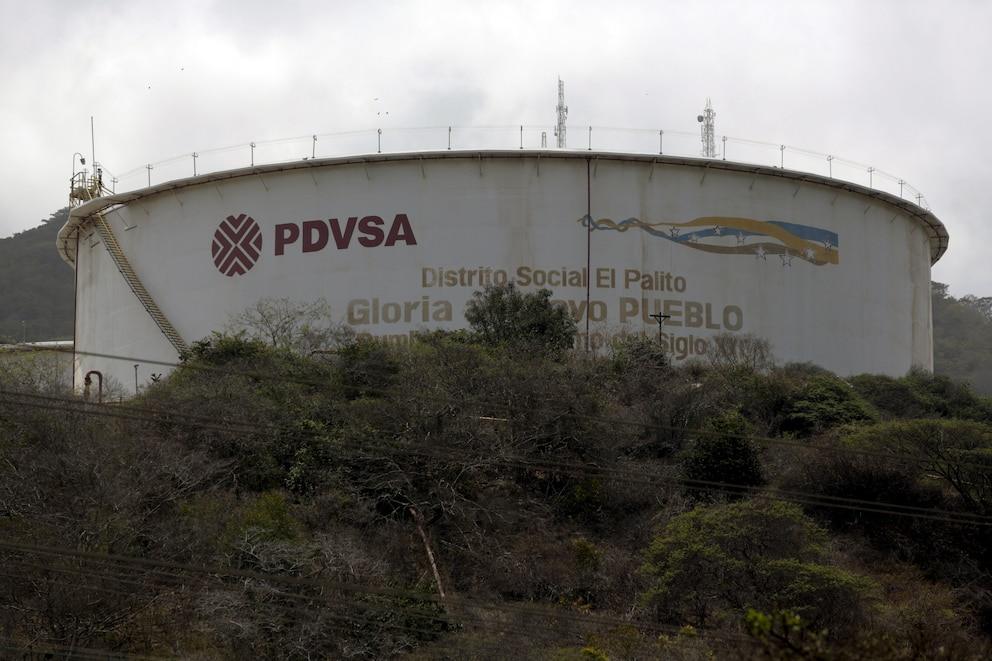
The confiscations generated diplomatic tensions with Beijing, which accused Washington of “serious violation of international law” after the interception of the Centuries oil tanker, which was transporting 1.8 million barrels of Venezuelan crude oil to China.The vessel had loaded under the false name “Crag” and operated through Satau Tijana Oil Trading, one of the multiple intermediaries that PDVSA uses to market its production with independent Chinese refineries.The intermediation strategy through companies registered in third countries dilutes legal tracking, although each intermediary collects their share, reducing the real income that reaches Venezuela.
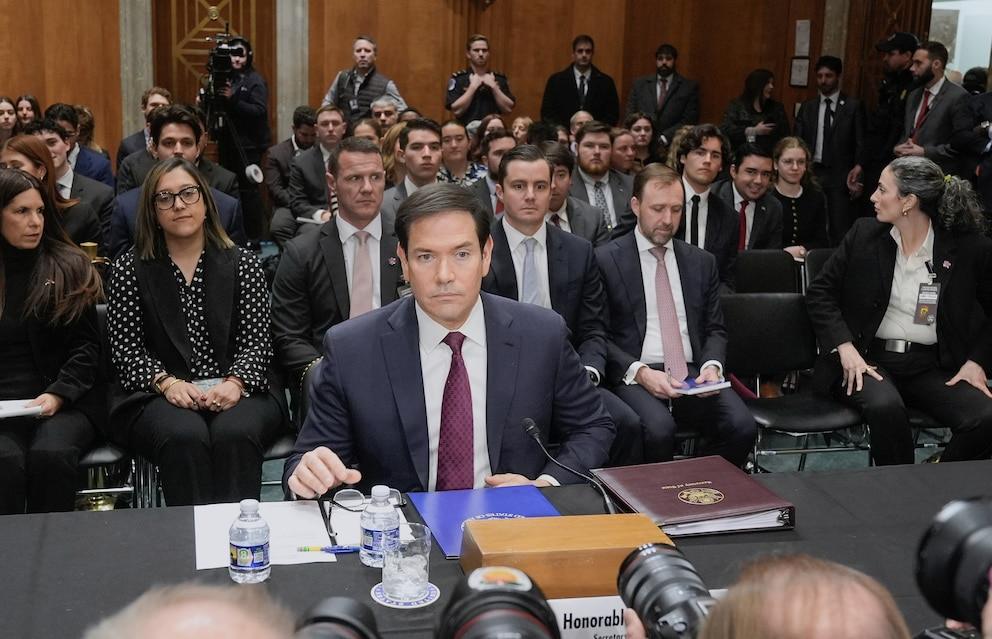
During the Senate hearing, Democrats and some Republicans pressed Rubio for details on how the United States will ensure transparency in its handling of Venezuelan oil.Senator Chris Murphy warned of the risks of the scheme: “They are taking your oil at gunpoint, they are holding it and selling it, they are deciding how and for what purposes that money will be used in a country of 30 million people. Many of us believe that is doomed to fail.”
Rubio defended that under Maduro the oil industry benefited corrupt leaders of the regime and countries like China, which bought Venezuelan crude oil at substantial discounts.He assured that now the interim leaders of Venezuela are assisting the United States in the seizure of illegal shipments.The model involves Washington issuing instructions on how the money can and cannot be spent, with periodic audits to verify compliance.Rubio described the mechanism as an “intermediate step” that allows “income to be divided so that there is no systemic collapse while we work on this recovery and transition.”
The%20Assembly%20National%20Venezuelan%20began%20%20to%20debate%20last%20week%20a%20reform%20wing%20Law%20of%20Hydrocarbons%20requested%20by%20Rodr%C3%ADguez,%20with%20the%20objective%20of%20createconditionions%20to%20attract%20investment%C3%B3n%20private%20foreign.%20The%20president%20of%20thestate%20Petr%C3%B3leos%20of%20Venezuela,%20H%C3%A9ctor%20Obreg%C3%B3n,%20announce%C3%B3%20a%20goal%20of%20increase it%20producci%C3%B3n%20a%2018%%20in%202026,%20up to%20approximately%201.4%20million%20of%20barrelsdaily.%20Trump%20has%20urged%20to%20executives%20of%20the%20major%20oil%20world%20toinvest%20%E2%80%9Cal%20less%20100,000%20million%20of%20d%C3%B3lares%E2%80%9D%20for%20revitalize%20theinfrastructure%20veNezolan,%20offering%20%E2%80%9Cprotection%C3%B3n%20and%20security%20of%20government%E2%80%9D%20long%20term.

