


Google has presented a series of updates to strengthen anti-theft protection on Android devices.
These new functions seek to make it difficult for unauthorized third parties to access smartphones, expand authentication barriers and facilitate the recovery of the device in the event of theft or loss.The measures are aimed at users with Android 10 or higher, and some of them require Android 16 or newer.
Among the main new features is the incorporation of an optional security question, designed to ensure that only the legitimate user can activate remote locking of the device if it is lost or stolen. By activating this function, only the person who has set the question will be able to initiate the remote locking process, which adds an extra layer of protection against improper access attempts.
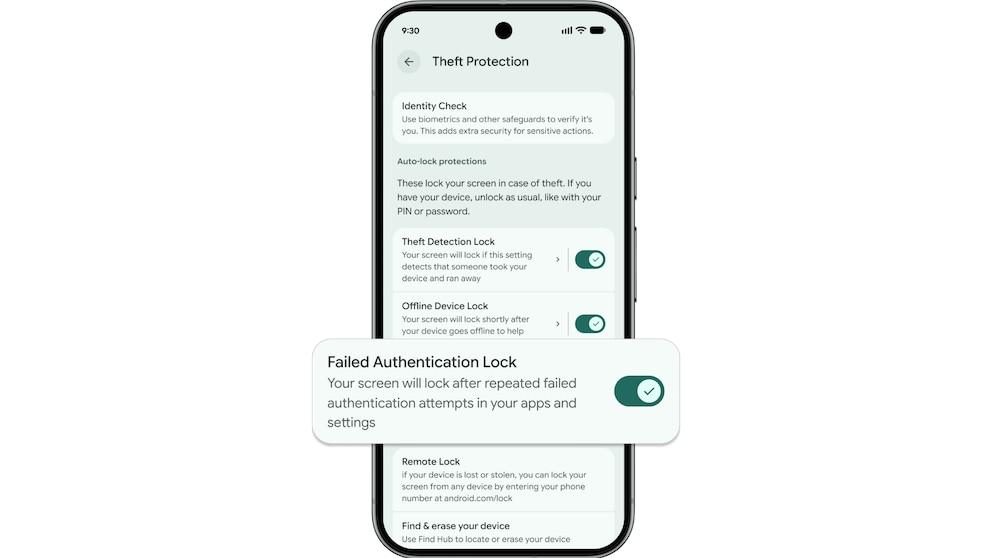
The update also introduces improvements to the failed authentication blocking mechanism.This feature automatically locks the screen after several failed unlock attempts, preventing attackers from accessing the phone’s contents through repeated attempts to guess passwords, patterns or PINs.
With the new version, identical failed unlock attempts will no longer be counted, which prevents quickly exhausting the margin of error for the rightful owner due to repeated errors.
Additionally, biometric authentication—which previously only protected certain internal apps—now extends to third-party banking apps and Google Password Manager.This means that sensitive applications and password management tools will have an additional barrier, making access difficult for those who cannot pass biometric validation.

On the other hand, the user has a new control in the device settings to activate or deactivate the blocking due to failed authentication, which allows them to adapt the level of protection according to their needs.
In the case of Brazil, newly activated phones have by default both theft detection locking and remote locking.The first uses artificial intelligence in the device to identify movements associated with physical theft, such as the usual “snatches”, and triggers the automatic locking of the equipment.
The second allows the user to lock their phone from the official website, reducing the time the device remains vulnerable after an incident.

The Remote Lock function, in addition to allowing the device to be locked from any browser, now includes the possibility of configuring a security challenge.This option ensures that only the actual owner can initiate the locking procedure, reinforcing protection in loss or theft scenarios.
The new features introduced by Google aim to make Android devices less attractive targets for cybercriminals.Strengthening authentication and expanding automatic defense measures respond to the growing sophistication of attack methods and the importance of maintaining exclusive control over personal information.
Google indicated that these updates will be deployed progressively, depending on the compatibility of each device with the corresponding Android version.All of these improvements are part of an ongoing strategy to anticipate and neutralize the threats facing the mobile ecosystem.

