



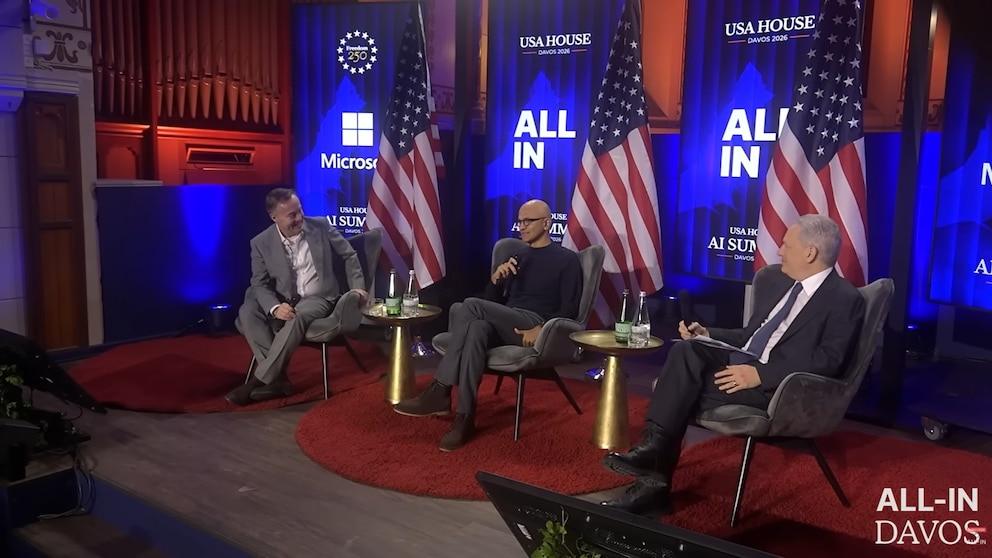
Artificial intelligence is redefining the way companies understand productivity and collaboration, said Satya Nadella, CEO of Microsoft, in the All-In Podcast edition held during the Davos Economic Forum.
In an extensive dialogue with the drivers, the executive addressed the impact of AI, the transformation of work and the evolution of intelligent assistants, pointing out that the industry is heading towards completely different models, where innovation and transversal adoption are leading the change.
Nadella described the arrival of artificial intelligence as “the biggest change in knowledge work since the PC.”According to the manager, the new intelligent assistants represent “a manager of infinite minds,” a metaphor that, in his words, summarizes how technology is allowing people to delegate tasks and achieve solutions with greater speed and scope.
The head of Microsoft stressed: “We now need a new concept or metaphor for the use of computers in the age of artificial intelligence. An ‘infinite mind manager’ is an excellent way to think about it.”He insisted that this conceptual leap will lead to a broad redistribution of tasks and the emergence of fully autonomous assistants.
Nadella stated that this transformation implies that “macro delegation and micromanagement will be central,” since employees will be able to define big goals and adjust details “on the fly” thanks to the constant support of these digital assistants.

Analyzing the recent progress, the Microsoft leader explained: “We started with chat. Chat with reasoning went beyond the mere request and response because there you see the chain of thought.”
Then, he noted: “There are now assistants capable of executing actions both locally and in the cloud, with various application modalities.”For Nadella, “the composition of these assistants in multiple scenarios is what is transforming the dynamics of knowledge work.”
The director emphasized the emergence of the concept of “digital employees” and described a future in which each professional will be able to have “infinite minds,” in addition to creating independent entities “with their own digital identities.”
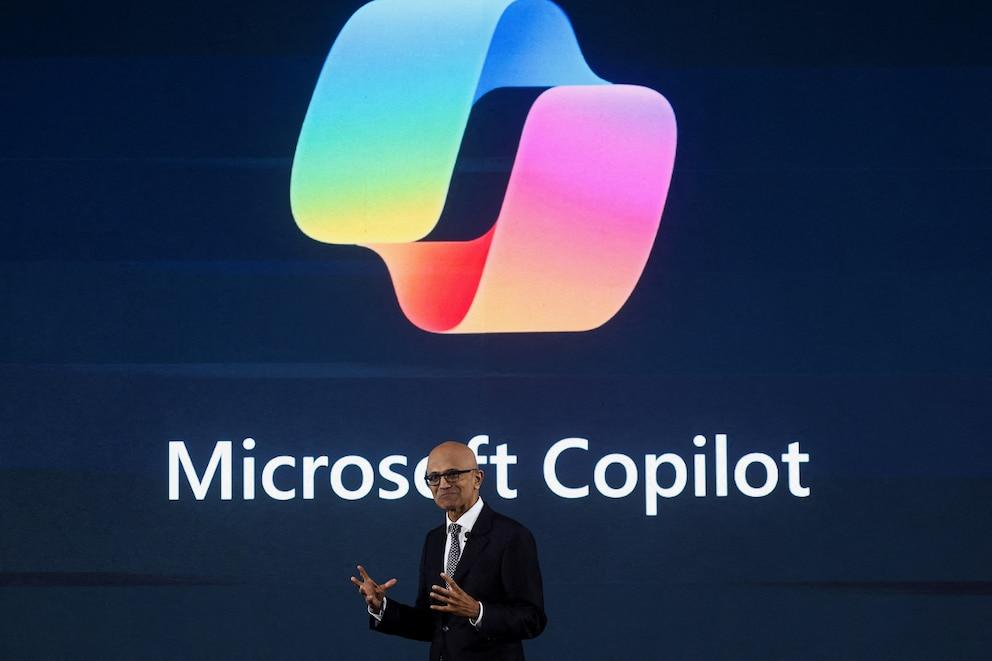
Within Microsoft and other technology companies, structural changes are accelerating.Nadella recounted on the All-In Podcast how traditionally differentiated roles, such as product managers, designers and developers, gave way to multidisciplinary teams known as “full stack builders.”
The manager summarized it: “This multiplies efficiency and reduces the number of intermediaries in the production chain.”He emphasized that the work artifact and task flow are completely evolving, and that today “work requires new loops between assessment, science and infrastructure, all driven by teams capable of spanning multiple functions.”
Nadella also defended the value of an organization that combines operational excellence in traditional tasks with the ability to develop new AI solutions simultaneously.
Addressing the international diffusion of artificial intelligence, he stated that the real opportunity arises when the technology spreads intensely and transversally.Regarding this, he stressed: “What generates real value is the intense and widespread use of this technology. It is not enough to create innovation, it has to be in use in large and small companies and in the public sector.”
He explained that both promotion from top management and adoption from the base, with flexible employees and digital natives, will determine the success of the transformation.He also highlighted the opportunity for the global south, where AI could influence public administration and economic development.
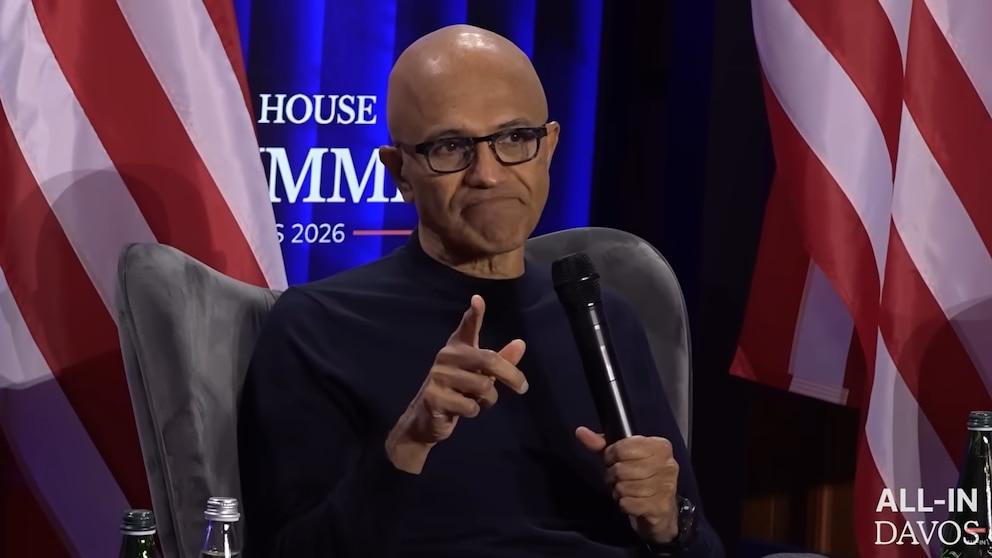
Asked about Microsoft’s strategic approach, Nadella stated that the objective is to create a “foundational model” based on heterogeneous infrastructure and the ability to operate with varied models, open or closed.
“A model is not enough; each company should have its own, adjusted to its tacit knowledge and managed autonomously,” he explained.He also added that differentiation comes from “ecosystemic impact” and stressed the importance of opening opportunities for developers and companies on the Microsoft platform.
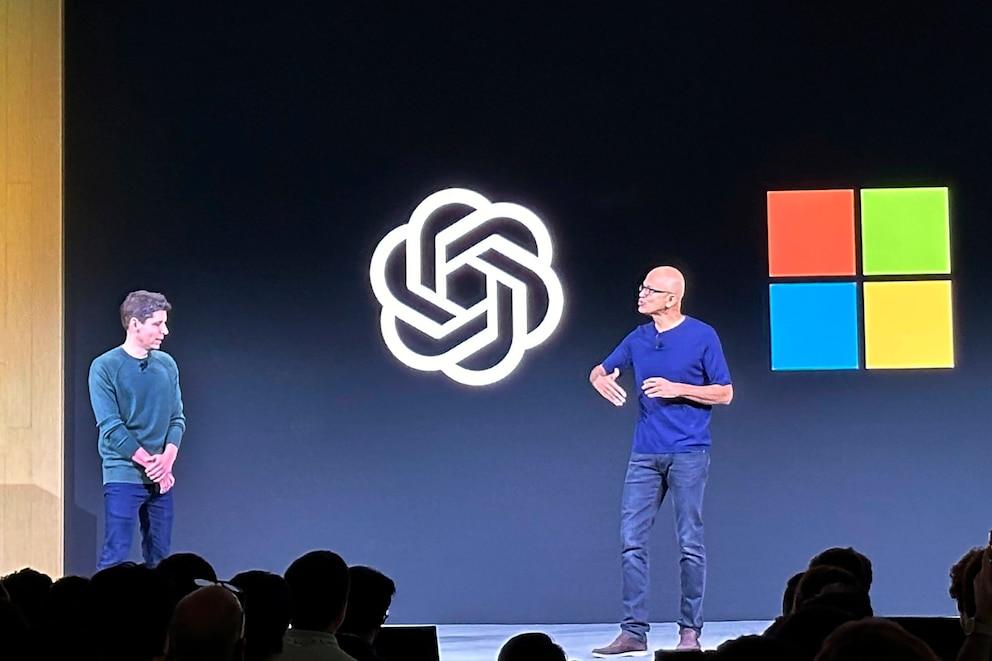
Regarding the collaboration with OpenAI and the development of new applications, Nadella pointed out: “In the next stage of the knowledge economy, the key is for companies to integrate their knowledge within models that they control and adapt, fostering a diverse ecosystem instead of a steel-summary competition.”
The developer acknowledged before the All-In Podcast that training and the acquisition of skills go through a process of accelerated transformation. “Learning is no longer mystical; it occurs through action,” he assured, defending the importance of support so that those who join working life can develop skills with the support of intelligent assistants.
He explained that with the integration of AI, new professionals have access to tools and guidance that were previously only provided by experienced mentors.
In closing, executive director Satya Nadella stated that the speed of integration and learning in teams is multiplied, since intelligent assistants function as allies that promote specialization and adaptation in each work challenge.

