


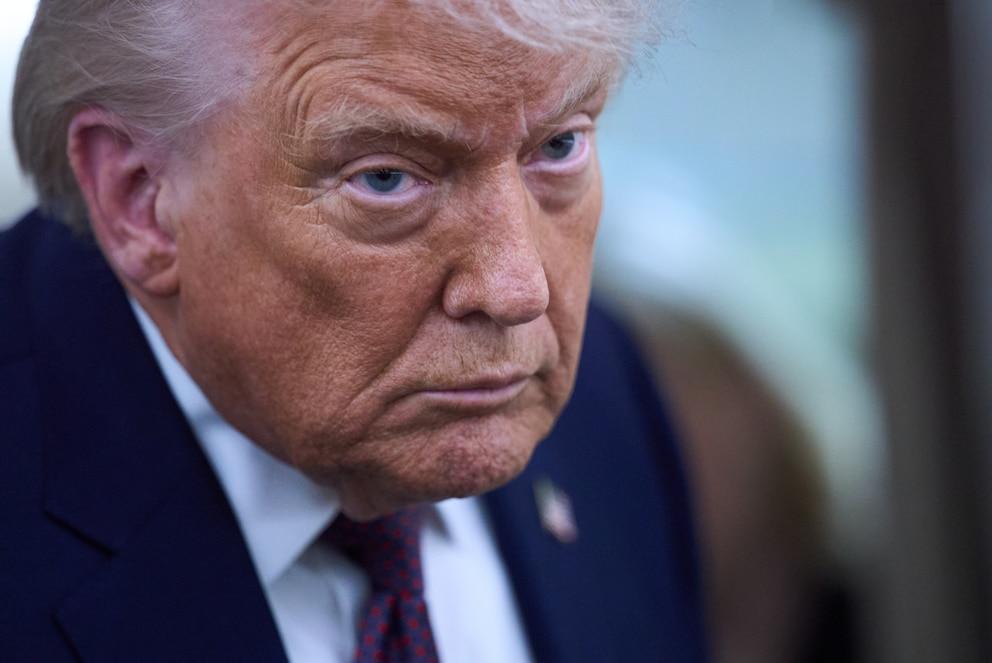
The president of the United States, Donald Trump, stated this Monday that Venezuela is “releasing” political prisoners at “an accelerated pace” and thanked the Delcy Rodríguez regime for what he described as “an important humanitarian gesture.” However, independent organizations and relatives of detainees question the transparency of the process and warn that the real number of those released is much lower than that officially reported.
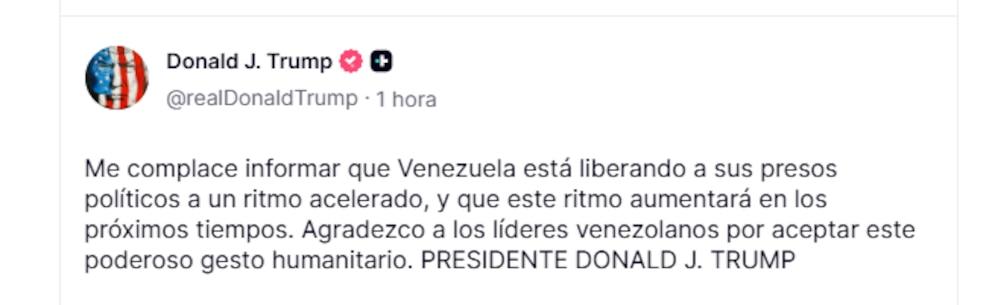
In a message broadcast on his Truth Social network, Trump celebrated the progress of the release process in Venezuela and assured that he hopes that in the coming weeks “the pace” of releases will increase.
“I am pleased to report that Venezuela is releasing its political prisoners at an accelerated pace, and this pace is expected to increase in the coming weeks,” he wrote.
The US president thanked Chavismo for “accessing this important humanitarian gesture.”
Trump’s statement coincided with the announcement made by the Venezuelan Minister of the Interior, Diosdado Cabello, who assured that more than 800 people had been released from prison.
Despite official announcements, the process is mired in controversy.The NGO Foro Penal, one of the main organizations monitoring political prisoners in Venezuela, pointed out that its own records do not coincide with the figures released.
According to Gonzalo Himiob, vice president of the organization, since December they have only been able to verify 383 releases, and only 266 since the announcement of a “great release” on January 8.
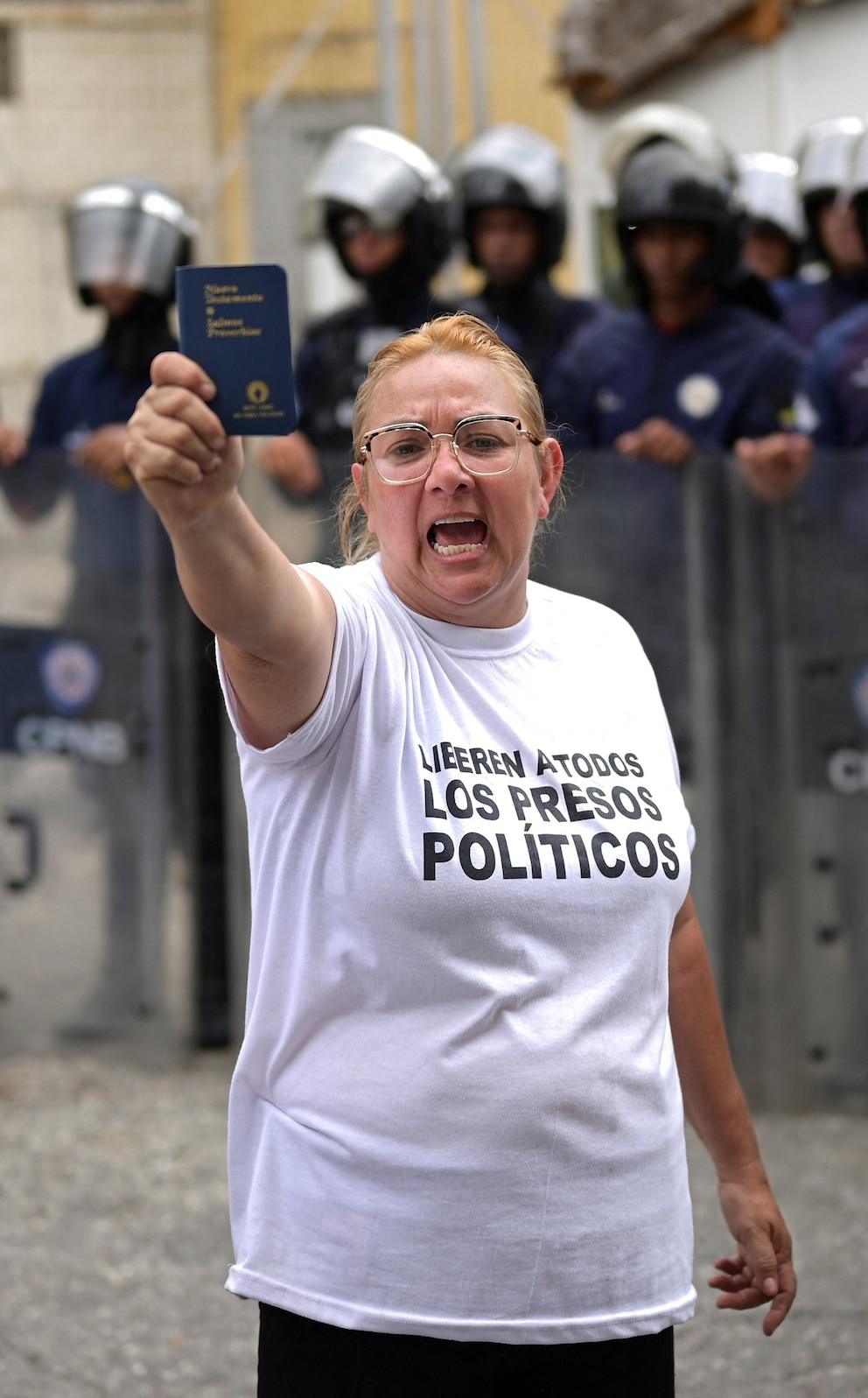
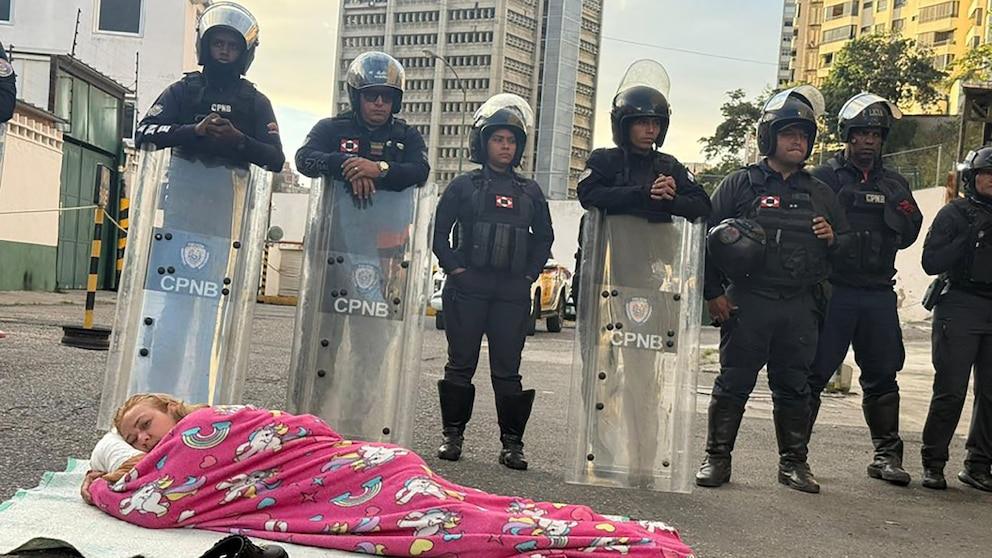
“It does not match any of the figures we have been recording,” declared Himiob, who insisted that dozens of relatives remain camping outside the detention centers without clear information about the fate of their loved ones.
The Penal Forum and other NGOs denounce that hundreds of opponents and protesters remain imprisoned, including political leaders, students, activists and citizens detained during protests and repression operations.They have also pointed out that the Delcy Rodríguez regime has refused to provide official lists and allow independent verification of releases.
Cabello, for his part, rejected these questions and maintained that “we do not have to consult” NGOs about the management of those released.
The release process occurs amid international pressure and negotiations between Chavismo and Washington.After coming to power, Delcy Rodríguez has signed agreements with the United States to facilitate access to Venezuelan oil and has reiterated the commitment to the “stabilization” of the country.However, the release of political prisoners has progressed irregularly and many family members denounce that opacity and arbitrariness continue to mark the process.
The human rights situation in Venezuela continues to be a cause of concern for international organizations.Amnesty International and HumanRights Watch have called for transparency and guarantees so that releases are not used as a tool for political negotiation or propaganda.According to these groups, many of those released had been detained without due process, and the releases have not been accompanied by judicial reforms or guarantees of non-repetition.
The evolution of the liberation process will be decisive for the political future of Venezuela and for the normalization of relations with the international community.For now, the differences between official data and reports from independent organizations maintain the focus on the situation of political prisoners and the need for transparent and credible verification of each case.
(With information from EFE and Europa Press)

